
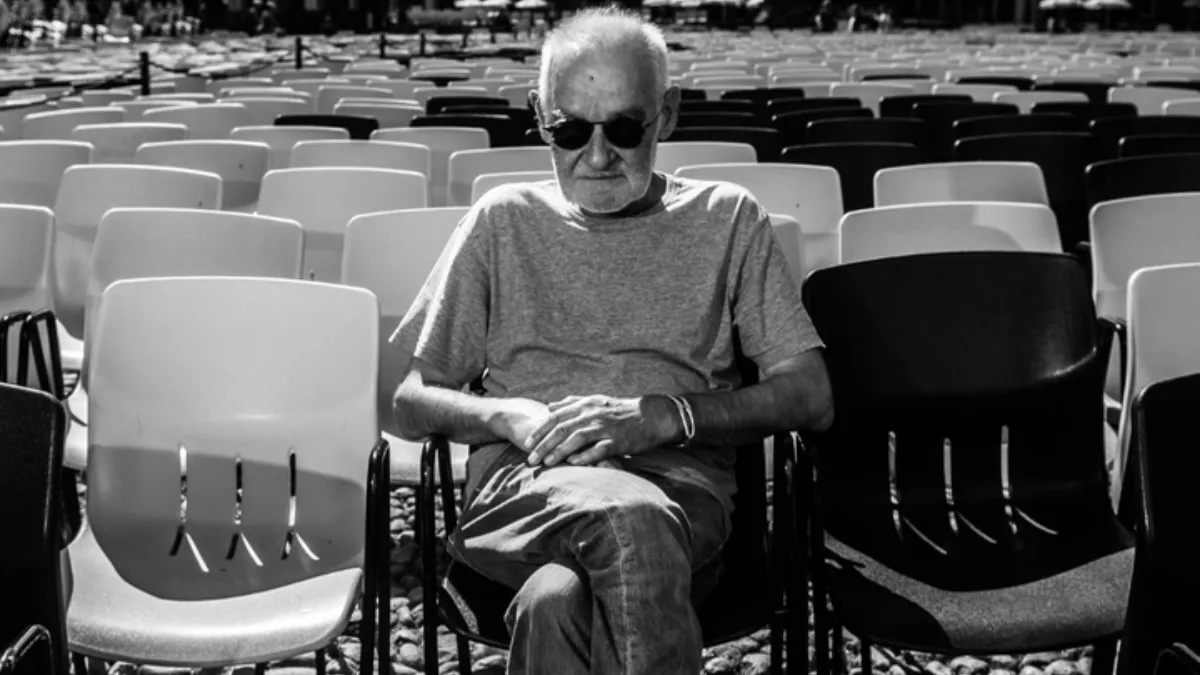
The Hungarian filmmaker Bela Tarr, renowned for his dark and apocalyptic films like Damnation and Satantango, referred to as the slow cinema movement founder, died at the age of 70 on Tuesday. The news was reported by the European Film Academy, where Tarr had been a member since 1997, saying that Tarr died after a long serious illness that morning.
A statement from the organisation said, The European Film Academy is mourning a prominent film director and a personality with a strong political voice, who is not only highly regarded by his peers, but also loved by people all over the world. The sorrowful family would kindly appreciate that they may not be contacted for a comment for these days.
Pioneer of the slow cinema movement
Tarr was also a key exponent of what came to be known as slow cinema. This was typified by black and white imagery, long unbroken shots, a lack of dialogue, an absence of a conventionally structured plot, as well as a distinctly gloomy and mundane treatment of everyday life in Eastern Europe. This is perhaps most aptly illustrated through his feature length Satantango of 1994, which was seven and a half hours in length and illustrated the struggles of a small Hungarian village in the aftermath of the fall of communism there. It was in this, his longest film, that Tarr perhaps received his ultimate critical recognition. It is also frequently cited as among the greatest films of all time.
Early life and beginnings in filmmaking
Born on July 21, 1955, in Pecs, Hungary, Tarr began his acting career with a series of small TV roles as a kid before starting his work as a filmmaker at the age of 16. His hobby videos soon came to the attention of Bela Balazs Studios, and they assisted him with funding his first feature film, titled Family Nest, produced in 1979. He began his studies at the Academy of Theatre and Film in Budapest and graduated in 1982. He started his own film studio, Tarsulas Filmstudio, but had to shut it down due to political reasons in 1985 because of his vocally expressed anarchist ideas. During those years, his other productions were The Outsider (1981), The Prefab People (1982), and Almanac of Fall (1984).
International recognition and major works
His fifth work, Damnation (1988), a drama about a depressed man in love with the wife of the singer, marked the country’s first independent film. Satantango, released in 1994, followed after a hiatus of six years, so did another of the master’s highly acclaimed productions, Werckmeister Harmonies, in the year 2000. About an hour and fifty minutes long, the film, jointly directed by the writer’s wife, co producer, editor, and companion, Agnes Hranitzky, has only an astonishing 39 camera shots, all of which revolve around the story of the writer, Appolinus, as stated, and his uncle during the Hungary communist era in connection with the menacing Circus that comes to town.
Later films and retirement from filmmaking
In 2007, their movie, The Man From London, produced and directed by Tarr and Hranitzky and featuring Tilda Swinton, was released at Cannes Film Festival. In 2011, Tarr released The Turin Horse, in Berlin Film Festival, chronicling an event where a horse was beaten in Turin, Italy, and it was said to be responsible for Friedrich Nietzsche’s insanity. The movie won the grand prize, and Tarr said it was going to be his final piece of work.
Bela Tarr is survived by his wife Hranitzky.
Also Read: Brigitte Bardot, French legendary actress, dies at 91
