
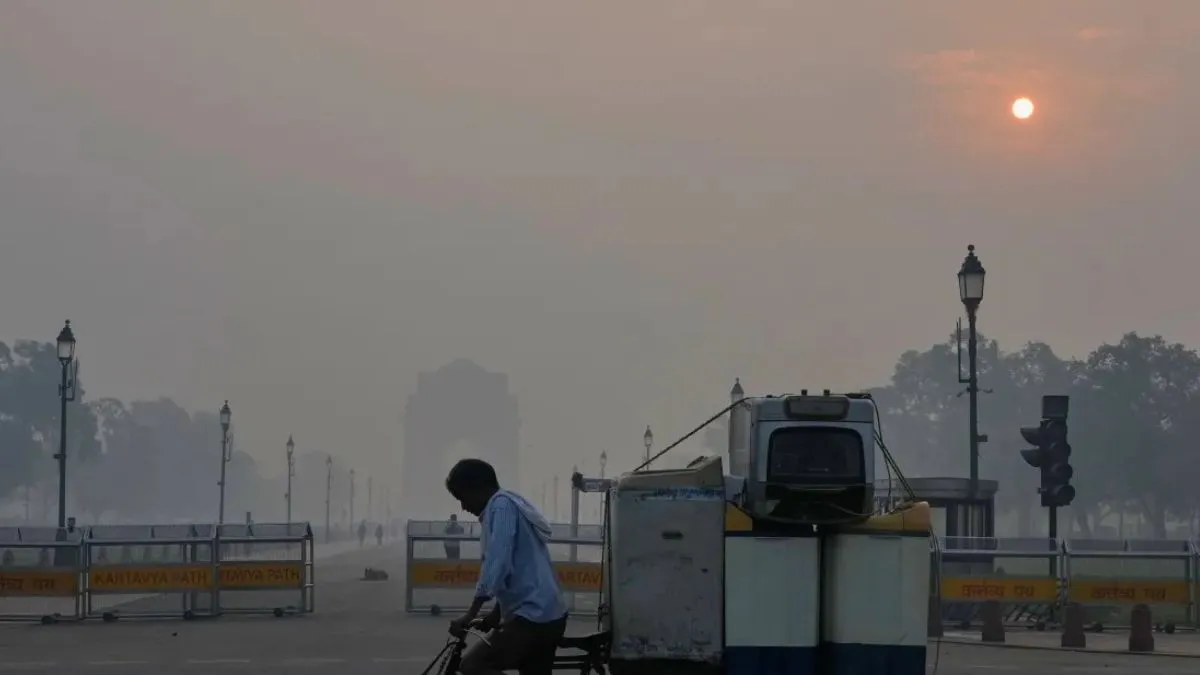
The Supreme Court on Tuesday expressed serious concern over the worsening air quality in Delhi and directed the Commission for Air Quality Management (CAQM) to urgently identify the key causes behind the deteriorating Air Quality Index (AQI) before proposing solutions. Hearing a batch of petitions on air pollution in the national capital, a Bench led by Chief Justice of India Justice Surya Kant made it clear that without a clear diagnosis, remedial measures would remain ineffective.
CAQM asked to convene experts within two weeks
The apex court directed CAQM to shortlist domain experts and convene a meeting within two weeks to determine, preferably unanimously, the principal contributors to Delhi’s air pollution. The court emphasised that CAQM is duty-bound to bring experts from various relevant fields “under one umbrella” to carry out a comprehensive and data-backed assessment.
The findings, the court said, must be placed in the public domain to ensure transparency and accountability.
Clarifying its role, the Bench said the Supreme Court would not position itself as a “super expert” on air pollution but would ensure that expert-driven decision-making happens in a timely and transparent manner.
“The first stage is to identify causes. Solutions come later,” the Chief Justice observed, cautioning against vague or generalised claims about pollution sources without precise attribution.
Taking a stern view of CAQM’s approach, the court remarked that the body appeared to be “in no hurry” to either identify the causes of the worsening AQI or work on long-term solutions. Warning of the consequences, the Bench said inordinate delay in expert assessment and action would only lead to further complications, especially as Delhi faces the pollution crisis year after year.
The court directed CAQM to simultaneously begin thinking about long-term solutions, but only for those factors that are found to be contributing to the maximum pollution. It stressed that reactive or piecemeal steps would not be sufficient to address a recurring problem of this scale.
Once the causes are identified and disclosed, the court noted, public suggestions could also be invited, lending credibility to the exercise.
Construction, vehicles under lens, but with caution
During the hearing, the Bench flagged construction activity and vehicular emissions as areas requiring detailed expert evaluation. However, it acknowledged competing social needs.
“There is a dire need for housing, so construction will go on. But if construction is causing a problem, what will be done?” the Chief Justice asked, adding that expert bodies must quantify the contribution of each factor. On vehicular pollution, the court noted estimates suggesting nearly 40 per cent contribution but cautioned against simplistic solutions. “If buses are stopped, how will the common man travel?” the Bench observed.
No selective blame, says Court
The court also cautioned against disproportionately blaming farmers for stubble burning, recalling that during the pandemic period, despite high stubble burning, Delhi had witnessed clearer skies. The observation was made to underline the need for a holistic, evidence-based evaluation rather than selective attribution.
Additional Solicitor General Aishwarya Bhati informed the court that a status report could be filed on the issues highlighted and said responses had already been submitted on some aspects, including the ECC toll issue, while seeking more time on others.
Delhi’s AQI
Meanwhile, Delhi’s air quality continues to be a concern. According to data from the Central Pollution Control Board’s Sameer app, the city’s average AQI stood at 293 on Tuesday morning, categorised as ‘poor’. Chandni Chowk recorded the worst air quality at 352, falling in the ‘very poor’ category.
