
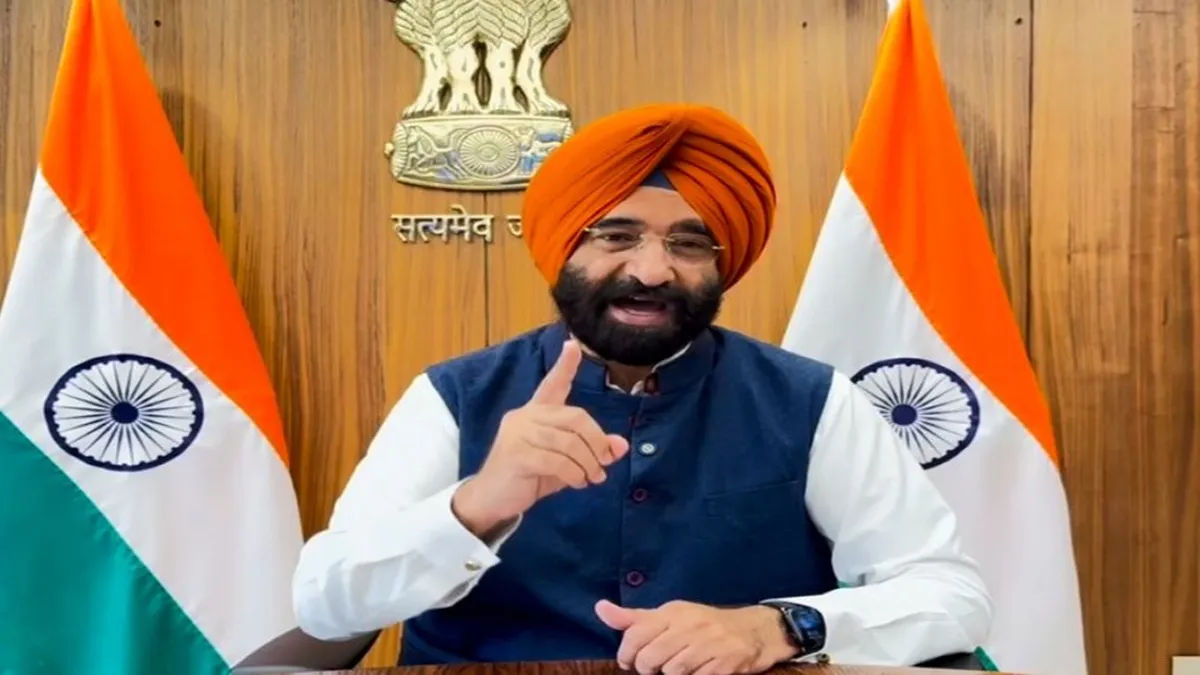
The Delhi government is set to undertake a comprehensive overhaul of the Pollution Under Control Certificate (PUCC) system as part of its broader push to tackle rising pollution levels in the capital. Delhi Environment Minister Manjinder Singh Sirsa said the existing PUCC framework will be revamped, with a third-party monitoring mechanism introduced to improve transparency and accountability.
According to the minister, the government will bring in an independent agency to supervise the PUCC system to ensure more reliable emissions data and stricter compliance. The move is aimed at closing loopholes and restoring public confidence in pollution certification processes.
Car pooling app to reduce traffic and emissions
To ease congestion and curb vehicular pollution, the Delhi government is also planning to develop a dedicated car pooling application. The initiative is intended to encourage residents to share rides, reduce the number of vehicles on the road and promote a more sustainable commuting culture across the city. "We are trying to bring a car-pooling app that is easy for people to download and use," he said, as per news agency PTI. The minister said the government has decided to hire a third-party agency to monitor potholes throughout the city.
Under the proposed system, the agency will conduct year-long surveys, travel across Delhi, identify potholes, click photographs and submit data to the authorities. A tender has been issued by the Delhi Pollution Control Committee (DPCC) for this purpose, he said. The minister also announced that the government is working with the traffic police to develop an integrated traffic management system.
"Currently, it happens that even if there is a long jam, the traffic light will remain red for a certain period. This aggravates jams. We are working on a system wherein if there is a jam, the duration for which the traffic signal remains red can be reduced," he said. The minister said the government will also tie up with Google Maps to identify traffic hotspots. During the tenure of the Aam Aadmi Party government, there were 13 pollution hotspots and now there are 62, he said. "We are tying up with Google Maps to identify 100 hotspots of vehicular pollution. This way, we will be able to initiate measures," he added.
Tech-driven approach to fix city roads
In another key announcement, Sirsa said the government will hire a third-party agency to collect and analyse data on potholes across Delhi. This data-driven approach is expected to help authorities respond faster to road damage and improve overall urban infrastructure planning.
MCD to procure mechanical road sweepers
The Municipal Corporation of Delhi will also step up mechanised cleaning efforts. Sirsa said the MCD will move forward with the procurement of mechanical road sweepers and litter pickers to strengthen dust control and improve daily sanitation across major roads. The Public Works Department (PWD) has been directed to deploy 70 mechanical road sweepers and water sprinklers. Sirsa said around 1,000 litter pickers and 300 water sprinklers are also being deployed across the city.
The minister said Delhi is coordinating with neighbouring states to ensure a regional approach to air pollution control. "We are in touch with neighbouring states and trying to ensure that air quality levels improve there as well," he said. Sirsa also said the government has signed an MoU with IIT Madras to identify and develop "smog-eating" surfaces that can help reduce pollution levels. These surfaces will be tested and implemented in selected areas, he added.
