
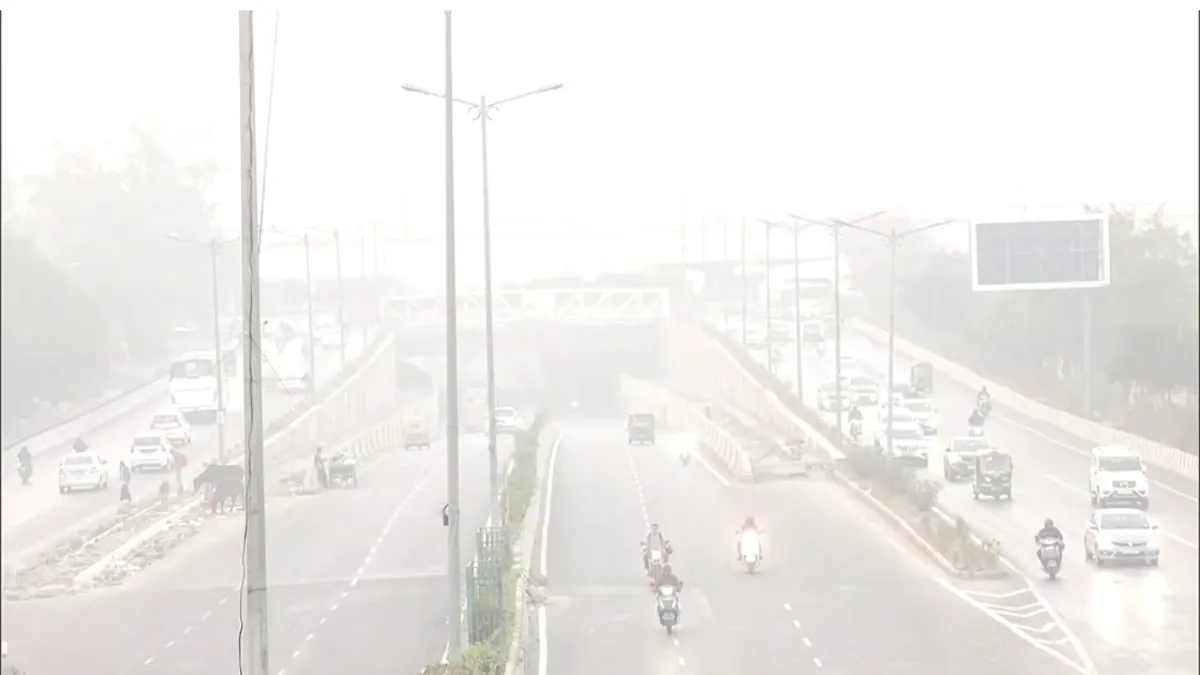
Delhi's air quality deteriorated sharply on Saturday morning, edging close to the severe category as the city’s overall AQI climbed to 387. This marked a reversal of the brief improvement seen earlier in the week, raising concerns about health and commuting conditions.
Thick smog and shallow fog covered several parts of the city in the early morning hours, reducing visibility and prompting low-visibility procedures at Indira Gandhi International Airport, though all flights continued to operate normally. Pollution hotspots were particularly affected, with AQI levels crossing 400 in multiple areas.
Low visibility at Delhi airport
In a post on X, the Delhi Airport said, "Low Visibility Procedures are in progress at Delhi Airport. All flight operations are presently normal. Passengers are requested to contact the airline concerned for updated flight information."
Pollution hotspots return to hazardous levels
Several areas recorded AQI levels above 400, signalling a return to hazardous conditions. Wazirpur was the most polluted locality with an AQI of 443, followed by Jahangirpuri (439), Vivek Vihar (437), Rohini and Anand Vihar (434 each), Ashok Vihar (431), and Sonia Vihar and DTU (427 each). Other severe areas included Narela (425), Bawana (424), Nehru Nagar (421), Patparganj (419), ITO (417), Punjabi Bagh (416), Mundka (415), Burari Crossing (413), Chandni Chowk (412) and Delhi University’s North Campus (401).
Brief respite followed by sharp decline
After nine consecutive days of very poor air quality, Delhi experienced a short improvement on Tuesday with an average AQI of 282, slipping into the poor category. Conditions slightly improved on Wednesday (259) before worsening to 307 on Thursday and sharply rising to 349 on Friday, according to the Central Pollution Control Board’s Sameer app.
Similar situation in NCR
The worsening air quality extended across the National Capital Region. Ghaziabad and Noida recorded AQI levels of 422 each, firmly in the severe category. Gurugram reported 295, and Faridabad 208, both falling in the poor range. The dense smog and fog reduced visibility, disrupted commuting and heightened health risks, especially for children, the elderly and people with respiratory issues. The deterioration coincided with the season’s first dense fog episode across north India.
