
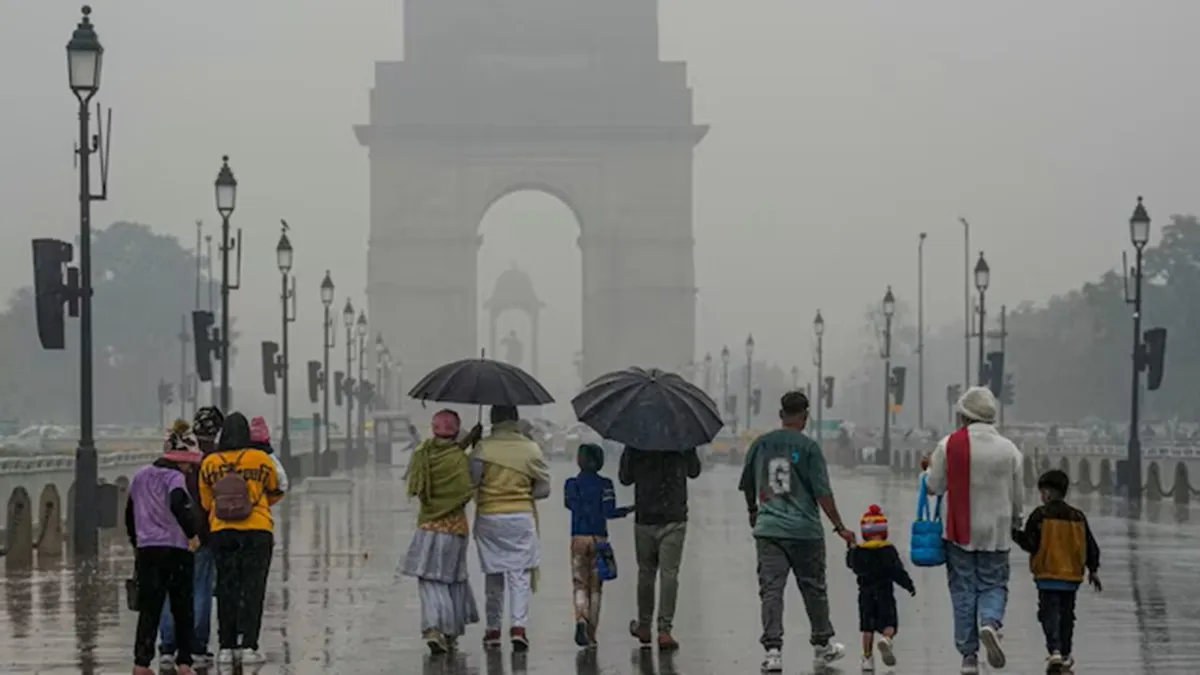
The Central Pollution Control Board (CPCB) said that Delhi experienced its cleanest July air in a decade, mainly due to consistent rainfall on 23 out of 31 days. As of July 30, the monthly average Air Quality Index (AQI) stood at 79 -- classified as "Satisfactory" under CPCB's air quality rating system. CPCB began calculating the AQI in April 2015. It said July 2025's average AQI of 79 is significantly lower than previous years. In comparison, the average AQI was 96 in July 2024 and 83.67 in July 2023. The CPCB also shared data showing the AQI data for the last few years.
Average July AQI in past years:
- 2015: 138.13
- 2016: 145.64 (highest)
- 2017: 98.39
- 2018: 103.83
- 2019: 134
- 2020: 83.80
- 2021: 110.06
- 2022: 87.29
As per CPCB standards, an AQI of 0–50 is "Good", 51–100 is "Satisfactory", 101–200 is "Moderate", 201–300 is "Poor", 301–400 is "Very Poor", and anything above 400 is classified as "Severe."
Air quality in July 2025
By July 30, Delhi had recorded 28 "Satisfactory" category air days and two "Moderate" days. The cleanest air was noted on July 15 with an AQI of 51, nearly entering the "Good" category. The worst day was July 26, with an AQI of 136. In contrast, July 2024 had 17 "Satisfactory" and 14 "Moderate" days, with the worst AQI being 138 on July 11.
Environment Minister credits multi-agency action
Delhi's Environment Minister Manjinder Singh Sirsa had claimed on July 23 that the city was on track to witness its cleanest July in a decade. "This is not just a weather-driven phenomenon. It reflects the impact of Delhi’s multi-agency implementation model, sustained landfill action, intensive cleanliness drives, and a firm commitment to results-based governance," he added. Officials also noted that by July 23, Delhi had already seen 118 days of "Good", "Satisfactory" or "Moderate" air in 2025 -- matching the total for the entire year in 2024.
Experts point to weather, not just policy
However, air pollution experts remain cautious about the claims. Anumita Roychowdhury, air pollution specialist and Executive Director at the Centre for Science and Environment, said the improvement in air quality is largely weather-driven. "Monsoon rains wash away pollutants and bring down pollution levels. This year’s frequent and intense rainfall spells are the key factor," she said.
On the government’s role, Roychowdhury added, "We don’t yet have comprehensive emissions data for such a short window. Monsoon is not the right season to measure the long-term effectiveness of policy interventions. We’ll need to watch the pollution levels during the winter to assess real progress.”
Rainfall surpasses long-term average
Delhi has already received more rainfall than the long-period average for July. As of Wednesday morning (8:30 AM), Safdarjung -- the city’s base weather station -- recorded 220.2 mm of rain, exceeding the long-term July average of 209.7 mm. By 5:30 pm on the same day, another 15 mm had been recorded. Other parts of the city also saw light to moderate showers. Palam weather station logged 4.6 mm in 24 hours until 8:30 am and 28.3 mm from 8:30 am to 5:30 pm. Pusa station recorded 37.5 mm and 12.5 mm during the same periods respectively, while Janakpuri saw 11.5 mm in the late afternoon. An official from the India Meteorological Department (IMD) said light to moderate rain is likely to continue on Thursday, followed by light rainfall, thunder, and lightning from Friday onwards.
