
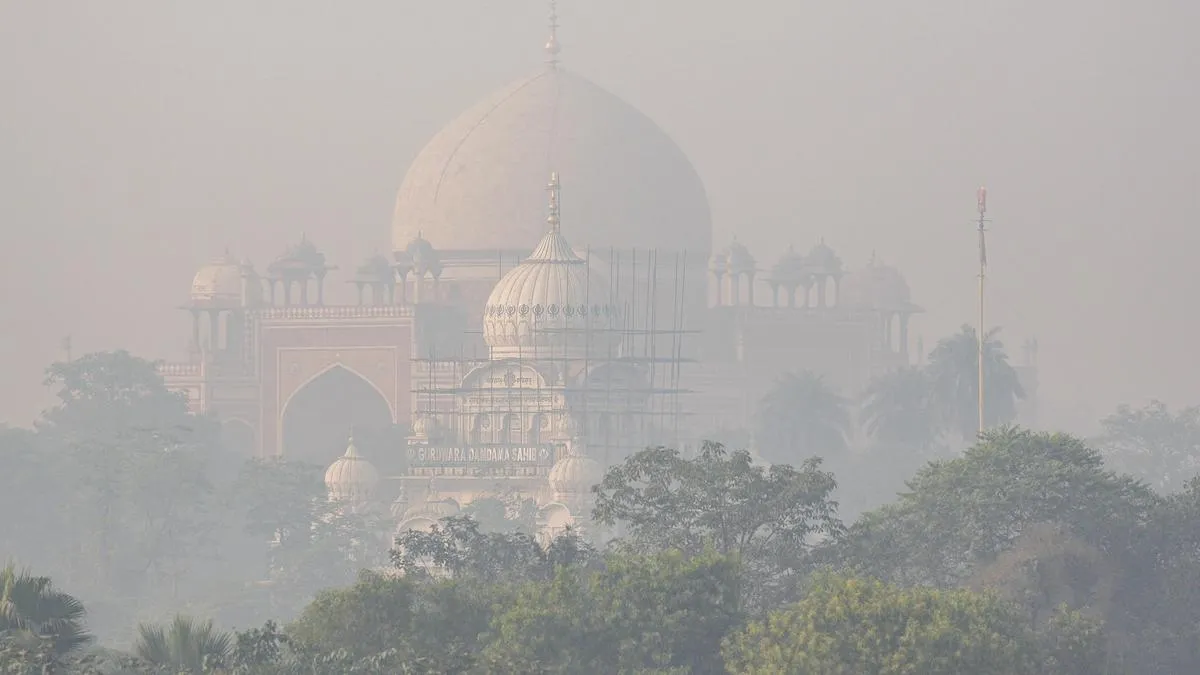
Delhi continued to battle hazardous air quality on Saturday, with the city’s AQI measured at 359—slightly better than Friday’s 364 but still firmly in the ‘very poor’ category. Thick smog persisted across several areas, disrupting daily life and heightening health concerns.
In response to the sustained pollution levels, authorities have proposed shifting key measures currently applicable under GRAP Stage IV to Stage III. These include allowing public, municipal, and private offices across NCR to operate at 50% capacity with the remaining staff working from home, while the Central Government has been advised to consider similar work-from-home provisions for its employees. These steps aim to reduce vehicular emissions and ease the pollution burden as Delhi grapples with worsening winter air quality.
Severe pollution in key areas
The ITO area recorded an AQI of 370, while Noida's Sector 125 showed a severe AQI of 434. Greater Noida fared slightly better, with Knowledge Park 3 registering 294 AQI in the ‘poor’ category. Other hotspots included Anand Vihar (422), Ashok Vihar (403), Bawana (419), Jahangirpuri (417), Rohini (414), Vivek Vihar (423), and Nehru Nagar (402), all in the ‘severe’ range.
Residents expressed concern over rising vehicular traffic, linking it to worsening air quality. "Buses and cars are increasing day by day. Pollution is rising, and there should be some control on vehicles,” said a resident from Punjabi Bagh. Another added, “Coming out is becoming difficult; people are getting sick, and daily life is affected."
Impact on daily life and health
Thick smog shrouded areas like India Gate, IGI Airport, and Akshardham, with AQI levels ranging from 296 ('poor') to 422 ('severe'). Residents reported difficulty in commuting and outdoor activities, highlighting the health risks posed by prolonged exposure to toxic air. The minimum temperature in Delhi was recorded at 13°C, contributing to the persistence of smog.
Government directives and court orders
In response to deteriorating air quality, the Delhi High Court ordered the cancellation of all outdoor sports events after a plea by schoolchildren, citing serious health risks. Justice Sachin Datta emphasised that authorities must protect children’s health and adjust annual sports calendars accordingly.
The Supreme Court directed that construction workers affected by GRAP-3 restrictions in Delhi, Punjab, Haryana, and Rajasthan must be provided subsistence allowances. GRAP-3 (Graded Response Action Plan Stage 3) has been in effect since November 11, restricting construction, industrial activities, and vehicular movement to curb pollution.
Farm fires and regional contributions
Government data shows that Punjab reported around 5,000 farm fire cases from September to November 20, while Uttar Pradesh had 4,600 and Haryana 592, adding to the toxic haze. By comparison, during the summer wheat-harvesting season, Punjab recorded 47,000 cases, Uttar Pradesh 45,000, and Haryana 9,700.
The Commission for Air Quality Management (CAQM) has mandated all NCR states to implement immediate measures to reduce pollution and defer outdoor events.
Weather forecast and outlook
The India Meteorological Department (IMD) predicted further cold wave conditions over Northwest India, with minimum temperatures expected to drop by 2–4°C in the coming week. Heavy rainfall, thunderstorms, and lightning were forecast for parts of the Andaman and Nicobar Islands, Kerala, Tamil Nadu, Puducherry, and Karaikal.
Despite slight improvements in AQI, 38 out of 39 monitoring stations recorded levels above 300, with 12 stations in the ‘severe’ category, indicating persistent health risks for Delhi residents.
