
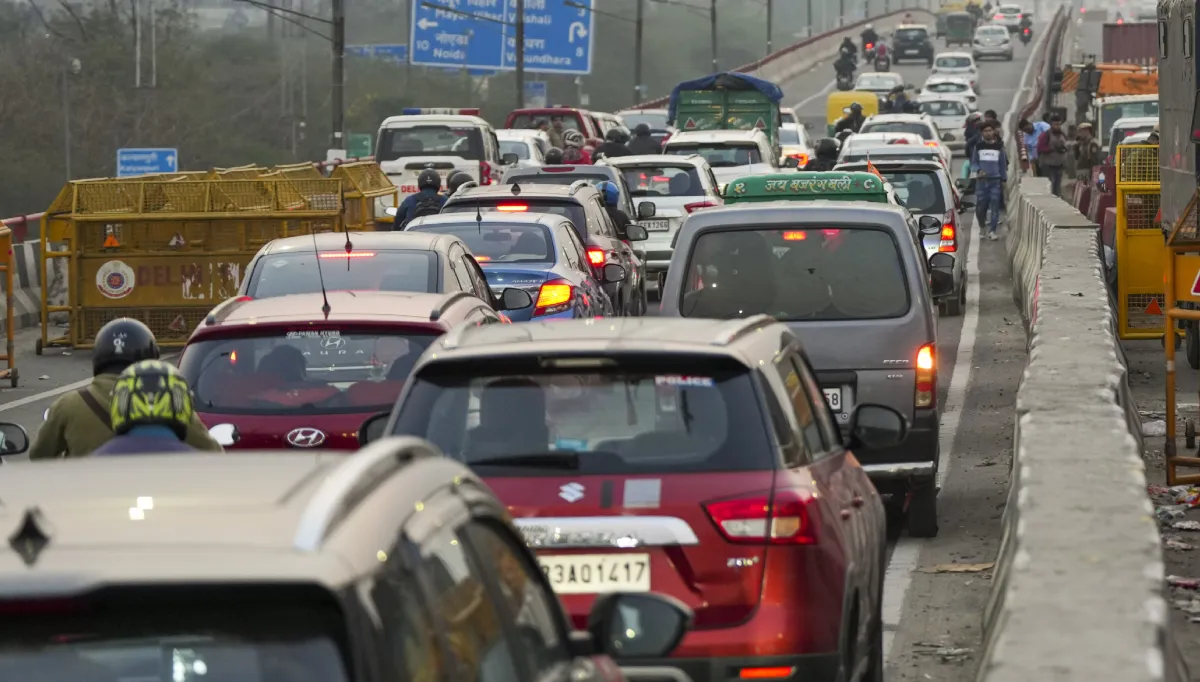
In order to address the chronic traffic congestion in Delhi, the Centre and the Delhi government have given a go-ahead to nine major infrastructure projects worth Rs 24,000 crore. The projects include a mix of flyovers, metro extensions, tunnels, and new roads. The new projects are aimed at reducing the travel time, getting rid of pollution, as well as making daily commutes smoother for millions of people in Delhi-NCR.
Projects To Be Completed By 2027
According to officials, all projects that have received the green signal are expected to be completed by 2027. The work will be undertaken in phases starting this year. The approval is seen as a joint effort to address some of the major traffic points of the city that remain largely congested and expand public transport options.
Pink Line Metro From Majlis Park To Maujpur
One of the significant projects includes the 12.3-kilometre extension of the Pink Line Metro from Majlis Park to Maujpur. This final segment will complete the circular Pink Line, forming a metro ring around Delhi and enabling passengers to travel across the city without changing lines or navigating through congested roads.
Elevated Corridor AIIMS and Mahipalpur Bypass
Notably, a new elevated corridor running between AIIMS and Mahipalpur Bypass got the approval. It will be instrumental in easing the slow commute towards the airport. The corridor will be beneficial for thousands of daily commuters who travel between South Extension, Dhaula Kuan, and the IGI Airport.
Additionally, a 5-kilometre tunnel, starting from Shiv Murti and with the end point at Vasant Kunj, will link National Highway 48 with Mahipalpur as well as Vasant Kunj. According to officials, this project could considerably reduce congestion in one of the national capital’s most traffic-prone zones.
Additional Underpasses, Service Roads Around DND Flyway
To alleviate congestion on the Delhi-Noida corridor, authorities plan to construct additional underpasses and service roads around the DND Flyway. These measures aim to improve traffic flow during peak hours and minimise spillover jams on adjoining routes.
