
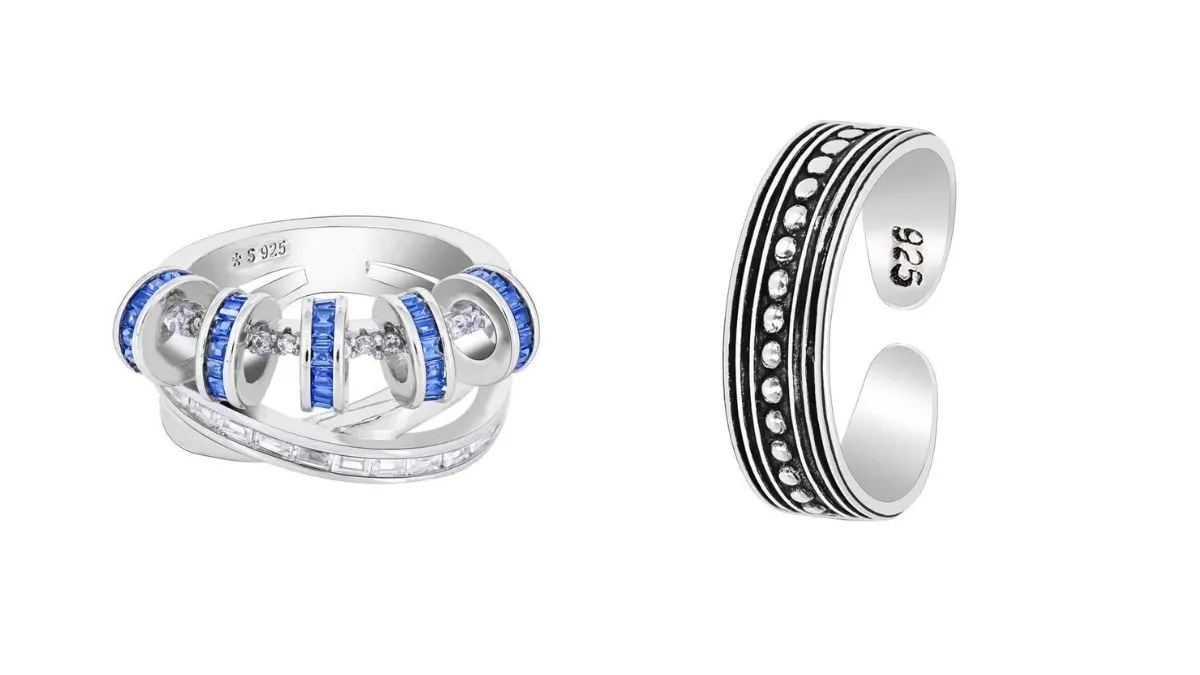
The government has introduced voluntary hallmarking for silver jewellery and articles, effective September 1, implementing a digital identification system to ensure metal purity for consumers. The Bureau of Indian Standards (BIS) revised its hallmarking standard with the publication of IS 2112:2025, replacing the earlier IS 2112:2014 version. The revised standard introduces seven purity grades - 800, 835, 925, 958, 970, 990, and 999 - with grades 958 and 999 newly added.
What Is Hallmarking?
Hallmarking is an official certification that verifies the purity and authenticity of precious metals like gold, silver, platinum, and palladium. A hallmark acts as a stamp of assurance, ensuring that the piece of jewellery you buy contains the exact metal content claimed by the seller. This system is widely adopted worldwide to protect consumers from fraud and ensure quality standards.
"In India, hallmarking of gold and silver jewellery is regulated by the Bureau of Indian Standards (BIS). The BIS mark on jewellery acts as a guarantee of purity, assuring customers that the piece meets the claimed standards," said Nishit Begwani, Founder of Touch925.
Why Is Hallmarking Important?
- Purity Assurance: It confirms that the jewellery or article meets the declared purity.
- Consumer Protection: Prevents customers from being misled by substandard or adulterated items.
- Resale Value: Hallmarked jewellery fetches better resale and exchange value.
- Global Standard: A universal trust symbol accepted worldwide.
Elements of a BIS Hallmark (India)
According to Nishit Begwani, when customers check a piece of hallmarked jewellery in India, they should see four key symbols:
BIS Logo
- A triangular logo confirming certification under BIS.
Purity/Fineness Grade
- Gold: 22K916 (91.6% purity), 18K750 (75% purity), etc.
- Silver: 925 (92.5% purity, globally accepted standard).
Assaying & Hallmarking Centre’s Mark
- Code of the BIS-recognised testing centre where the jewellery was certified.
Jeweller’s Identification Mark
- The registered jeweller’s mark, ensuring traceability.
How to Read a Hallmark – Step by Step Guide
- Locate the Mark: Check the inside of a ring, the clasp of a chain, or the inner side of a bangle.
- Identify the BIS Logo: Confirms certification under the Bureau of Indian Standards.
- Check Purity/Fineness: For silver jewellery, look for “925” (92.5% purity). For gold, look for 22K916, 18K750, etc.
- Find the Assay Centre Code: Indicates which BIS-recognised centre tested it.
- Look for Jeweller’s Mark: Confirms the authorised jeweller.
- Cross-Verify With Invoice: Always ensure the hallmark matches the details on your bill.
Silver Hallmarking Charges – Will It Impact Jewellery Prices?
According to Avanish Agarwal, Managing Partner, Sri Jagdamba Pearls, the BIS levies hallmarking charges on a per-article basis, irrespective of weight, for silver articles.
"The typical fee is Rs 35 plus GST per item, with a minimum consignment fee of Rs 150 for silver articles. These charges are added to the overall cost, which can result in a slight increase in the final jewellery price for consumers," Agarwal said.
Explaining this further, Dishi Somani, Founder of DishiS Designer Jewellery, said that for jewellers, it is not only the hallmarking cost
"There are also back-end expenses such as logistics, processing, and sometimes stock delays. To recoup these expenses, most jewellers might add a little premium to the end price. But this isn't something secretly added in; it's something openly committed to quality. Hallmarking creates a standard and earns trust. Indeed, the India Bullion & Jewellers Association (IBJA) has been calling for jewellers to be permitted to hallmark silver in-house, which would lower costs further and make turnaround times better," Somani added.
Gold vs Silver Hallmarking – Are There Any Differences?
According to Kabir Kate, CMO, Solitario, both gold and silver hallmarking serve the same purpose but the systems differ.
"The key difference lies in the measurement of fineness. Gold hallmarking specifies the karat (K) or fineness, such as 22K (91.6 per cent pure gold) or 18K (75 per cent pure gold), and includes a fineness number (e.g., 916, 750). Silver hallmarking, however, primarily uses a single standard of fineness, which is 92.5 per cent for sterling silver, indicated by the number 925," Kate said.
Tips for Consumers
- Always ask for hallmarked jewellery, whether it’s a silver pendant for women, a chain, or a gold bangle.
- Verify that the invoice clearly states “BIS Hallmarked.”
- Do not buy jewellery without a hallmark, even if offered at a cheaper rate.
- Use the BIS Care App (launched by the government) to verify hallmark authenticity in real-time.
