
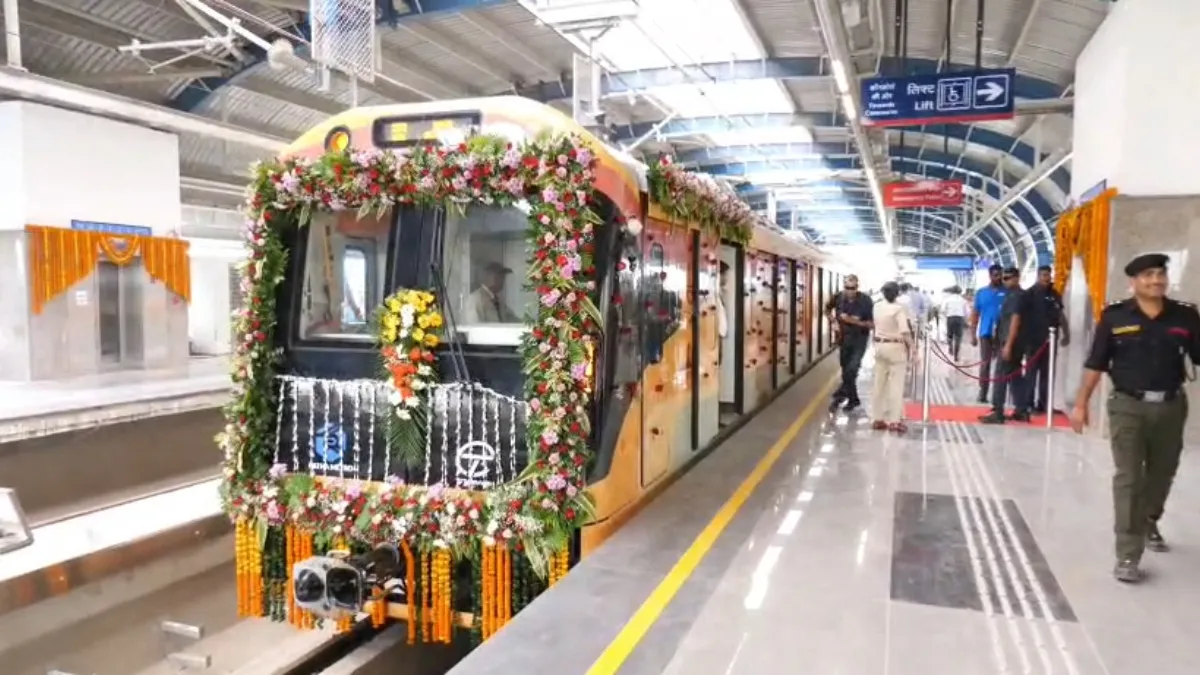
The long wait is finally over for residents of Patna as Bihar Chief Minister Nitish Kumar inaugurated the first phase of the 3.6-km elevated stretch of the priority corridor of the Patna Metro rail project today (October 6). The metro will run for the public from October 7.
Along with the inauguration of the first phase of Patna Metro, CM Kumar also laid the foundation stone for six underground metro stations, including Patna Junction, and a 9.35-kilometer tunnel.
How many people can travel in the Patna Metro?
The initial phase of the metro will currently operate only for a distance of approximately 3.6 km, marking a significant milestone in the city's public transportation network. A Patna Metro train, consisting of three coaches, can accommodate approximately 138 seated passengers, while an additional 945 passengers can travel standing per trip.
The inauguration of the Patna Metro is set to transform the city's transportation network, easing traffic congestion and improving connectivity across Patna.
Patna Metro: Route and stations
The Patna Junction ↔ New ISBT corridor will currently have three important stations:
- ISBT
- Zero Mile,
- Bhootnath Road
Once completed, the Blue Line (North-South corridor), will connect Patna Junction and ISBT, covering a 16.2-km stretch with five elevated and seven underground stations.
The 12 stations after completion will be:
- Patna Junction
- Akashvani
- Gandhi Maidan
- PMCH
- Patna University
- Moin Ul Haq Stadium
- Rajendra Nagar
- Malahi Pakri
- Khemmni Chak
- Bhoothnath
- Zero Mile
- New ISBT
Patna Metro: Ticket price and Timings
The Patna Metro fare has been fixed between Rs 15 and Rs 30. Traveling from ISBT to Zero Mile will cost Rs 15, while the fare from New ISBT to Bhootnath Metro Station will be Rs 30.
The metro will run daily, currently from 8 am to 10 pm, with trains scheduled every 20 minutes. Each train will also feature 12 reserved seats for women and differently-abled passengers.
Patna Metro: Features and security
The Patna Metro has placed a strong emphasis on passenger safety and convenience. Each coach is equipped with 360-degree CCTV cameras, emergency buttons, and microphones that allow passengers to communicate directly with the metro driver. Additionally, coaches feature cellphone and laptop charging points, front emergency doors, and bi-parting sliding doors for enhanced safety.
Reflecting Bihar's rich cultural heritage, the coaches are adorned with Madhubani paintings and motifs of iconic landmarks such as the Golghar, Mahavir Mandir, and Buddha, painted in saffron hues.
Metro stations have been designed with modern facilities to ensure comfort and accessibility. They include escalators, lifts, stairways, ticket-vending machines, public address systems, digital displays, and platform screen doors for safety. Concourse areas feature waiting zones, information kiosks, food courts, retail shops, and baggage screening and check-in/out facilities.
The security of the Patna Metro will be handled by Bihar Special Armed Police (BSAP) personnel. BSAP personnel will be deployed at every corner of the metro, from the entrance to the platforms.
