Neuralink ready for first human implant of vision-restoring brain device, says Elon Musk
Elon Musk’s Neuralink is ready to conduct its first human implant of a brain device called Blindsight, designed to help people who are completely blind regain vision. Pending regulatory approval, the implant aims to send visual signals directly to the brain, starting with low-resolution vision.
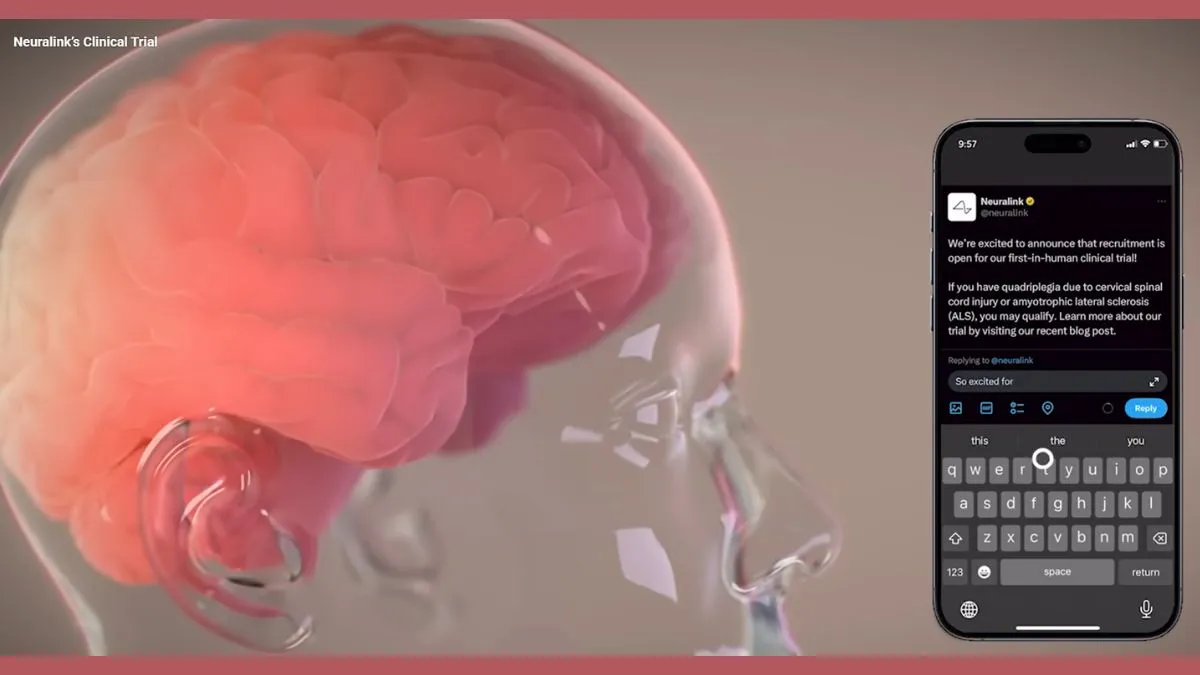
Neuralink, Elon Musk’s brain-computer startup, is gearing up for a huge step in medical tech. Musk says they’re set for their first human trial with Blindsight, a brain implant aimed at restoring vision—just waiting on the green light from regulators.
Blindsight is not about flipping a switch and seeing perfectly again. It is meant for people who have lost all their sight, even those with zero light perception. The idea is to help the brain slowly by relearning on how to process visual signals, not to deliver instant, natural vision.
How will Blindsight work on the human body?
Musk compared the first stage of Blindsight to pixelated, old-school digital images. At first, users would see basic, low-res visuals. But as their brains adjust to the implant’s signals, the hope is that things get sharper and more detailed over time.
How does Blindsight work with human vision?
Instead of trying to fix damaged eyes or optic nerves, Blindsight skips them entirely. The device sends information straight to the brain’s visual cortex. This direct approach could let people with otherwise hopeless cases of blindness start recognising shapes, movement, and maybe, eventually, detailed scenes.
If it works, Blindsight could change the game for treating blindness.
Neuralink’s progress so far
Neuralink’s already put brain chips into a handful of people—mainly folks with paralysis. Those patients have used the implant to type, browse the web, and play games, all just by thinking. But restoring sight? That’s a much bigger challenge.
Next-gen implants and quicker surgeries
Musk also teased what’s next. Neuralink is building a new version of their implant that’ll be three times more powerful than what they have now. They’re aiming to have it ready by late 2026.
Furthermore, they are working on a better surgical robot. The new machine can insert those super-fine threads in just a second and a half—way faster than the old system, which took 17 seconds. Speeding up the surgery could make the whole process safer and less stressful.
Superhuman Vision with Neuralink?
Musk did not stop at restoring regular sight, but he already thinks in a bigger picture. Down the road, these implants might let people see things humans never could before, like infrared or ultraviolet light, or even radar-like signals. Imagine seeing the world in a whole new way.
Waiting on approval
Of course, nothing moves forward until regulators sign off and the tech passes a lot of tests. But if Blindsight works as promised, it could rewrite the rules for treating blindness—and maybe even change how we see the world.