Big leap for Indian space security: Private satellite successfully captures ISS from orbit
India has achieved a new space surveillance milestone as private firm Azista successfully imaged the ISS using its AFR satellite, marking the country’s first private-sector demonstration of in-orbit observation capability.
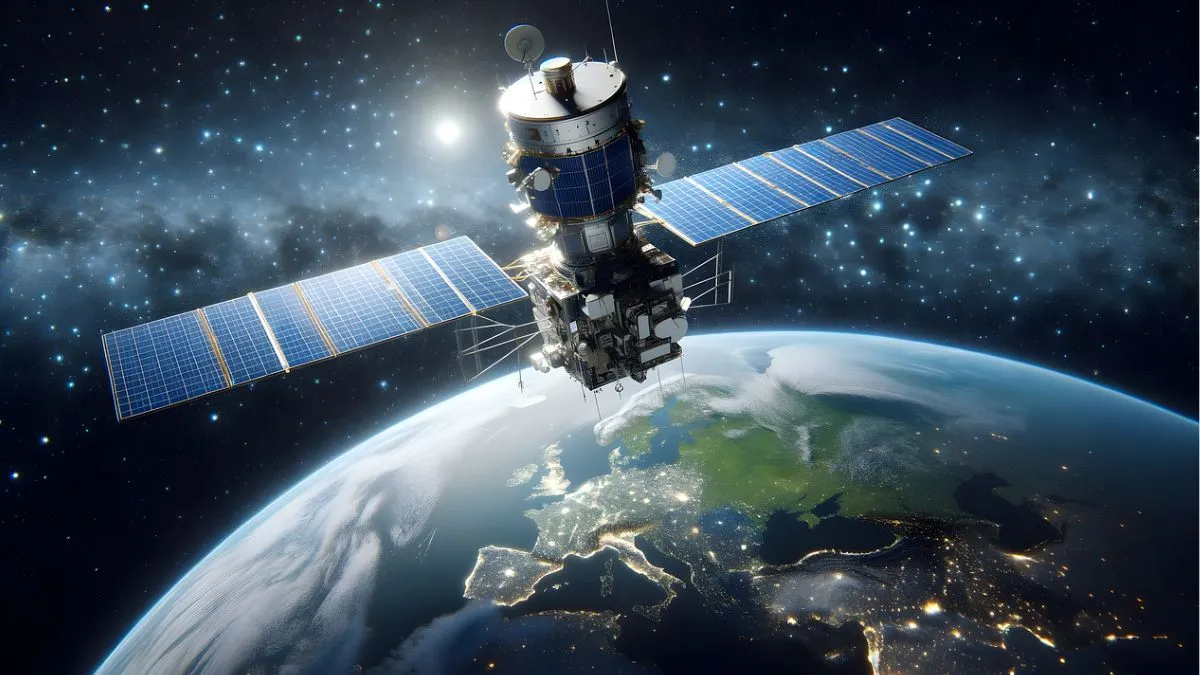
India has reportedly pulled off a big move in space surveillance. For the first time, a private company in India is managing to snap photos of objects in orbit by using its own satellite, which is not just a technical milestone. With the way space is getting more crowded (and more tense), being able to keep a close eye on what is flying matters a lot in situations of space debris.
As per the NDTV report, an Ahmedabad-based company called Azista Industries are using their aerospace division and got their AFR Earth-observation satellite, just 80 kilograms, which is pretty small, to photograph the International Space Station. They ran two controlled experiments on February 3, and both worked out.
People in the industry call this kind of thing “in-orbit snooping”.
Basically, one satellite tracks and takes pictures of another, and it is a big deal for any country’s security playbook.
Azista made two separate attempts
Getting these images was not easy. Azista made two separate attempts under tough conditions: once with the ISS near the horizon and once when it was lit by the sun. The satellite was about 300 kilometres away for the first pass and 245 kilometres for the second. The AFR’s electro-optical sensor had to lock onto the ISS, which moves fast (over 27,000 km/h), and still managed to capture 15 clear image frames, each with a resolution of about 2.2 metres. Azista says both passes worked perfectly, which really puts their homegrown tracking algorithms and imaging tech on the map.
What’s the bigger picture here?
Azista’s demonstration proves India’s own technology—algorithms, sensors, satellite engineering—can do what’s needed to track and analyse objects in space. ISRO, India’s national space agency, has pulled off similar stunts before, most recently with its SPADEX mission. But this is a first for a private Indian company and in a field where governments usually call all the shots.
By photographing the ISS—a big, cooperative target—Azista just proved it can do the basics. Next up could be tracking satellites that aren’t so friendly or easy to spot.
AFR satellite
The AFR satellite itself launched on SpaceX’s Falcon 9 back in June 2023. It’s already spent about two and a half years in orbit and is expected to keep working for the same amount of time going forward. While space surveillance is the headline, AFR’s also busy with naval imaging, night-time shots, and even video for customers around the world, both civilian and military. Azista is not stopping here—they’re already building next-gen payloads that will be able to image objects in orbit at super-sharp, 25-centimetre resolution once their new facility in Ahmedabad comes online.
Stepping back, the fact that a private Indian company pulled this off shows a real shift. Private players are moving into strategic areas that, until recently, only governments handled. With this new capability, India’s got a stronger hand when it comes to watching, understanding, and defending its interests in space.