Important for India, China to work together: PM Modi to Japan's Yomiuri Shimbun, world's largest newspaper
PM Modi in Japan asserted that stable, predictable, and amicable bilateral relations between India and China, as two neighbours and the two largest nations on earth, can have a positive impact on regional and global peace and prosperity.
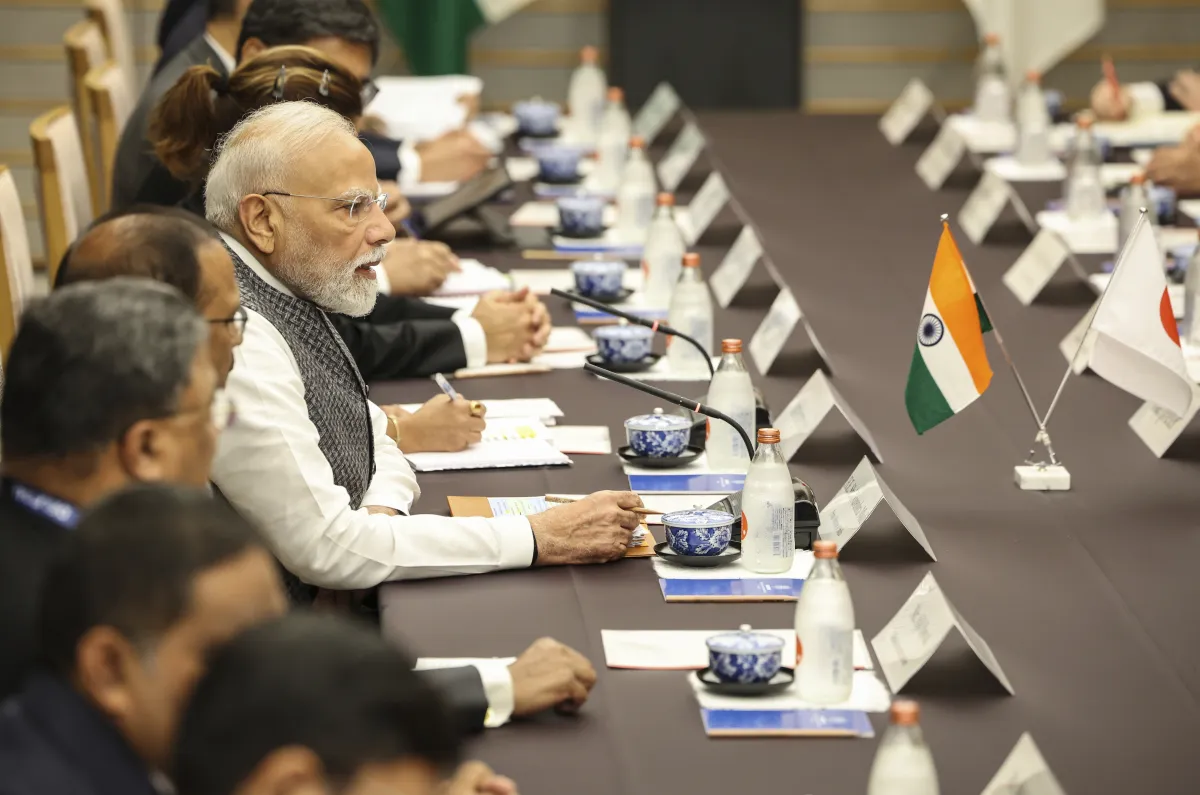
Prime Minister Narendra Modi, who is on a two-day official visit to Japan, said on Friday that it is important for India and China to work together to bring stability to the world economic order as he asserted that New Delhi is ready to advance bilateral ties from a strategic and long-term perspective based on mutual respect, mutual interest and mutual sensitivity.
Speaking in an interview with The Yomiuri Shimbun published during his ongoing visit to Japan, PM Modi asserted that stable, predictable, and amicable bilateral relations between India and China, as two neighbours and the two largest nations on earth, can have a positive impact on regional and global peace and prosperity.
Here's what PM Modi said on improving relations with China
When asked about the importance of improving relations with China at this time, PM Modi said, "At the invitation of President Xi Jinping, I would be travelling to Tianjin from Japan to take part in the SCO Summit. Since my meeting with President Xi in Kazan last year, steady and positive progress has been made in our bilateral ties. Stable, predictable, and amicable bilateral relations between India and China, as two neighbours and the two largest nations on earth, can have a positive impact on regional and global peace and prosperity, he said.
This is also crucial for a multi-polar Asia and a multi-polar world, he added. "Given the current volatility in the world economy, it is also important for India and China, as two major economies, to work together to bring stability to the world economic order," PM Modi said.
He stated that India is ready to advance bilateral relations from a strategic and long-term perspective on the basis of mutual respect, mutual interest and mutual sensitivity, and to enhance strategic communication to address our developmental challenges.
PM Modi highlights 'Vision MAHASAGAR'
On his views on the Japanese government's concept of a free and open Indo-Pacific, PM Modi said there is a strong convergence between Japan’s vision of a free and open Indo-Pacific and India’s own approach encapsulated in our Indo-Pacific vision, in the 'Vision MAHASAGAR' and the Indo-Pacific Oceans' Initiative.
India and Japan are committed to an Indo-Pacific that is peaceful, prosperous, stable and where the territorial integrity and sovereignty of nations are respected, the prime minister said.
"Both our countries have strong and extensive linkages with countries in the Indo-Pacific region, and we both engage with some of them in plurilateral formats to give expression to our shared objectives," he said.
PM Modi says India maintains humanitarian stance on Ukraine conflict
Highlighting his recent conversations with the leaders of Russia and Ukraine, PM Modi said India has maintained a principled and humanitarian stance on the conflict, which is equally appreciated by both President Vladimir Putin and President Volodymyr Zelenskyy.
"In line with this, both the leaders spoke to me to share their perspectives on the developments related to the conflict. I reiterated India’s principled and consistent stand and encouraged dialogue and diplomacy to resolve the conflict. I have already indicated India’s willingness to support meaningful efforts aimed at achieving peaceful resolution of the conflict," he told the Japanese newspaper.
"I believe, by virtue of our good relations with both sides, including key stakeholders, we can strengthen efforts dedicated to the restoration of an early and lasting peace in Ukraine," Modi said.
He also stressed on the importance of the Global South and said the global community has made a commitment to create a more equitable world through achieving Sustainable Development Goals by 2030.
"If we have to live up to this commitment, then the Global South must be given priority. In a highly interconnected world, we have seen the debilitating impact of the pandemic, conflicts and supply chain disruptions on the Global South," the prime minister said.
Also Read: