Bharat bandh today: Who will join nationwide strike and what are key demands of trade unions?
Bharat bandh on February 12: Central trade unions have announced a Bharat Bandh on February 12 against labour reforms and economic policies, with nearly 30 crore workers expected to participate. Key sectors may face disruptions, while essential services will continue.
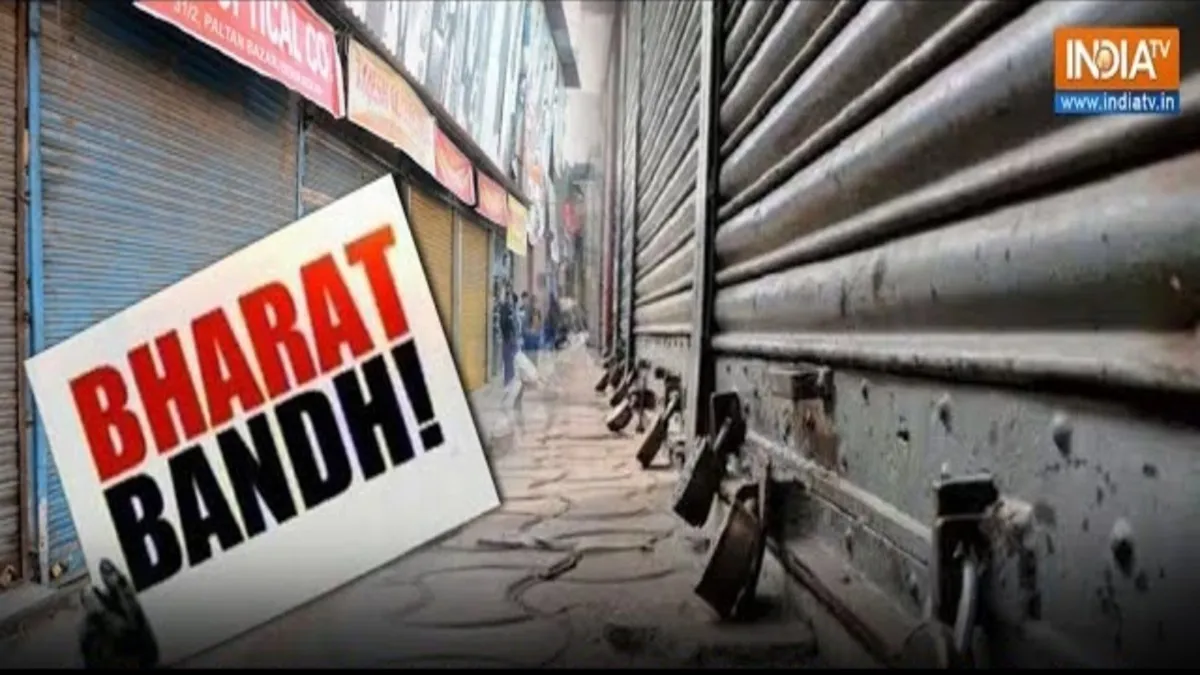
A nationwide strike (Bharat Bandh) has been called by central trade unions on Thursday, February 12. As per details, the strike will begin at midnight on Thursday and continue for the next 24 hours. The bandh has been announced in protest against labour reforms and other economic policies that unions say weaken workers' protections. In view of this, banks, buses, government offices and several industries may face disruptions, particularly in Kerala and Odisha, where unions mobilise in large numbers. Essential services such as hospitals and ambulance operations will remain exempted.
Who will be joining the bandh?
A joint platform of 10 central trade unions confirmed that the call for a nationwide general strike on February 12 stands firm, with not less than 30 crore workers across the country expected to participate. The group had earlier called for a nationwide strike on January 9, 2025, to show their "resistance to anti-worker, anti-farmer and anti-national pro-corporate policies of the central government".
List of unions participating in Bharat Bandh
- Indian National Trade Union Congress (INTUC)
- All India Trade Union Congress (AITUC)
- Hind Mazdoor Sabha (HMC)
- Centre of Indian Trade Unions (CITU)
- All India United Trade Union Centre (AIUTUC)
- Trade Union Co-ordination Centre (TUCC)
- Self-Employed Women's Association (SEWA)
- All India Central Council of Trade Unions (AICCTU)
- Labour Progressive Federation (LPF)
- United Trade Union Congress (UTUC)
All India Trade Union Congress General Secretary Amarjeet Kaur told reporters that this time "not less than 30 crore workers will participate in the strike". She added that during the previous agitation on July 9, 2025, about 25 crore workers had participated.
Why has the nationwide strike been called?
The trade unions are opposing the four labour code bills that replaced 29 labour laws in 2025. They argue that these bills will adversely impact workers' rights, reduce job security and make it far easier for employers to hire and fire employees. Unions have also raised concerns about privatisation, stagnant wages and the lack of social security.
Key demands of the protestors
Among the major demands are the withdrawal of the four labour codes and related rules, the rollback of proposed bills and stronger employment guarantees under rural job schemes. The proposed bills that unions want rolled back include the Draft Seed Bill, the Electricity Amendment Bill and the Sustainable Harnessing and Advancement of Nuclear Energy for Transforming India Act. The unions are also seeking the restoration of MGNREGA and the repeal of the Viksit Bharat - Guarantee for Rozgar and Ajeevika Mission Act of 2025.
Why farmers are supporting the bandh
Farmer bodies, including the Samyukt Kisan Morcha and the All India Kisan Sabha, have extended full support to the nationwide Bandh due to the interim India-US trade deal. In a statement, the SKM described the interim agreement as a "total surrender" of India's agriculture to US MNCs. It warned that opening Indian markets to dairy products, soybean oil, animal feed and other agricultural imports could severely impact domestic farmers.
The union demanded the resignation of Commerce Minister Piyush Goyal and accused him of misleading farmers on the inclusion of dairy products in free trade agreements with the UK, New Zealand and the European Union. The AIKS said that these trade agreements could have long-term consequences for India's agriculture and dairy sectors and added that deals signed by the US and the EU mainly serve their own economic interests.
ALSO READ: