- News
- Lifestyle
- Spirituality
- 108 names of Lord Ganesha with meanings and divine significance
108 names of Lord Ganesha with meanings and divine significance
The 108 names of Lord Ganesha carry deep meanings. Chanting them in puja or meditation invites wisdom, peace, and divine blessings into everyday life.
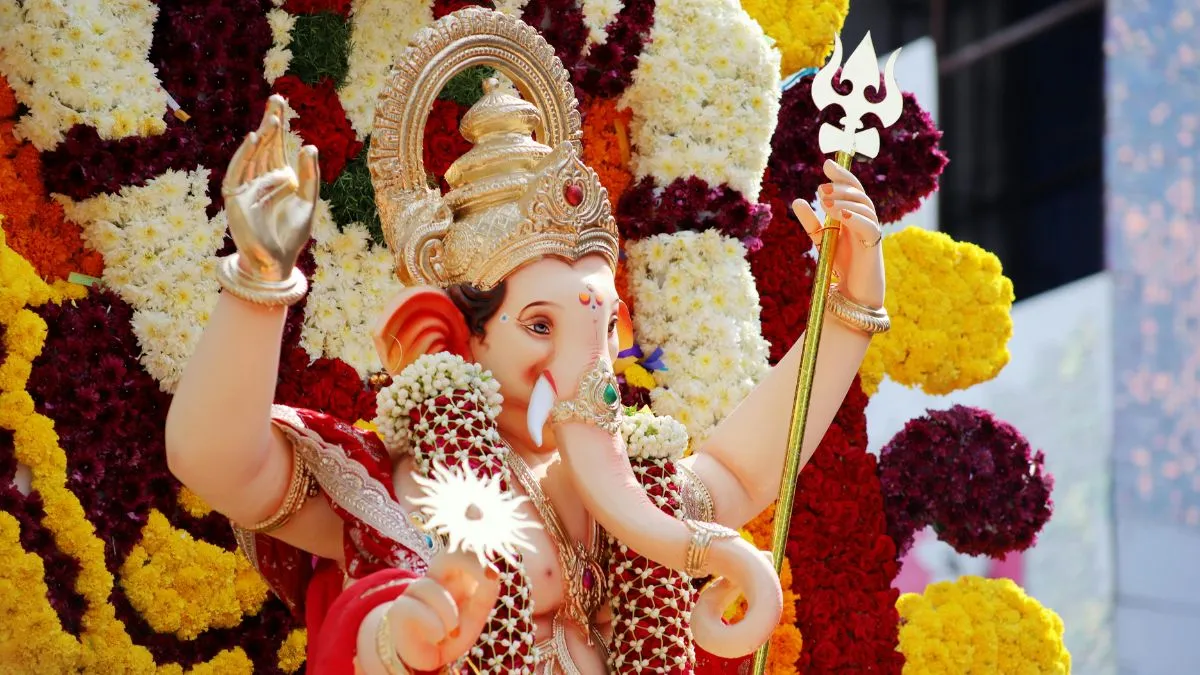
Lord Ganesha, also known as Vighnaharta, is amongst the most adored deities of Hinduism. He is adorated at the beginning of every prayer, ritual, and festival as the one who removes obstacles and bestows wisdom. His numerous names represent various characteristics of his divine form- from his elephant-faced aspects, to qualities of wisdom, strength, and compassion.
Amongst these are the 108 Ganesha names in Sanskrit, which are said to be most auspicious. Each name corresponds to one quality, one story, or one form of symbolism attributed to the deity, and chanting these names while performing puja is said to invoke the blessings of comfort, fame, and peace.
Also read: Ganpati Bappa coming soon captions, status, quotes, and shayari [2025]
Significance of 108 Ganesha names in Hinduism
The number 108 has a spiritual significance in Hinduism. It is linked to cosmic energy, sacred geometry, and the idea of totality. The chanting of all 108 names of Lord Ganesha is believed to harmonise one's mind towards higher consciousness and invoke blessings for every sphere of life.
Also read: Creative Ganesh Chaturthi 2025 drawing ideas for school and festive decoration
Complete list of 108 Ganesha names with meanings
- Akhuratha – one whose chariot is pulled by a mouse
- Alampata – ever-eternal Lord
- Amit – incomparable Lord
- Anantachidrupamayam – infinite and consciousness personified
- Avaneesh – lord of the whole world
- Avighna – remover of obstacles
- Balaganapati – beloved, child form
- Bhalchandra – moon-crested Lord
- Bheema – huge, gigantic
- Bhupati – lord of the gods
- Bhuvanpati – lord of the heavens
- Buddhinath – god of wisdom
- Buddhipriya – knowledge bestower
- Buddhividhata – god of knowledge
- Chaturbhuj – four-armed Lord
- Devadeva – lord of lords
- Devantakanashakarin – destroyer of evils and demons
- Devavrata – one who accepts all penances
- Devendrashika – protector of the gods
- Dharmik – one who gives charity
- Dhoomravarna – smoke-hued Lord
- Durja – invincible Lord
- Dvaimatura – one who has two mothers
- Ekaakshara – he of the single syllable
- Ekadanta – single-tusked Lord
- Ekadrishta – single-focused (sometimes the same as Ekadanta)
- Eshanputra – son of Shiva
- Gadadhara – one who carries the mace
- Gajakarna – elephant-eared Lord
- Gajanana – elephant-faced Lord
- Gajananeti – elephant-headed Lord
- Gajavakra – trunk of an elephant
- Gajavaktra – one with an elephant-like mouth
- Ganadhakshya – leader of the ganas (divine beings)
- Ganadhyakshina – leader of celestial bodies
- Ganapati – lord of the ganas
- Gaurisuta – son of Gauri (Parvati)
- Gunina – master of virtues
- Haridra – golden-coloured Lord
- Heramba – mother’s beloved son
- Kapila – yellowish-brown coloured
- Kaveesha – master of poets
- Kriti – lord of music
- Kripalu – merciful Lord
- Krishapingaksha – yellowish-brown eyed
- Kshamakaram – embodiment of forgiveness
- Kshipra – easy to please
- Lambakarna – large-eared Lord
- Lambodara – large-bellied Lord
- Mahabala – enormously strong Lord
- Mahaganapati – supreme, omnipotent Lord
- Maheshwaram – lord of the universe
- Mangalamurti – embodiment of auspiciousness
- Manomay – winner of hearts
- Mrityuanjaya – conqueror of death
- Mundakarama – abode of happiness
- Muktidaya – giver of liberation
- Musikvahana – one who rides a mouse
- Nadapratithishta – one who loves music
- Namasthetu – destroyer of evils and sins
- Nandana – son of Shiva
- Nideeshwaram – bestower of treasures
- Omkara – embodiment of OM
- Pitambara – clad in yellow
- Pramoda – lord of all abodes
- Prathameshwara – first among gods
- Purush – omnipotent personality
- Rakta – red-coloured body
- Rudrapriya – beloved of Shiva
- Sarvadevatman – acceptor of celestial offerings
- Sarvasiddhanta – giver of skills and wisdom
- Sarvatman – protector of the universe
- Shambhavi – son of Parvati
- Shashivarnam – moon-complexioned
- Shoorpakarna – large-eared Lord
- Shuban – all-auspicious Lord
- Shubhagunakanan – mine of virtues
- Shweta – pure white coloured
- Siddhidhata – bestower of success
- Siddhipriya – giver of accomplishments
- Siddhivinayaka – provider of success
- Skandapurvaja – elder brother of Skanda (Kartikeya)
- Sumukha – auspicious-faced
- Sureshwaram – lord of lords
- Swaroop – lover of beauty
- Tarun – ageless
- Uddanda – nemesis of evildoers
- Umaputra – son of Uma (Parvati)
- Vakratunda – curved trunk Lord
- Varaganapati – giver of boons
- Varaprada – granter of wishes
- Varadavinayaka – bestower of success
- Veeraganapati – heroic Lord
- Vidyavaridhi – storehouse of wisdom
- Vighnahara – remover of obstacles
- Vignaharta – destroyer of obstacles
- Vighnaraja – king of obstacles
- Vighnarajendra – lord of obstacles
- Vighnavinashanaya – destroyer of all obstacles
- Vigneshwara – lord of all obstacles
- Vikat – huge and formidable
- Vinayaka – supreme leader
- Vishwamukha – master of the universe
- Vishwaraja – king of the world
- Yagnakaya – acceptor of sacred offerings
- Yashaskaram – giver of fame
- Yashvasin – beloved and ever famous
- Yogadhipa – lord of yoga and meditation
Also read: Ganesh Chaturthi 2025: Date, sthapana muhurat and visarjan details
How to chant the 108 names of Lord Ganesha during puja
During Ganesh Chaturthi, daily pujas, or special occasions like marriage ceremonies, devotees chant or recite the 108 names of Ganesha. Some offer a flower with each name, a ritual known as pushpanjali, symbolising surrender and devotion. Others meditate on the meanings to connect with the qualities of wisdom, humility, and strength in their own lives.
The 108 names of Lord Ganesha are not just words, but gateways to understanding his multifaceted nature. From being the remover of obstacles to the embodiment of wisdom and compassion, each name teaches a value that devotees can embrace. Chanting these names with faith is believed to bring clarity, success, and harmony. Above all, they remind us that Ganesha is both a guide and a guardian, walking with us through every challenge of life.