Explainer: Bangladesh on the brink as Tarique Rahman's govt trapped in double oath standoff
Bangladesh is witnessing a tense political crisis as Tarique Rahman prepares to form the new government. The BNP's refusal to take the second oath required under the July Charter has triggered a constitutional deadlock.
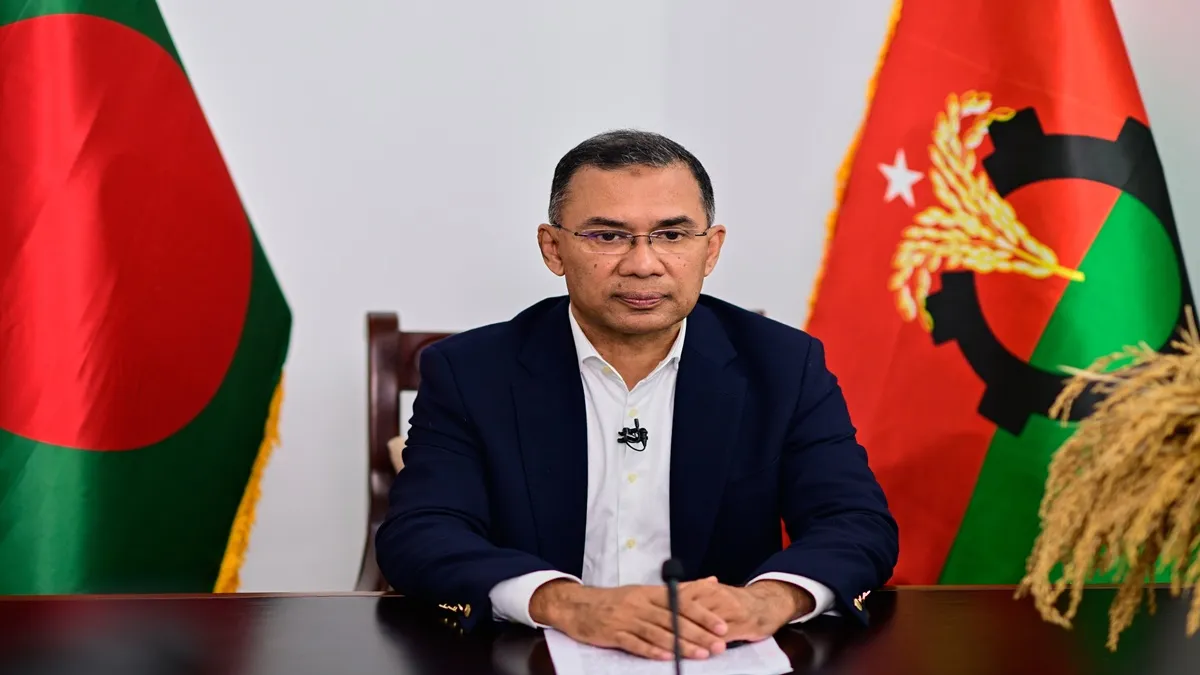
Bangladesh stands at a decisive moment on Tuesday as Tarique Rahman prepares to take oath as the country's new Prime Minister after the sweeping victory of the Bangladesh Nationalist Party (BNP) in the February 12 elections. What should have been a smooth transition of power has now spiralled into a constitutional and political crisis that many fear could push the nation towards prolonged turmoil. The deadlock stems from what is being widely described as a double oath crisis -- a standoff that threatens to overshadow the historic mandate and derail the formation of the new government.
What is the July Charter?
Drafted after the student-led uprising of July 2024 that toppled Prime Minister Sheikh Hasina, the July Charter lays out 84 key reform measures aimed at reshaping Bangladesh's political structure. Its core goal is to curb excessive executive power and rebuild state institutions to prevent any return to authoritarian governance. The reforms are to be carried out by a Constitutional Reform Council within 270 working days. This document proposes converting the newly elected Parliament into a Constituent Assembly with the authority to rewrite major sections of the Constitution. The referendum results created a binding expectation that elected lawmakers would formally endorse the Charter before assuming their duties.
The dual oath requirement
The new constitutional framework mandates two oaths. The first is the traditional oath acknowledging the authority of the state and assuming legislative duties. The second oath is an explicit pledge to uphold and implement the July Charter. Only after taking this second oath do the provisions of the Charter become legally active, enabling Parliament to function as a Constituent Assembly. This dual oath requirement has now become the central trigger of the current turmoil.
Why the BNP is refusing the second oath
Despite a landslide victory in the general elections, the BNP leadership has refused to take the second oath. Party officials argue that the wording and implications of the July Charter grant excessive and unchecked power to the Constituent Assembly, which weakens the executive branch even before the government is formed. They also claim that the timing of the second oath could complicate early governance priorities. The BNP has insisted that the first oath is constitutionally sufficient to form the government and that any further endorsement of the Charter should occur only after additional legal scrutiny. Their refusal has put the entire transition process on hold.
Coalition partners turn up the heat
The BNP's coalition partners, Jamaat-e-Islami and the Nationalist Citizen Party (NCP), have reacted sharply. Both parties have accused the BNP of betraying the referendum mandate and backtracking on commitments made during campaign negotiations. Jamaat-e-Islami and the NCP have threatened to boycott the oath ceremony entirely. Their leaders have stated that if the BNP does not take the second oath, they will launch street protests, political blockades and a nationwide agitation campaign.
Growing fears of political unrest
The ongoing tension has raised fears of a broader political confrontation. Analysts warn that any boycott or mass mobilisation could bring Bangladesh's fragile political environment to a boiling point. The possibility of opposing supporters clashing on the streets is adding to public anxiety. Many believe that unless a quick political compromise is reached, the new government might begin its tenure under intense instability.
What lies ahead for Bangladesh
With the oath ceremony today, Bangladesh stands at an uncertain crossroads. Tarique Rahman is preparing to assume leadership, but the dual oath standoff looms large and unresolved. Experts believe the coming days will determine whether the BNP can negotiate a workable settlement with its coalition allies or whether the country is heading toward a full-blown constitutional crisis. For now, all eyes remain on Dhaka as the nation watches its political future hang in the balance.
ALSO READ: