Ferrari Luce: First EV with futuristic OLED cockpit, Jony Ive design influence and 5 seats
Ferrari has introduced its first-ever EV called Luce, which has been developed with inputs from former Apple design chief Jony Ive and designer Marc Newson, while Samsung supplied advanced OLED display technology for the futuristic cockpit setup.
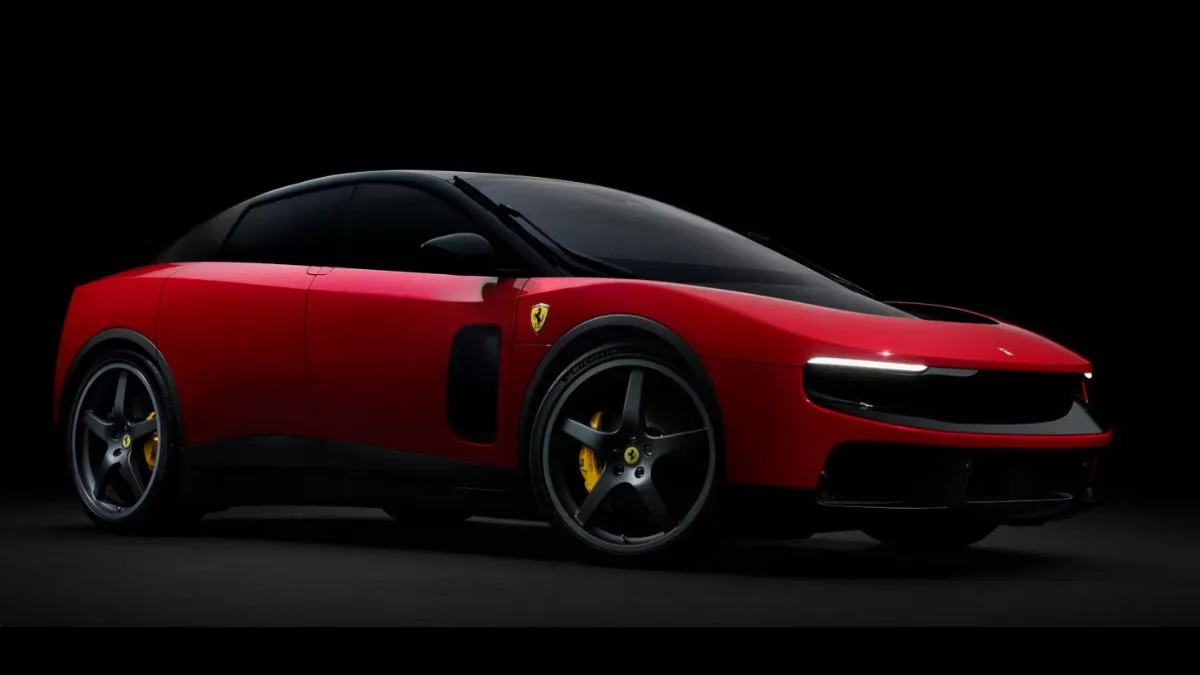
Ferrari just made history with the launch of the Luce, its very first all-electric supercar. They showed it off to the world at their big premiere event in Italy on May 25. But Ferrari did not just flip the switch to electric; rather, they made some bold design moves too. For the first time, you will find 5 seats inside a Ferrari, breaking away from its classic two-seater setup.
The Luce is not just an EV with a fancy badge. It is a real blend of Ferrari’s signature luxury and performance, packed together with futuristic looks and some serious tech. It is all about keeping that raw, analogue Ferrari driving experience, just with a lot of innovation under the skin.
Jony Ive and Marc Newson Helped Design the Car
Jony Ive, the guy who led design at Apple, and Marc Newson, another big name in industrial design, worked together on the Luce’s look. Their Apple-inspired minimalism is all over this car, but Ferrari’s DNA is still front and center. The result is that you will get a car that feels like a bridge between classic, emotional driving and the kind of smart, digital interface that defines modern gadgets.
Samsung supplied advanced OLED displays for Ferrari Luce
When you step inside, you will see what that partnership really means. Samsung provided all the OLED displays; nobody else got the job. There are four in total:
- A huge 12.9-inch driver’s cluster
- A 12-inch lower display
- A 10.1-inch central screen
- A 6.3-inch display for passengers in the back.
The way these screens are layered across the dashboard is something you have not seen in any other car.
Ferrari Luce gets futuristic layered dashboard
These are not just the screens being installed in line. The instrument cluster uses a layered design:
There are two displays, one on top of the other, and in between them, mechanical hands physically move to show you info.
So, you get live vehicle data and alerts on the top layer, while graphics and backgrounds stay on the lower one. It’s not just for show; it blends that tactile, analogue feeling with cutting-edge visuals.
Samsung’s HIAA tech, which they first used for tiny holes in phone screens, gets pushed to a whole new level here—way bigger, way more complex.
How the dashboard works:
- Lower OLED layer shows graphics and gauge backgrounds
- Upper OLED layer displays alerts and live vehicle data
- Mechanical hands rotate between both layers
- Creates an analogue-inspired digital experience
Everything about the Luce’s cockpit is built to keep the driver emotionally connected, even as the tech takes a big leap forward.
Ferrari focuses on luxury and technology together
Under the skin, Ferrari’s approach is clear – they want the Luce EV to stay true to their roots, even as it carries Ferrari into an electric future.
Ernesto Lasalandra, Ferrari’s R&D chief, says it straight: the company set out to merge their legacy with next-gen technology, crafting a new kind of driving experience that’s still undeniably Ferrari.
Lastly, as per the information shared, Luce EV is not just another electric car on the road. Rather, it is a huge step, marking Ferrari’s commitment to electrification while keeping the soul that’s made the brand legendary. As the auto industry heads fast toward electric everything, Ferrari’s making sure it doesn’t leave its past behind.