
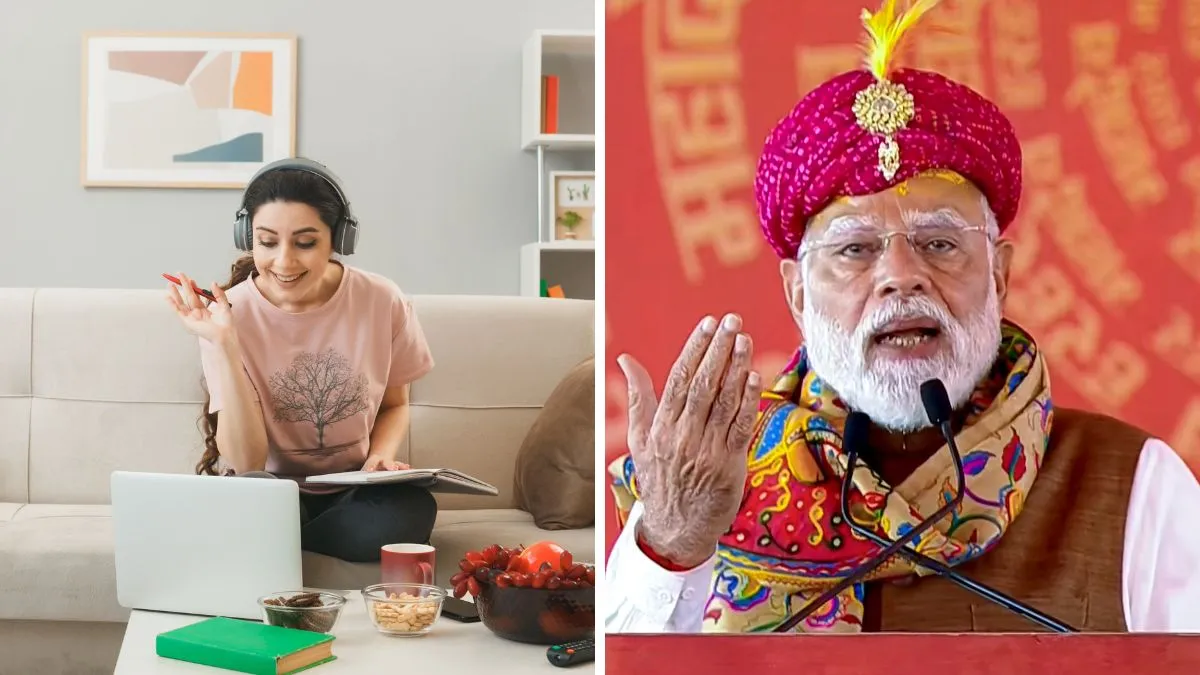
Prime Minister Narendra Modi has triggered widespread online discussion after urging Indians to use fuel carefully and choose work from home (WFH) “whenever possible” amid the ongoing Gulf crisis and rising concerns around energy security.
The statement, positioned as part of broader austerity measures, quickly moved beyond policy conversations and turned into a full-scale social media discussion around privilege, urban work culture, employee rights and whether India is truly prepared for a large-scale return to remote work.
Internet reacts to PM Modi's work from home appeal
For many users online, the appeal reopened conversations that have quietly existed since companies began pushing employees back to offices post-pandemic. While some praised the suggestion as practical and environmentally conscious, others pointed out that working from home remains a privilege largely limited to white-collar professionals in urban sectors.
Social media users argued that millions of Indians working in manufacturing, retail, healthcare, hospitality, transport and informal labour simply do not have the option to work remotely. Many also questioned whether employers, especially private companies that recently enforced strict return-to-office policies, would actually allow employees to shift back to hybrid or remote work arrangements. One X user wrote, "PM Narendra Modi has urged people to work from home to save fuel amid rising prices. If employees can deliver full productivity remotely, then what is the need for mandatory WFO and unnecessary daily travel? WFH is practical and efficient."
Another X user supported this suggestion and posted, "Work From Home is the best model. It saves a lot of resources like office space rent, petrol usage, expenses, plus zero office politics and harassment and boosts creativity. Time to follow this advice and make Bharat proud. It will force nation into self reliance like never before."
"Work from home is the best way to save fuel and traffic nonsense and office politics. No drama. We get extra time to spend with family buy cutting travel time," read another post on X (formerly Twitter). A few users commented on the flip side of the issue, and one X user wrote, "WFM reduces productivity and is exploited heavily. No way should We INDIANS work from Home."
"Work from home helps flexibility, but it's not one-size-fits-all, Best approach is hybrid balance productivity collaboration, and quality of life," suggested another netizen.

The internet is divided on WFH again
One side viewed the suggestion as a sensible temporary solution that could:
- Reduce fuel consumption
- Ease traffic congestion
- Lower pollution levels
- Improve work-life balance for employees
Others, however, said the conversation highlighted deep workplace inequalities.
Several users pointed out that during the pandemic, many employees reported burnout, blurred work-life boundaries and longer working hours while working remotely. Some argued that companies benefited from WFH financially while employees absorbed hidden costs such as electricity, internet and home office setups.
The “return-to-office” culture enters the debate
The Prime Minister’s remarks also revived criticism of recent return-to-office mandates introduced by major corporations globally and in India. Over the past two years, many companies have increasingly associated office attendance with productivity, collaboration and discipline. Online users are now questioning whether those arguments weaken during periods of fuel uncertainty and rising commuting costs.
Some users even described the moment as “WFH discourse returning full circle”.