
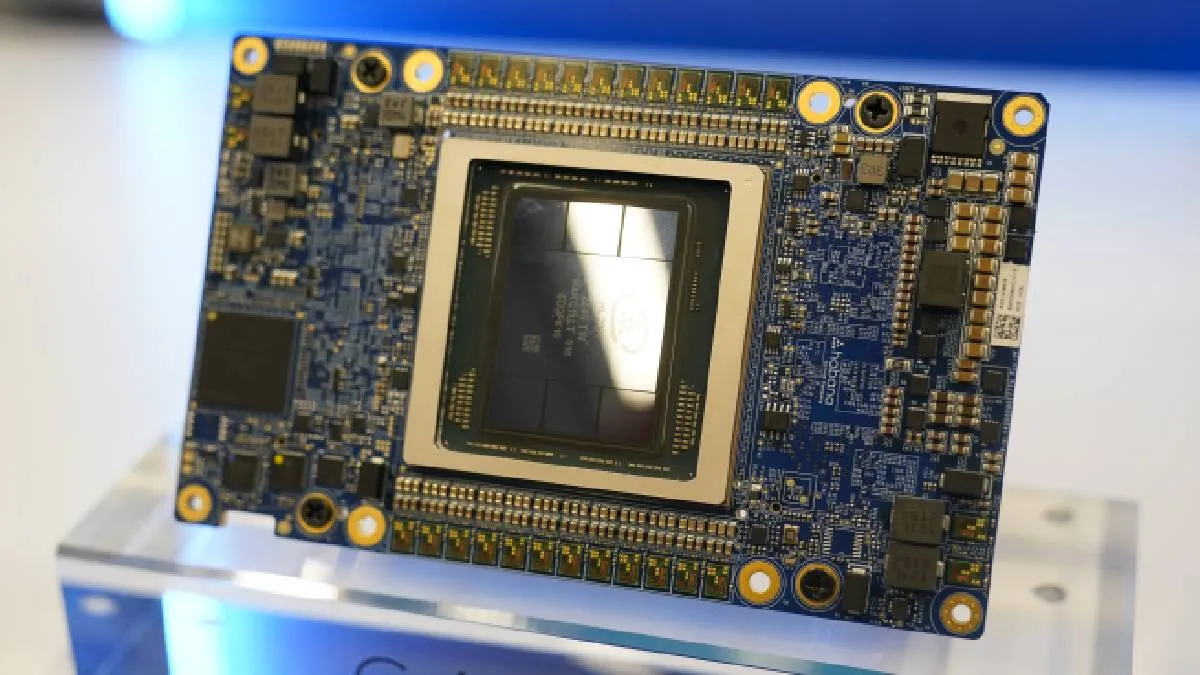
The government is aiming to manufacture high-tech 3-nanometre (3nm) chips, used in modern smartphones and computers, by 2032, Union Minister Ashwini Vaishnaw said on Tuesday.
Focus on six key chip categories
The minister said the government will focus on six categories of chips under the second phase of the Design-Linked Incentive (DLI) Scheme. These include compute, radio frequency (RF), networking, power, sensor, and memory chips. The initiative is designed to enable companies in India to gain major control over developing 70–75 per cent of technology products.
Manufacturing and design roadmap
“The target by 2032 is to reach 3-nanometre chip manufacturing and design. Design, of course, we are doing even today. But manufacturing, we should reach 3 nanometre,” Vaishnaw said after meeting 24 chip design firms selected under the Design-Linked Incentive Scheme.
Building a comprehensive semiconductor ecosystem
Vaishnaw said the government wants to focus on these six major systems to develop India’s semiconductor design ecosystem in a comprehensive manner.
“Compute, RF, networking, power, sensor, and memory—we will encourage academia and industry to come up with new ideas, new thoughts, and new solutions in these six major categories,” he said.
Targeting 70–75 per cent of domestic chip requirements
According to the minister, by 2029 India is expected to build strong manufacturing and design capabilities for chips required in nearly 70–75 per cent of all applications in the country. He added that every sector will require a combination or permutation of these six types of chips.
Special incentives
In a related development, the Uttar Pradesh Cabinet has approved a major proposal under the Semiconductor Policy 2024 to attract large-scale investments. The state government will offer special, case-by-case incentives for semiconductor projects involving investments of Rs 3,000 crore or more, aiming to strengthen India’s overall semiconductor ecosystem.
