
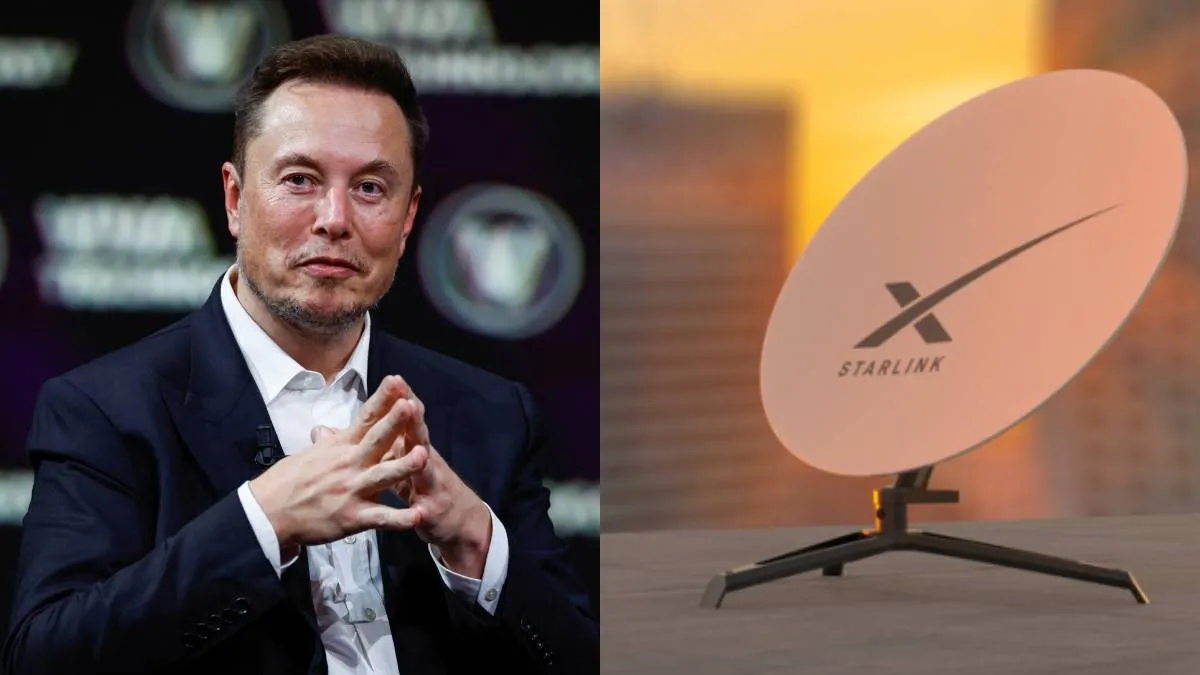
Elon Musk's Starlink has officially been granted permission by India's telecom department to offer satellite internet services in the country. This is an important step that brings them closer to starting their commercial operations. Starlink is now the third company to receive this approval, following Eutelsat OneWeb and Jio Satellite Communications. Another applicant, Amazon's Kuiper, is still waiting for its approval. Sources from the Department of Telecommunications confirmed on Friday that Starlink has received the license, and the company can expect to receive trial spectrum within about 15 to 20 days after they apply. Before they can start providing services, Starlink must meet certain security requirements, which include allowing authorities access for legal monitoring.
Wait for a bit longer
Starlink has recently received a license from the Department of Telecommunications about a month after it was given a letter of intent. However, the companies that got the license will still need to wait for a bit longer to start their satellite communication services. This is because the Telecom Regulatory Authority of India (TRAI) has just sent a report to the government regarding the pricing and rules for using radio frequencies.
Once the government allocates the necessary radio wave frequencies, these companies will finally be able to launch their services.
Before any commercial technology can launch, it's usually necessary to conduct preliminary tests. These early trials help check and confirm that everything meets safety standards and regulations.
As for Starlink, the final approval from the Indian space regulator, In-SPACe, has not been confirmed yet.
Argument between Elon Musk and President Donald Trump
The license was granted just hours after a major argument between Elon Musk and President Donald Trump. Their disagreement started when Musk, who had recently stepped down from his position overseeing government efficiency, publicly criticised Trump’s large tax cuts and spending plan.
The situation escalated into a heated exchange on Thursday after Trump took a shot at Musk while in the Oval Office. In response, Musk claimed that Trump would not have succeeded without his support, which led Trump to cancel some US government contracts with Musk's companies.
What is Starlink
Starlink is an internet service created by SpaceX, a company founded by Elon Musk in 2002. It aims to provide fast and reliable internet access to people all over the world using satellites.
What makes Starlink different from traditional satellite internet is that it uses a large number of satellites that orbit closer to Earth, about 550 kilometers above the surface. This setup helps to deliver internet that is faster and with less delay.
Currently, there are around 7,000 satellites in orbit, but this number is expected to grow to over 40,000 in the future. With this network of satellites, Starlink can support activities like streaming movies, playing online games, and making video calls, making it a useful service for many people.
Partnership with Jio, Airtel
Recently, it formed partnerships with two major Indian telecom companies, Reliance Jio and Bharti Airtel, which together have a huge share of the country’s telecom market. This will help bring Starlink's internet services to India.
Government norms
Last month, the government introduced strict security measures requiring the legal interception of satellite communication services. Companies are now prohibited from linking user connections to any terminals or facilities outside the country's borders, as well as processing data abroad.
These enhanced security regulations also require service providers to indigenise at least 20 percent of their satellite network’s ground segment within a set timeframe after establishing operations in the country. Satellite communication service license holders will need to obtain security clearances for specific gateway and hub locations in India, ensuring compliance with monitoring and interception standards.
Additionally, India's regulations stipulate that satcom companies must showcase their system capabilities concerning security, including monitoring, to the Department of Telecom (DoT) or its authorised representatives before commencing operations in India.
TRAI recommendations
It's important to note that last month, the telecom regulator TRAI recommended that satellite communication companies like Starlink pay 4 percent of their adjusted gross revenue (AGR) as spectrum charges to the government. This rate is higher than what these companies had been advocating for.
For operators providing satellite-based broadband internet services in urban areas, this translates to an extra Rs 500 per subscriber annually, as suggested by TRAI. However, no additional fee would apply for services offered in rural areas.
The Cellular Operators Association of India (COAI), which includes members like Reliance Jio and Airtel, recently voiced concerns to the telecom department regarding TRAI's recommendations on satellite communication spectrum.
COAI argued that "incorrect assumptions" have resulted in disproportionately low spectrum charges for satellite services compared to terrestrial networks. TRAI, however, firmly rejected these claims and has no plans to revisit its recommendations at this time.
ALSO READ: Huawei launches new smart band in India starting at Rs 6,599: Here's what it has to offer
Inputs from PTI
