
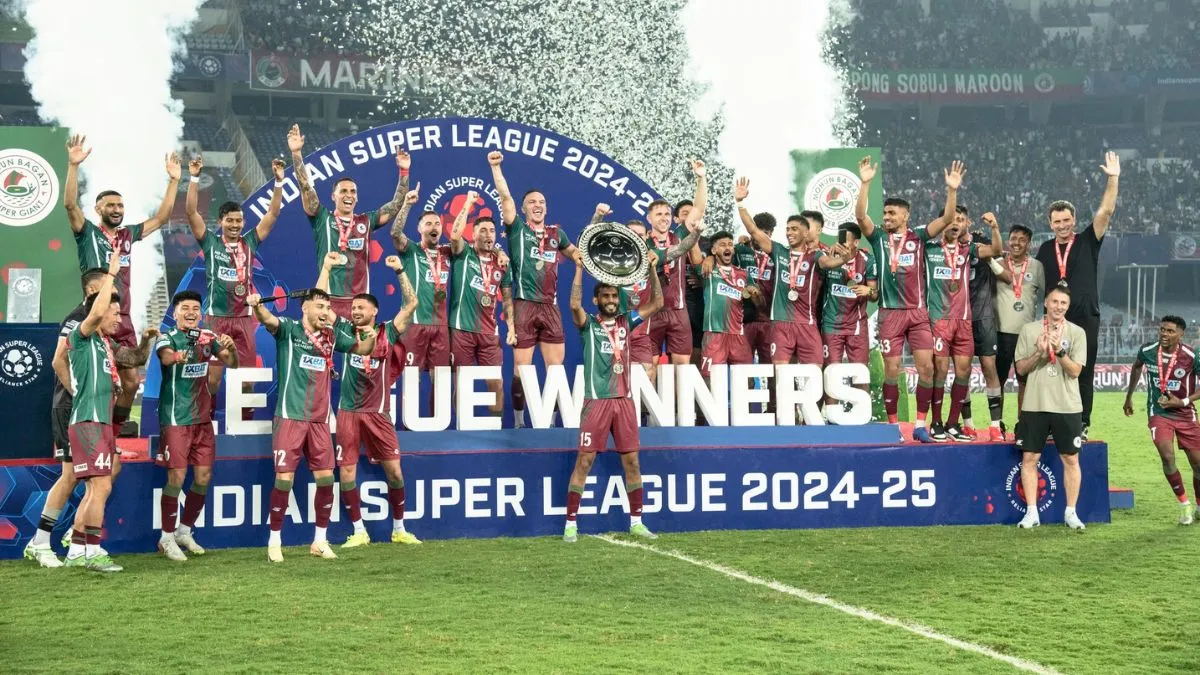
The future of the Indian Super League (ISL) hangs in the balance after Football Sports Development Limited (FSDL), the league's organisers, announced that the 2025–26 season has been put on hold due to ongoing uncertainties surrounding the renewal of the Master Rights Agreement (MRA) between FSDL and the All India Football Federation (AIFF). The MRA, which was signed in 2010, is set to expire in December 2025, and its renewal has become a pivotal issue for Indian football’s future.
Under the current MRA, FSDL holds exclusive commercial and operational rights to run the ISL for a 15-year period. However, FSDL has now proposed a significant restructuring of the league’s governance. The new model would involve the creation of a holding company jointly owned by ISL clubs (60%), FSDL (26%), and the AIFF (14%). This proposal marks a major shift from the current framework, where FSDL retains central control over ISL operations.
The AIFF, which has faced significant criticism over its handling of the MRA negotiations, failed to finalise a new agreement by April 2025. Instead, the Federation formed an eight-member task force to assess the situation, a move that has drawn ire from several key stakeholders, including former India captain Bhaichung Bhutia.
Several clubs postponed pre-season, pulled out of Durand Cup
With the ISL usually running from September to April, FSDL’s communication to clubs emphasised the difficulty of planning the upcoming season without clarity on the MRA's renewal. As a result, several ISL clubs, including FC Goa, Bengaluru FC, Chennaiyin FC, Odisha FC, Kerala Blasters, Mumbai City FC, and Hyderabad FC, have already decided to postpone their pre-season preparations.
These clubs have also withdrawn from the 2025 Durand Cup, citing concerns over potential financial losses and complications with player and staff contracts if the season is delayed or cancelled.
The ISL, which began in 2014, has grown into India’s premier football competition, earning official recognition as the country's top-tier league by FIFA and the AFC in 2019. However, with the future of the MRA still unresolved, both the AIFF and FSDL face significant challenges in ensuring the smooth continuation of the league
