
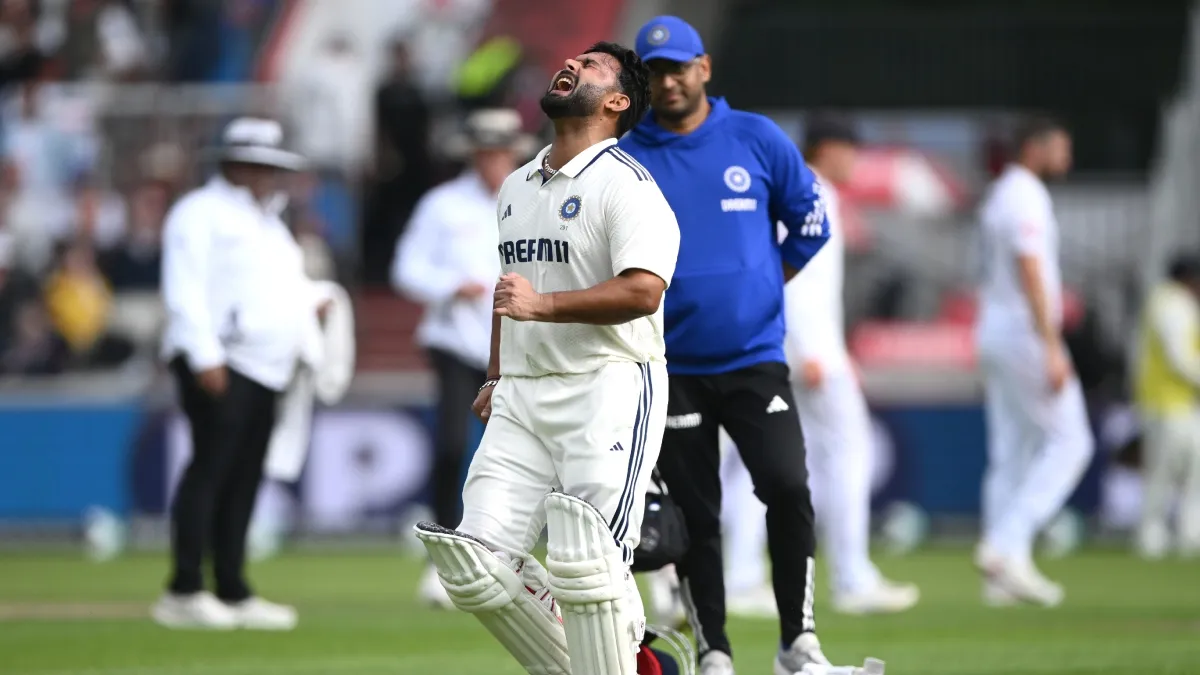
The Board of Control for Cricket in India (BCCI) has implemented a few new rules in domestic cricket. Following Rishabh Pant's injury in the Anderson-Tendulkar trophy, the Indian Board has implemented a "serious injury replacement substitute" rule in multi-day domestic cricket tournaments, starting from the Duleep Trophy.
The Board has also made a change in the short-run rule across formats. It also adopted the ICC rule of phasing out one ball in its premier 50-over domestic competition, the Vijay Hazare Trophy. Check the new rules implemented.
Player replacement rule introduced
The Indian Board has introduced three new rules in its domestic cricket. One rule allows like-for-like player replacement in case of an injured player in multi-day tournaments. The player replacing the injured player can be any of the non-playing members of the squad and should be like-for-like. The replacement would need to be approved by the match referees after teams produce medical reports that highlight the seriousness of the injury.
Moreover, the injured player would be allowed to be replaced if the player has been injured during the game and only if the injury is an external one and not an internal one.
Short-run rule to no longer benefit batting team
Meanwhile, the Indian Board has also introduced a new rule to curb the unfair advantage batters used to take at times. Batters, at times, take short runs in T20 cricket to ensure the more recognised batter keeps the strike. Previously, the fielding team could get five penalty runs if the batters took a short run, and there was also a possibility of hearing before the match referee.
Now, the fielding captain will decide which batter will take the strike if the batters have taken a short run. "A deliberate short run is an attempt for batters to appear to run more than one run, while at least one batter deliberately does not make good their ground at one end. Batters may choose to abort a run, provided the umpire believes that there was no intention by the batter concerned to deceive the umpires or to score the run in which they didn't make their ground," the new ruling says, as quoted by Cricbuzz. This rule has been implemented across the three formats in Indian domestic cricket.
BCCI implements ICC's ball phase-out rule
Meanwhile, the Indian Board has implemented ICC's rule of phasing out a ball in ODI cricket. As per the ICC rule, only one ball will be used after 34 overs and balls from either end won't be used after this mark.
The Indian Board has implemented this rule in the Vijay Hazare Trophy. "Each fielding team shall have two new balls for its innings to be used in alternate overs, i.e. one from each end for overs 1 to 34. At the end of over 34, the fielding team will choose one of the two balls from the innings to be used for all the remaining overs of the innings. The other ball will be added to the stock of replacement balls for the innings," the rule says
