
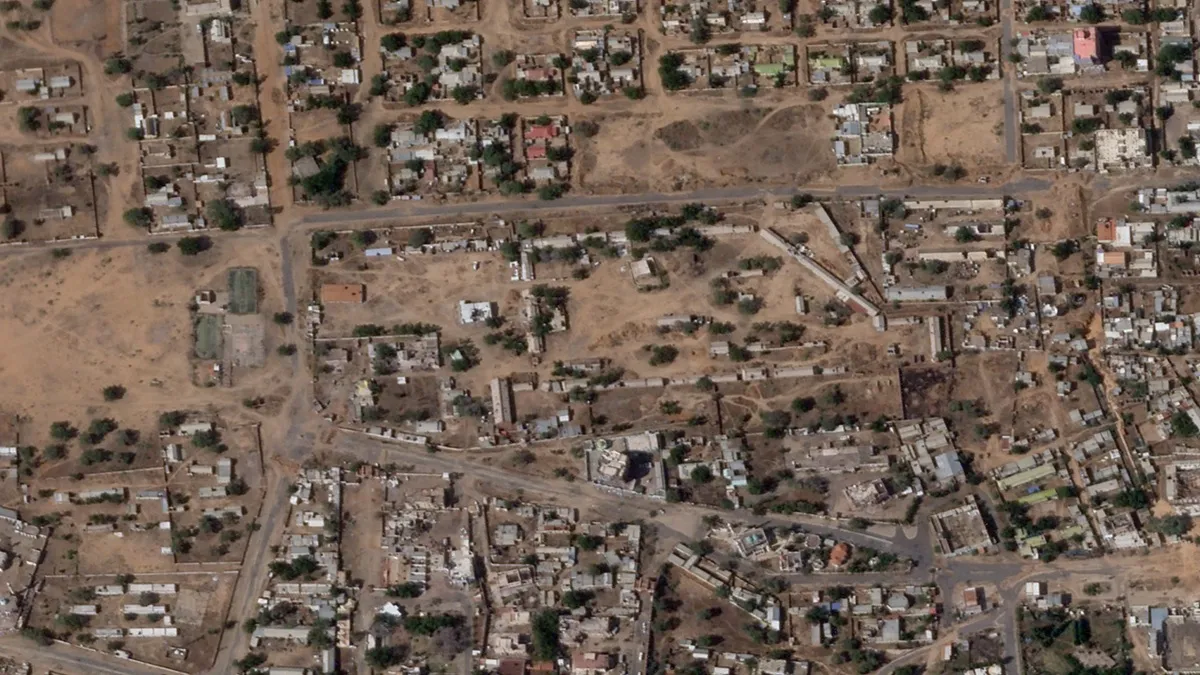
New satellite images have revealed chilling evidence of mass killings in El-Fasher, Sudan, following its capture by the paramilitary Rapid Support Forces (RSF). The images, analysed by Yale University’s Humanitarian Research Lab (HRL), show visible pools of blood and piles of bodies, underscoring the scale of the massacre that has shaken the war-torn region of Darfur.
El-Fasher falls, Sudan divided
On Sunday (October 26), the RSF seized control of El-Fasher, the Sudanese military’s last major stronghold in western Darfur. The city’s fall effectively split Sudan into two zones of control, deepening the humanitarian crisis and fueling fears of another genocide reminiscent of the atrocities committed in Darfur between 2003 and 2005, which claimed around 300,000 lives from non-Arab communities such as the Masalit, Fur, and Zaghawa.
Evidence of systematic killings
HRL’s satellite analysis identified at least six to seven areas across El-Fasher marked by disturbing signs- body-sized objects and dark-red ground discoloration consistent with blood. The analysis suggested the RSF positioned their vehicles in tactical formations suitable for house-to-house searches in the Daraja Oula neighborhood, where civilians had sought refuge. The report noted: “Imagery shows objects consistent with human bodies near RSF vehicles. Several reddish areas with body-sized objects were found, aligning with reports of ongoing executions.”
Bodies found along city perimeter and hospital
Additional findings showed piles of human-sized objects along the city’s outskirts, suggesting that many victims were shot while trying to flee. HRL’s follow-up report also identified heaps of bodies at a hospital in El-Fasher, implying that one of the massacres occurred inside or near a medical facility- an act that violates international humanitarian law.
Survivor accounts reveal horror
Eyewitness testimonies collected by Reuters paint a harrowing picture of life and death in the city. Ikram Abdelhameed, who fled El-Fasher with her children and grandson, recounted that RSF fighters targeted men among fleeing civilians. “We were running and they were chasing us, firing missiles ahead and behind us,” she said. After being stopped at an RSF checkpoint, she described how men were separated from women and summarily executed. “They shot them in front of us, in the street,” she recalled. The surviving women were told to move on, but their male relatives never reappeared.
Pattern of atrocities across Darfur
The El-Fasher massacre adds to a growing list of atrocities committed by the RSF since Sudan’s civil war erupted in 2023. The group and its allies have been implicated in the deaths of over 17,000 people across Darfur, including up to 15,000 killed in El-Geneina, according to the United Nations. Besides mass killings, the RSF has been widely accused of systematic sexual violence, including rape, forced marriage, and sexual slavery- aimed at terrorising civilian populations.
Renewed calls for international action
Human rights observers have warned that the scale and nature of the violence in El-Fasher point to ethnic cleansing and possible genocide. As the RSF tightens control over western Sudan, calls for international investigation and intervention are intensifying to prevent further massacres in a region already scarred by decades of bloodshed.
