
Prime Minister Narendra Modi received a warm and enthusiastic welcome from the Indian diaspora upon his arrival at Binhai International Airport in Tianjin, China, on Saturday. The Prime Minister's visit to China marks his first in seven years and comes ahead of the Shanghai Cooperation Organisation (SCO) Summit, which will take place from Sunday, August 31.
A welcoming reception by Indian diaspora
As PM Modi stepped off his plane, he was greeted by a host of senior Indian and Chinese officials. Members of the Indian diaspora, present in large numbers, cheered the Prime Minister with chants of "Bharat Mata Ki Jai" and "Vande Mataram," expressing admiration and solidarity. This reception underscored the deep ties between the two countries' peoples.
Cultural exchange with Chinese artists
In a remarkable gesture of cultural diplomacy, PM Modi later attended a performance at his hotel, where Chinese artists performed Indian classical music using traditional instruments like the sitar, santoor, and tabla. These artists, who have spent years learning Indian classical music and dance, showcased the enduring cultural connections between India and China, symbolising the harmonious relationship that the two nations are working towards.
Key engagements at SCO Summit
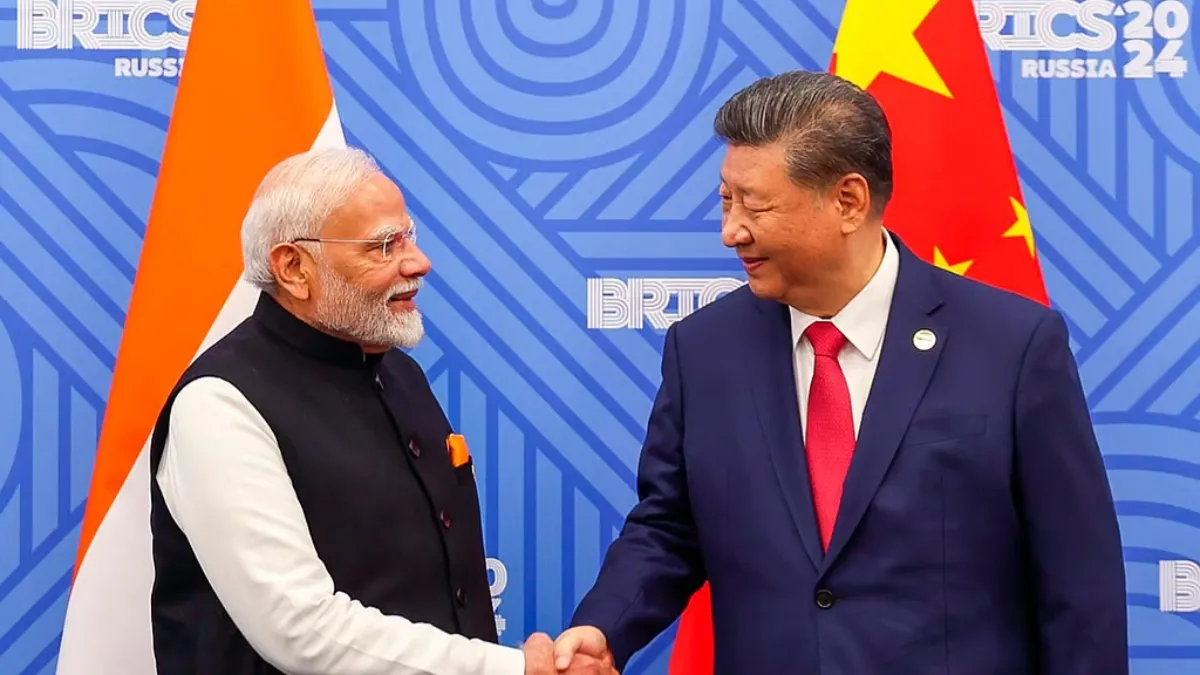
The SCO Summit, which will be held on Sunday, August 31, is a significant diplomatic event for India, with PM Modi set to hold crucial bilateral talks with Chinese President Xi Jinping. The two leaders are expected to discuss a wide range of issues, including economic cooperation, border issues, and regional security concerns. PM Modi will also meet Russian President Vladimir Putin during the summit to discuss the implications of global trade dynamics, including US tariffs, Russia’s ongoing conflict with Ukraine, and the situation in Gaza.
Strengthening India-China bilateral ties
The visit comes at a time when India and China are working towards stabilising their bilateral relationship, which has witnessed tensions in recent years. After the Galwan clash in 2020 and a prolonged military standoff in Eastern Ladakh, both nations have taken significant steps to smooth over their differences. These efforts include resuming direct flights between the two countries and restoring trade through key mountain passes such as Lipulekh in Uttarakhand, Shipki La in Himachal Pradesh, and Nathu La in Sikkim.
Bilateral talks focused on trade and border issues
PM Modi's meeting with President Xi Jinping will focus on maintaining momentum in India-China ties, which have improved since the tensions of 2020. In an interview in Japan ahead of his visit, PM Modi stated that India-China relations are critical not only for the two nations but also for regional peace and prosperity. He emphasised that stable and predictable relations between the world’s two largest nations would positively impact Asia and the broader world.
Progress on boundary dispute resolution
The ongoing boundary dispute between India and China is also expected to be a key topic of discussion. Following the recent visit of Chinese Foreign Minister Wang Yi to New Delhi, both countries have agreed to explore avenues for a peaceful settlement of the border issue. An expert group will be set up to expedite the boundary delimitation process, marking a significant step towards resolving one of the longest-standing disputes in the region.
PM Modi's vision for a multi-polar asia
During his remarks, PM Modi reiterated the importance of India-China relations for a multi-polar world. He stated, "Stable, predictable, and amicable bilateral relations between India and China, the two largest nations on Earth, can have a positive impact on regional and global peace and prosperity... This is also crucial for a multi-polar Asia and world."
Anticipation of key discussions with Russian President Putin
Apart from his engagements with President Xi, PM Modi is also scheduled to meet Russian President Vladimir Putin. Discussions between the two leaders are expected to focus on a range of issues, including the implications of the US tariffs on global trade, Russia’s ongoing conflict with Ukraine, and other critical international matters.
