
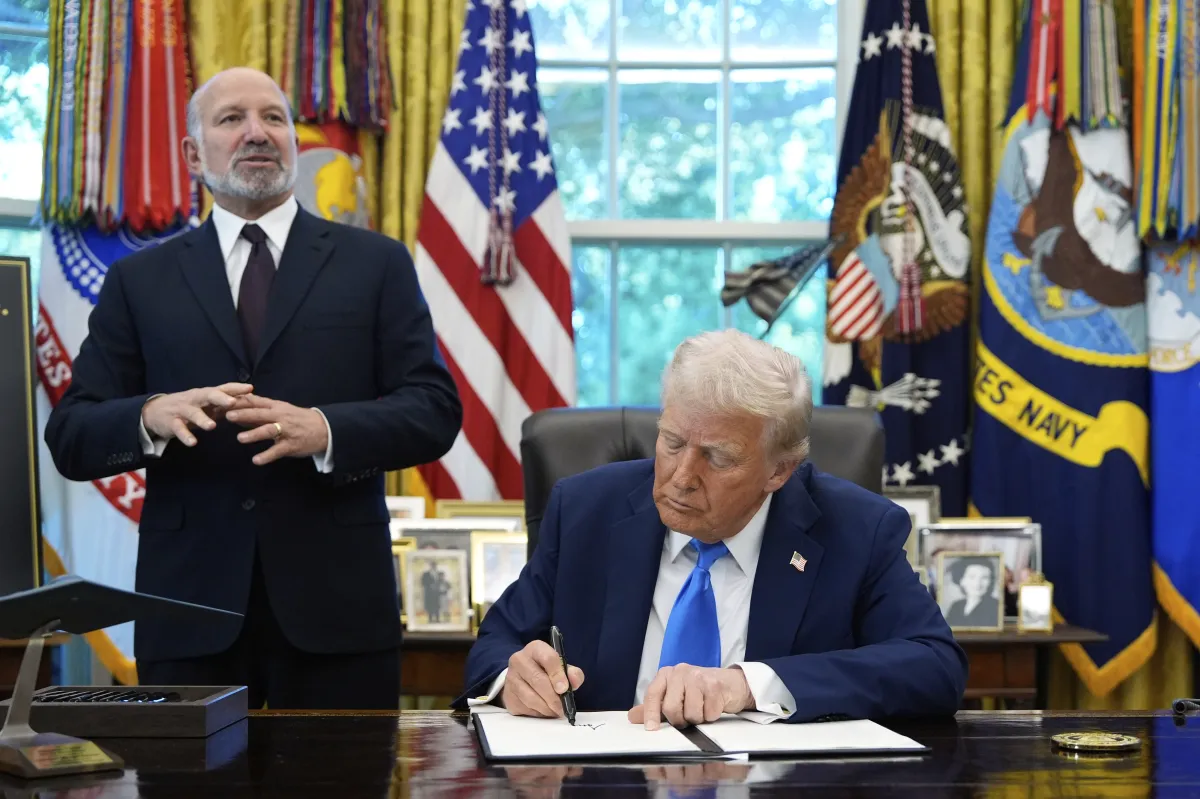
H-1B visa: In a step to reform the H-1B visa program, US President Donald Trump signed a proclamation on Friday that will impose a $100,000 annual fee for companies seeking to sponsor foreign workers through the H-1B visa system. This change aims to ensure that the program, which has been criticized for allowing companies to hire foreign workers at lower wages, better serves its original purpose of attracting the brightest minds to fill high-skilled jobs in fields like technology, science, engineering, and mathematics.
White House staff secretary Will Scharf says, "One of the most abused visa systems is the H1-B non-immigrant visa programme. This is supposed to allow highly skilled labourers who work in fields that Americans don't work in to come into the United States of America. What this proclamation will do is raise the fee that companies pay to sponsor H-1B applicants to $100,000. This will ensure that the people they're bringing in are actually very highly skilled and that they're not replaceable by American workers." United States Secretary of Commerce, Howard Lutnick, says, "The whole idea is that no more will these big tech companies or other big companies train foreign workers. They have to pay the government $100,000, then they have to pay the employee. So it's just not economic. If you're going to train somebody, you're going to train one of the recent graduates from one of the great universities across our land, train Americans, stop bringing in people to take our jobs. That's the policy here. All of the big companies are on board."
H-1B visas: What are they?
H-1B visas are designed to allow companies to hire foreign professionals who hold specialised knowledge in fields where US workers are in short supply. However, the program has faced growing scrutiny over the years. Critics argue that it has been misused by companies seeking to hire foreign workers at wages much lower than the salaries of US tech employees.
For example, while a typical US tech worker may earn a six-figure salary, many foreign workers on H-1B visas are paid less than $60,000 annually.
Trump has repeatedly stated that the changes would be welcomed by the tech industry, with a particular focus on ensuring that the program benefits skilled foreign workers rather than being used to fill entry-level positions at a lower cost.
Changes to the H-1B visa system: What’s new?
The key change in Trump’s new proclamation is the introduction of a $100,000 annual fee that companies must pay to sponsor H-1B workers. The idea is to ensure that only companies with genuine needs for highly skilled workers will benefit from the program. Historically, H-1B visas have been issued through a lottery system, with 85,000 visas available each year. Companies like Amazon, Microsoft, Apple, and Google have been among the top recipients, this year. California is the state with the highest number of H-1B workers, according to US Citizenship and Immigration Services (USCIS).
New H-1B visa fee could impact Indian workers
The recent changes to the H-1B visa program appear to disproportionately affect Indian workers, who represent the largest group of beneficiaries. Official statistics show that Indian nationals account for 71% of all approved H-1B visa recipients, while China makes up 11.7%. These visas are typically granted for periods ranging from three to six years.
This latest proposal is part of the Trump administration’s broader effort to either restrict or generate revenue from legal immigration. Just last month, the US introduced a pilot program allowing consular officers to impose bonds of up to $15,000 on tourist and business visa applicants from countries with high overstay rates or weak vetting systems.
