
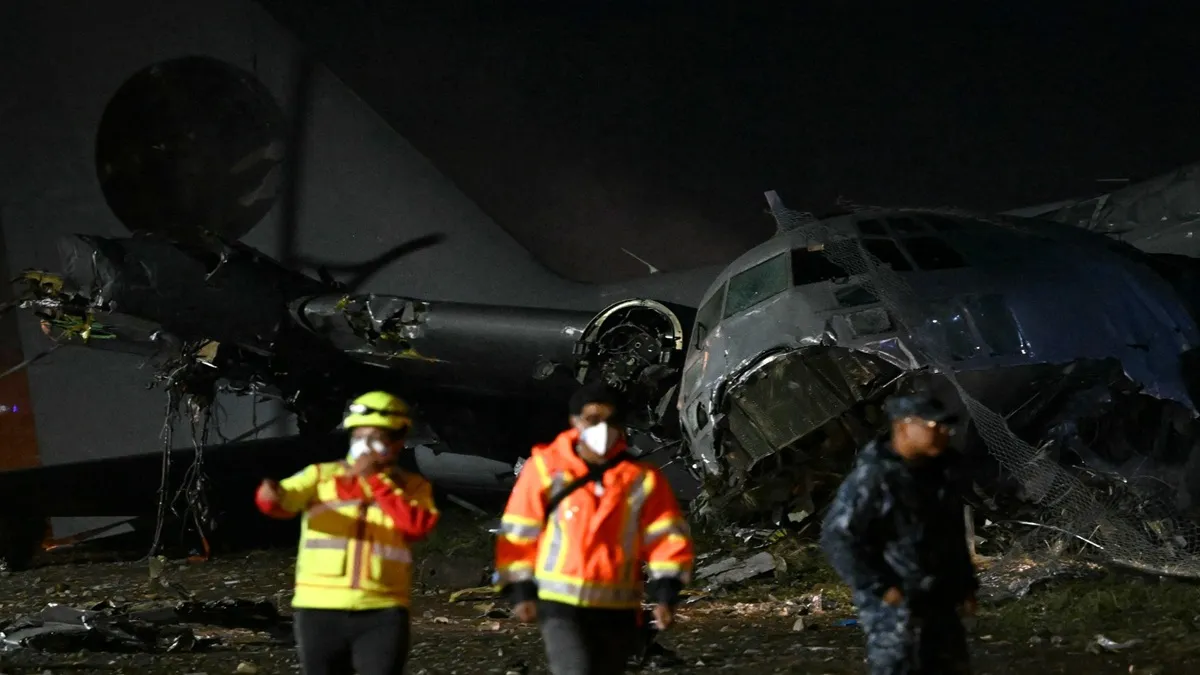
A Bolivian Air Force Hercules cargo plane plummeted moments after takeoff from El Alto International Airport near La Paz on Friday (February 27), erupting into flames and veering off the runway in a catastrophic skid. The aircraft, loaded with freshly printed banknotes from the Central Bank destined for other cities, smashed into a nearby highway, damaging at least a dozen vehicles and leaving a trail of wreckage across the road and into an adjacent field. Fire Chief Pavel Tovar confirmed at least 15 people dead, though it's unclear if the fatalities included crew members aboard the plane or motorists caught in the impact. Social media images captured the horrifying scene: twisted metal debris, destroyed cars, scattered bodies, and firefighters battling the intense blaze that eventually engulfed the fuselage before being extinguished.
Highway havoc and vehicle carnage
The plane's uncontrolled path carved destruction through El Alto, the high-altitude city neighboring Bolivia's capital, turning a busy highway into a zone of pandemonium. At least 15 vehicles bore the brunt of the collision, with eyewitness videos showing the aircraft's underbelly ripping through traffic, sending cars spinning and igniting fires amid the chaos. Emergency responders rushed to the site, navigating a landscape littered with plane parts, crumpled automobiles, and personal belongings flung from the crash. Tovar's initial assessment highlighted the scale of the involvement, as rescue teams worked amid acrid smoke and twisted wreckage to account for victims and secure the area.
Banknote bonanza sparks looting frenzy
In a bizarre twist amid the tragedy, the plane's cargo of new banknotes burst open upon impact, showering the highway and surrounding fields with cash. Viral social media footage depicted hundreds of onlookers swarming the site, scrambling to grab the scattered bills in a frenzied rush that overshadowed initial rescue efforts. Police, clad in riot gear, deployed tear gas and physical barriers to disperse the opportunistic crowd, restoring some order as authorities scrambled to recover the valuable payload. The incident not only compounded the human toll but exposed vulnerabilities in transporting high-value goods by air.

Airport shutdown and investigation underway
Bolivian officials swiftly halted all flights to and from El Alto Airport, stranding passengers and halting operations as investigators probed the cause of the crash—possibly mechanical failure, pilot error, or the challenges of high-altitude takeoffs in the thin Andean air. The Bolivian Air Force confirmed the Hercules model's role in routine domestic logistics, while questions lingered over safety protocols for such missions. As cleanup crews sifted through the debris and families awaited victim identifications, the nation mourned the loss and grappled with the surreal mix of grief and greed that defined the disaster.