
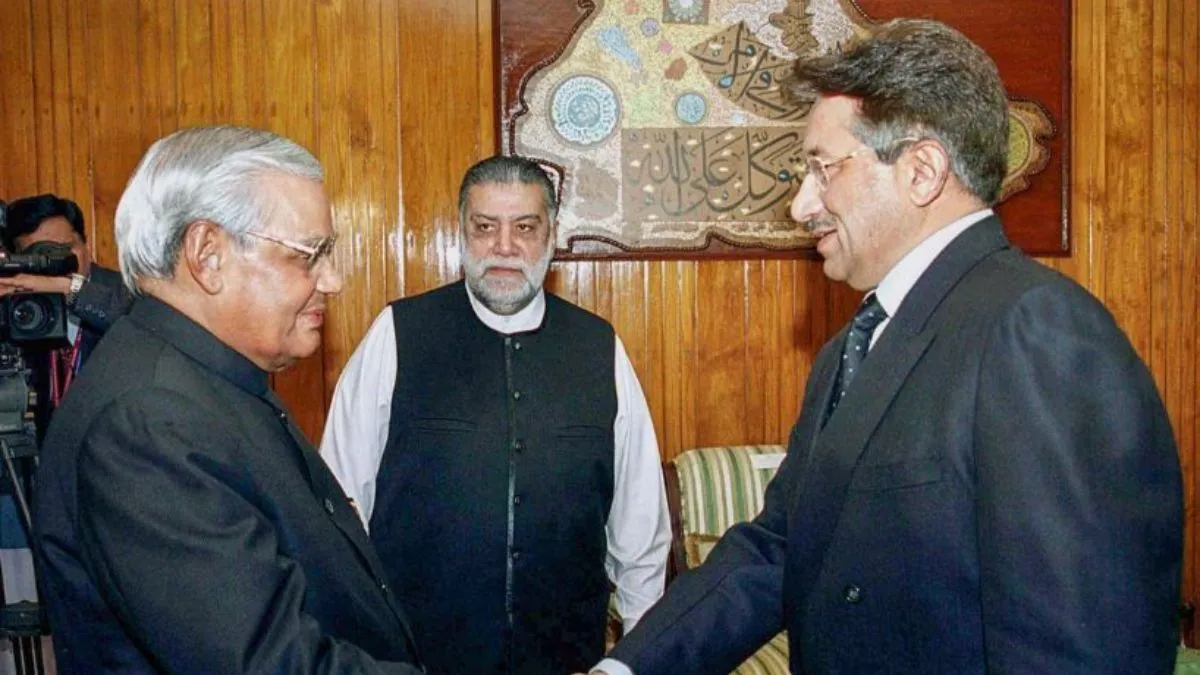
Former Central Intelligence Agency (CIA) John Kiriakou has said that the United States (US) thought India and Pakistan would go to war in 2002 following the deadly terror attack on the former's Parliament that claimed lives of nine security personnel. The US called India's policy 'strategic patience', he said, noting that New Delhi showed a lot of restraint after the Parliament attack and the 26/11.
In an interview with news agency ANI, Kiriakou, who served first as an analyst and then in counterterrorism in the CIA for 15 years, said India has got to a point where it "can't risk strategic patience being misunderstood as weakness".
"Family members had been evacuated from Islamabad. We believed India and Pakistan would go to war," he said. "The deputy secretary of state came in and shuttled between Delhi and Islamabad and negotiated a settlement where both sides backed off. But we were so busy and focused on Al Qaeda and Afghanistan, we never gave two thoughts to India."
'Pakistan will lose any conventional war with India'
The former CIA officer also told ANI that Pakistan will "lose any conventional war" with India, pointing out that New Delhi will not tolerate the nuclear blackmail by Islamabad anymore.
"Nothing, literally nothing good will come of an actual war between India and Pakistan because the Pakistanis will lose. It's as simple as that. They'll lose. And I'm not talking about nuclear weapons -- I'm talking just about a conventional war. And so there is no benefit to constantly provoking Indians," he said.
'India did not know US controlled Pakistan's nuclear arsenal'
In his interview, Kiriakou also said the US controlled the nuclear arsenal of Pakistan when he was stationed there in 2002. He said former Pakistan President Pervez Musharraf had given the access to Pakistan's nuclear arsenal to the US, adding that Washington never told New Delhi about this.
"I doubt that the Americans ever told India that the control of Pakistani nukes also lies with the US because of the vociferousness with which the Pakistanis have publicly maintained that they control their own nuclear weapons," he said. "But I can tell you definitively that the State Department was telling both sides -- if you're gonna fight, fight. Keep it short and keep it non-nuclear. If nuclear weapons are introduced, the whole world is going to change. And so I think there was restraint on both sides."
