
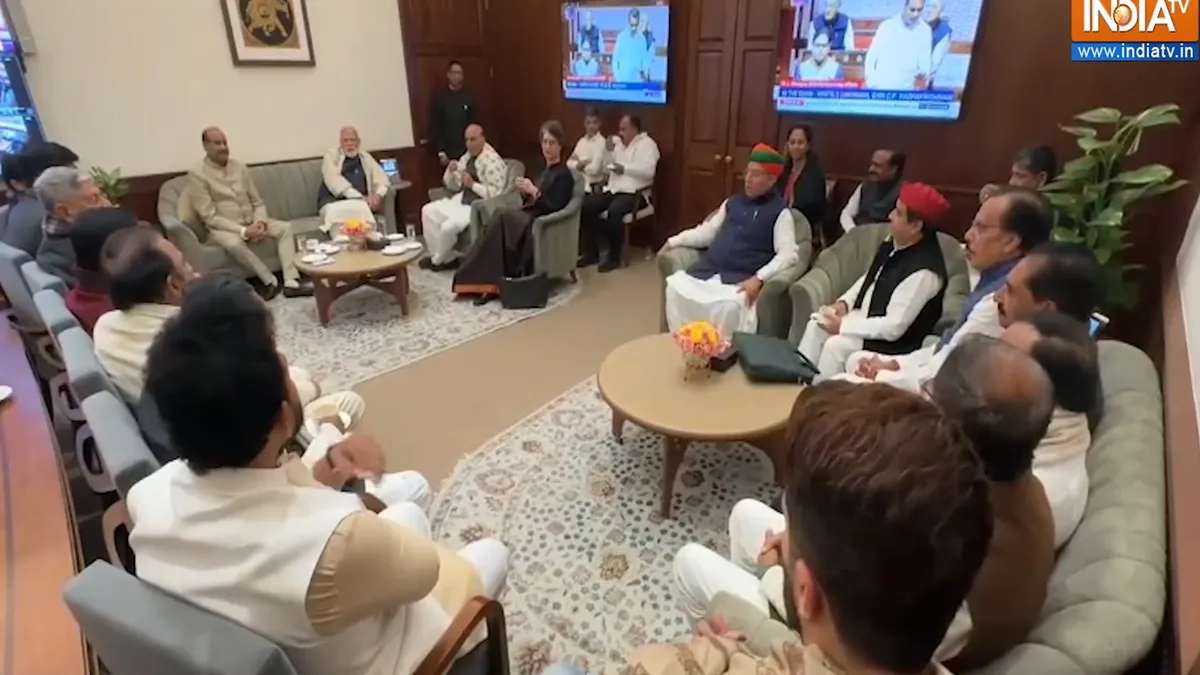
Lok Sabha Speaker Om Birla convened party leaders and MPs on Friday (December 19) to wrap up the tumultuous Winter Session of Parliament 2025, even as opposition protests over the controversial Viksit Bharat Guarantee for Rozgar and Ajeevika Mission (Gramin) (VB-G RAM G) Bill dominated the final hours, leading to adjournment amid high drama.
Speaker's courteous close amid house turmoil
Om Birla hosted a meeting with political party leaders and parliamentarians in his Parliament House chamber, marking a traditional conclusion to the Winter Session. Moments earlier, he adjourned the Lok Sabha sine die after playing 'Vande Mataram', with Prime Minister Narendra Modi- fresh from a three-nation tour- present in the chamber. The session ended on a fractious note, fueled by opposition uproar over the VB-G RAM G Bill's passage.
Rajya Sabha adjournment with stern rebuke
In the Upper House, Chairman and Vice-President CP Radhakrishnan resumed proceedings at 11:00 am before adjourning sine die. He laid statements and reports on the table, then sharply criticized members' conduct from the previous day's minister's reply: "Protesting and tearing papers was unbecoming of the House." This underscored the session's underlying tensions.
United Opposition's fierce street and floor protests
Opposition unity peaked outside Parliament, where a coalition staged demonstrations, joined by Trinamool Congress members on the House entry steps. Their ire targeted the VB-G RAM G Bill, viewed as a gutting of MGNREGA. Protests persisted into Friday, amplifying calls for its withdrawal.
Rahul Gandhi's scathing critique from abroad
Lok Sabha Leader of Opposition Rahul Gandhi, on a Germany visit, lambasted the bill on X as "anti-state" and "anti-village." He argued: "Last night, the Modi government demolished twenty years of MGNREGA in one day. VB-G RAM G isn't a 'revamp'- it demolishes the rights-based, demand-driven guarantee and turns it into a rationed scheme controlled from Delhi."
Gandhi hailed MGNREGA's empowerment of rural workers, boosting bargaining power, curbing exploitation and migration, raising wages, and building infrastructure. He spotlighted its COVID-19 lifeline: "When livelihoods collapsed, it kept crores from hunger and debt, helping women most- who contributed over half the person-days yearly." The bill, he warned, caps work and adds denial mechanisms, eroding rural poor's leverage.
