
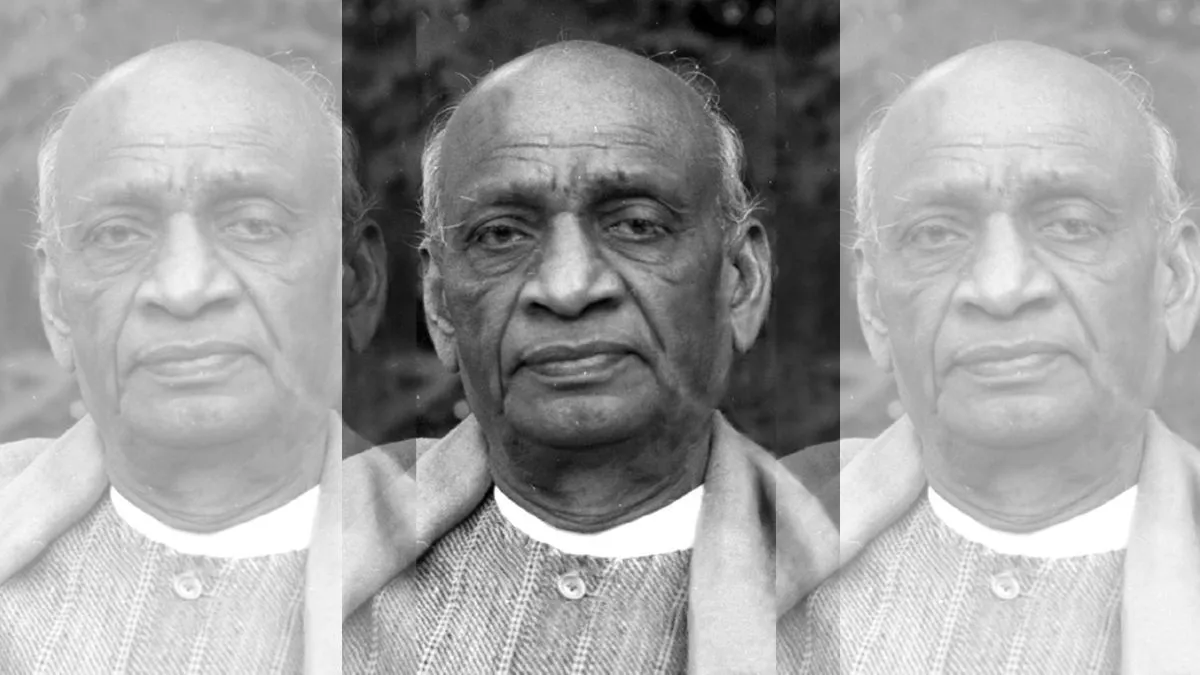
Back in 1947, the India we knew was way different. Why? Because many of the princely states, including Jammu and Kashmir, were against the idea of merging with the Union of India during the time of Independence. However, thanks to the efforts of one man, Sardar Vallabhbhai Patel, the India we now know was formed.
Thus, the Government of India celebrates Sardar Patel's birth anniversary every year on October 31 as Rāshtrīya Ektā Divas or National Unity Day. According to the Ministry of Home Affairs (MHA), National Unity Day aims to provide an "opportunity to re-affirm the inherent strength and resilience of our nation to withstand the actual and potential threats to the unity, integrity, and security of our country."
Sardar Patel and his importance
Born on October 31, 1875, in Nadiad in present day Gujarat, Sardar Patel was India's first deputy prime minister and the union home minister. Following Independence on August 15, 1947, he was give the hefty task of integrating the 562 princely states with the Union of India.
Though these states were not legally a part of the British India, it would be safe to say that they were fully subordinate to the Britishers. During the Independence, these states were given mainly two options - first, accede with India or Pakistan; second, continue as an independent sovereign state.
Many of these states saw this as an opportunity to continue as independent sovereign state, but Patel, along with assistance with Vappala Pangunni Menon, realised the importance of merging these states with India. He began using all sorts of ways to ensure that the princely states merge with India.
Patel, who was considered a trusted lieutenant of Mahatma Gandhi, was also among the key figures to introduce the concept of privy purse to woo the princely states. According to this, the Government of India provided an annual payment as compensation to all rulers of princely states for merging their kingdoms with India during the Independence.
This concept was abolished by the Indira Gandhi government in 1970, though.
Sardar Patel's biggest problems - Jodhpur, Junagadh, Hyderabad and Kashmir
Thanks to his efforts, most of the princely states merged with India. However, the Kingdom of Jodhpur under Maharaja Hanvant Singh considered of joining Pakistan. While he was negotiating with Mohammed Ali Jinnah, Sardar Patel met Singh and pointed that the state which is dominated by Hindus must join the Indian union. Thus, Jodhpur was merged with India.
Next came Junagadh. Like Jodhpur, Junagadh was dominated by Hindus, but was ruled by a Muslim Nawab, who even merged his kingdom with Pakistan on September 15, 1947. However, the people of Junagadh revolted against the Nawab, forcing him to flee to Karachi. Following this, Junagadh was merged with India.
Later, Pakistan attacked Kashmir forcing Maharaja Hari Singh to ask India for help. Unlike Jodhpur and Junagadh, the Hindus were in minority in Kashmir. Menon later flew to Kashmir, where the Maharaja was given the option to merge his state with India. Under tremendous pressure, the Maharaja acceded his kingdom to India.
Now, only Hyderabad was left. Hyderabad had refused to join India and the regime there was violently targeting the Hindus there. This forced Patel to act and the Indian forces marched into Hyderabad as part of Operation Polo on September 17, 1948. After four days, Nizam of Hyderabad surrendered and Hyderabad became a part of India.
Thus, for his role, Sardar Patel is known as the "Iron Man of India".
