
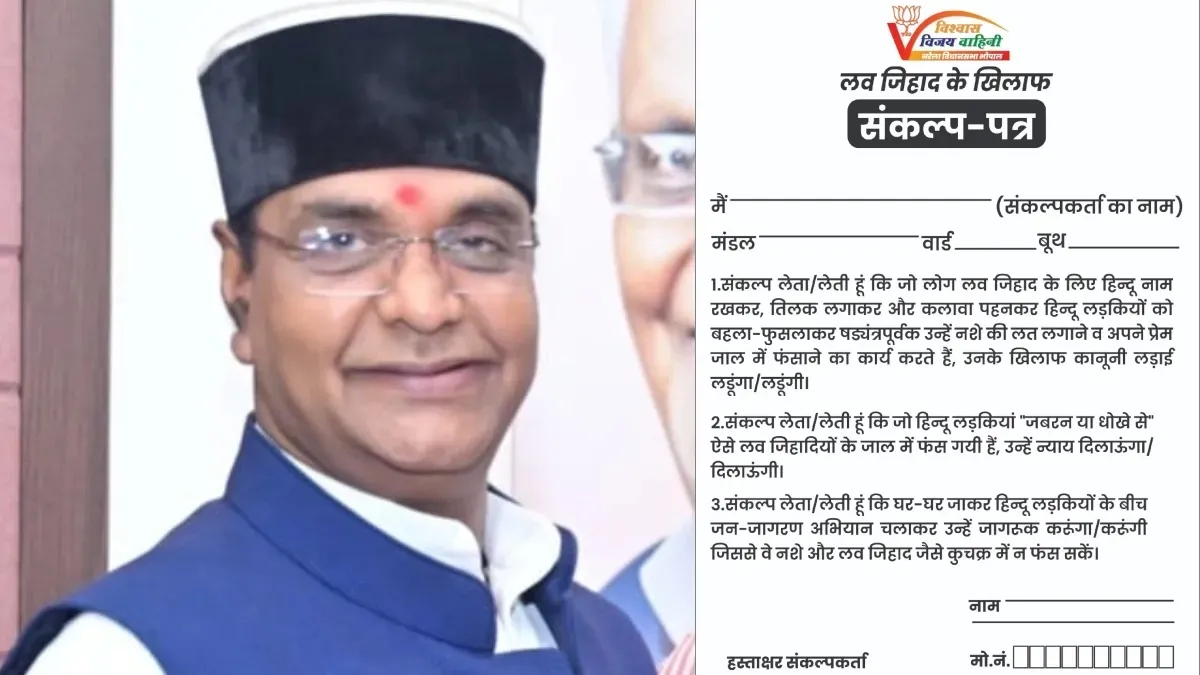
Amid rising concerns over so-called 'love jihad' cases in Madhya Pradesh, the state government has launched a large-scale public awareness campaign on the occasion of Raksha Bandhan. The drive, led by State Sports and Cooperation Minister Vishvas Kailash Sarang, aims to educate and mobilise women against alleged religious conversions through deceitful relationships.
As part of the campaign, women are not only tying rakhis as a symbolic gesture of protection but are also taking oaths to fight against 'love jihad' and signing pledge forms to support the cause. The initiative marks a unique blend of tradition and political messaging, with the government seeking to address what it calls a growing social concern.
'Love jihad' cases on the Rise
Despite the Madhya Pradesh Freedom of Religion Act being in effect since March 27, 2021, the number of reported cases involving alleged deceitful religious conversions has not slowed. According to figures presented in the State Assembly by Chief Minister Mohan Yadav, a total of 283 cases have been registered under the law. Alarmingly, 74 of these cases involve minor girls.
Bhopal ranks second in the state for the number of such cases, with 33 FIRs filed. Indore tops the list with 58 cases. Most of these incidents are reported from urban areas, where young women have moved for education or employment opportunities, indicating a disturbing trend of targeting vulnerable individuals living away from home.
Women take a stand
Minister Sarang administered an oath to women participating in the event, encouraging them to stand up for victims of “Love Jihad” and take legal action where necessary. The women vowed to spread awareness in their communities and help protect Hindu girls from alleged fraudulent relationships and forced conversions.
Speaking at the event, many women shared their concerns about the increasing danger such incidents pose and emphasised the importance of safeguarding girls, especially in cities.
Political and Social Ramifications
The campaign has sparked debate, with critics questioning its timing and narrative, while supporters argue that it addresses a real and growing problem. With elections on the horizon and the issue becoming a regular feature in political discourse, the campaign is expected to remain in the spotlight.
