
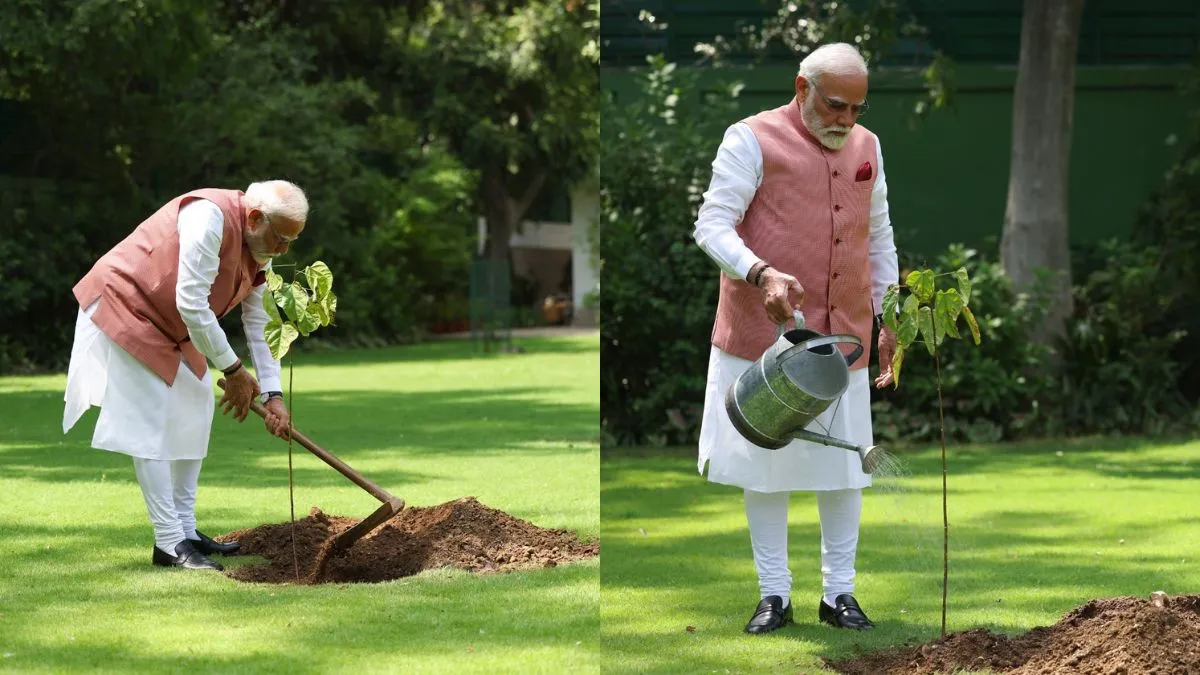
On the occasion of World Environment Day, Prime Minister Narendra Modi planted a sindoor sapling at his residence, 7, Lok Kalyan Marg, New Delhi. The plant was gifted to him by a group of women who were part of the 1971 war.
Sharing a post on X (formerly Twitter), PM Modi wrote, "1971 के युद्ध में साहस और पराक्रम की अद्भुत मिसाल पेश करने वाली कच्छ की वीरांगना माताओं-बहनों ने हाल ही में गुजरात के दौरे पर मुझे सिंदूर का पौधा भेंट किया था। विश्व पर्यावरण दिवस पर आज मुझे उस पौधे को नई दिल्ली के प्रधानमंत्री आवास में लगाने का सौभाग्य मिला है। यह पौधा हमारे देश की नारीशक्ति के शौर्य और प्रेरणा का सशक्त प्रतीक बना रहेगा। (The brave mothers and sisters of Kutch, who set an amazing example of courage and valor in the 1971 war, recently presented me with a Sindoor plant during my visit to Gujarat. Today, on World Environment Day, I have had the privilege of planting that plant in the Prime Minister's residence in New Delhi. This plant will remain a strong symbol of the valor and inspiration of the women power of our country.)"
The post garnered nearly 917.4K views. Several users also linked it to the recent Operation Sindoor, wherein the Indian Armed Forces hit terrorist infrastructure in Pakistan and Pakistan-occupied Jammu and Kashmir. This was in response to the brutal terrorist attack in Pahalgam, which killed 25 Indians and one Nepali citizen.
In a video message that was shared earlier today on X, PM Modi said that every country will have to rise above self-interest to protect the global climate. He said that eliminating plastic pollution is the theme of this year's World Environment Day, and India has been working on it continuously for the last four to five years.
His caption read, "This #WorldEnvironmentDay, let’s deepen our efforts towards protecting our planet and overcoming the challenges we face. I also compliment all those working at the grassroots to make our environment greener and better."
Significance of the sindoor plant
Also known as Annatto or Bixa Orellana, the Sindoor plant has cultural, religious and medicinal significance in India. The vibrant red-orange pigment is used to make sindoor, which is a sacred vermilion powder applied by married Hindu women along the parting of their hair as a symbol of marital status and auspiciousness.
The pigment is derived from the seeds of the plant and is also used as a natural dye in cosmetics and food. In Ayurveda, the plant is known for its anti-inflammatory and antioxidant properties. It has the ability to treat skin conditions and improve digestion.
ALSO READ: World Environment Day 2025: 7 easy changes you can make to cut down on your plastic waste
