
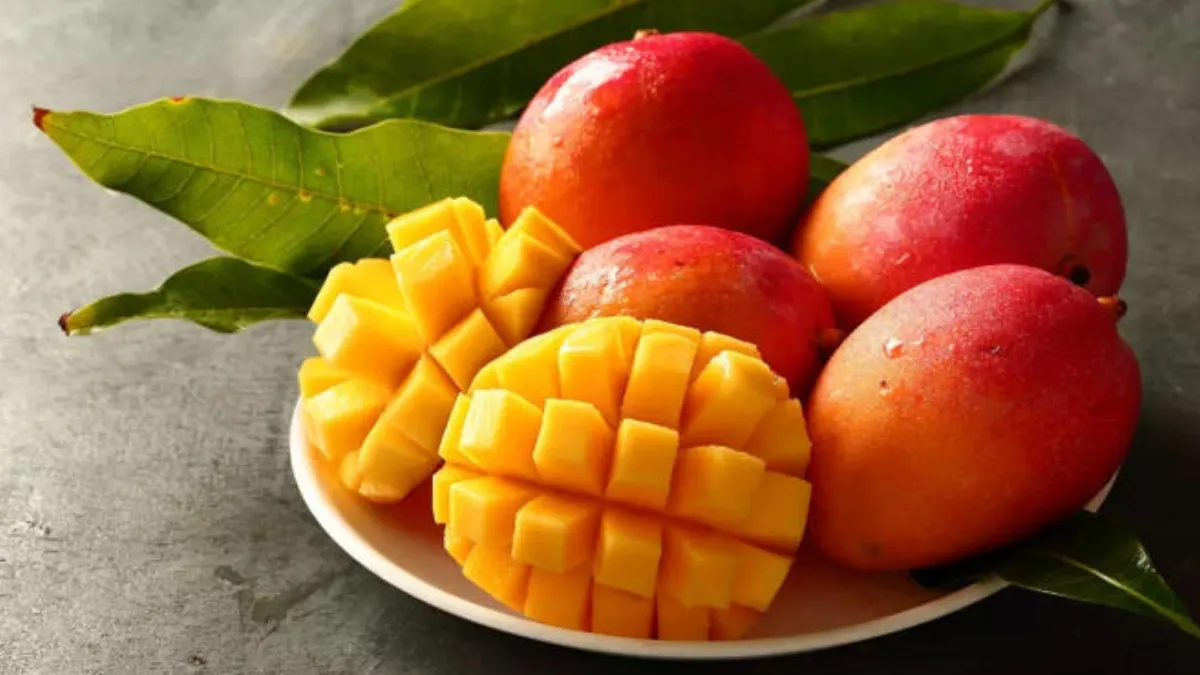
Fake mango, also known as artificially ripened mango, actually refers to the ripening of real mangoes using harmful chemicals like calcium carbide or ethephon instead of natural methods. Every year hundreds of kilograms of mangoes are artificially ripened and sent to the market to meet the demand before the season starts. According to the Food Safety and Standards Authority of India (FSSAI), buyers should pay attention to the appearance, touch, smell, and quality of mangoes before buying them and avoid buying chemically ripened mangoes. For this, let's take a look at the most common chemicals used to ripen mangoes.
As per experts, the most commonly used chemical agent for ripening mangoes is calcium carbide. It contains impurities like arsenic and phosphorus, which make it extremely harmful. It can cause long-term health problems like headaches, dizziness, nausea, and even cancer. Another chemical that is commonly used is ethylene gas. It is a colourless, flammable gas with the chemical formula C₂H₄. It is a natural plant hormone. It is commonly used to ripen fruits. Its excessive use can pose a serious threat to the human body.
Apart from this, ethephon, a chloroethylphosphonic acid, is used to ripen mangoes before time. This chemical can damage the liver or kidneys. Acetylene gas emitted from calcium carbide is also used to ripen mangoes. This chemical is also very harmful to the human body.
Follow these tips and tricks to identify real vs fake mangoes
- Colour of the peel: Artificially ripened mangoes have a uniform colour and may appear more yellow or orange than naturally ripened mangoes. Such artificial mangoes may also appear slightly shiny.
- Smell the mango: Naturally ripened mangoes have a sweet, fruity smell, while artificially ripened mangoes may have some chemicals or a different odour.
- Weight: Artificially ripened mangoes may seem softer or mushier than naturally ripened mangoes. This is because the chemicals used in the ripening process can break down the cell walls of the fruit, making them soft.
- Check for external damage: If the mangoes have external damage, such as bruises or spots caused by the injection of chemicals, do not buy them. Natural mangoes are less likely to have such external blemishes.
- Taste: According to experts, artificially ripened mangoes may taste bland or strange. If the mango tastes bad or has an unpleasant aftertaste, it may have been artificially ripened.
- Test by dropping them in water: Put the mangoes in a bucket of water. If the mangoes sink in the water, they are naturally ripened, and if they float, they are artificially ripened.
- Use baking soda: Add some baking soda to water and then soak the mangoes in the mixture for 15-20 minutes. After soaking, when you wash the mangoes, and if the colour of the mangoes changes, chances are they have been chemically treated or polished.
- Matchstick test: According to the Alphonso Mango website , anyone can use this test. All you need to do is light a matchstick and take it near the mango container, and if it has been chemically treated, it may catch fire or leave spark marks on the surface of the food. This method is very risky. So, do it at your own risk and under expert supervision.
ALSO READ: Should watermelon be consumed before or after meal? Know the right time to eat
