
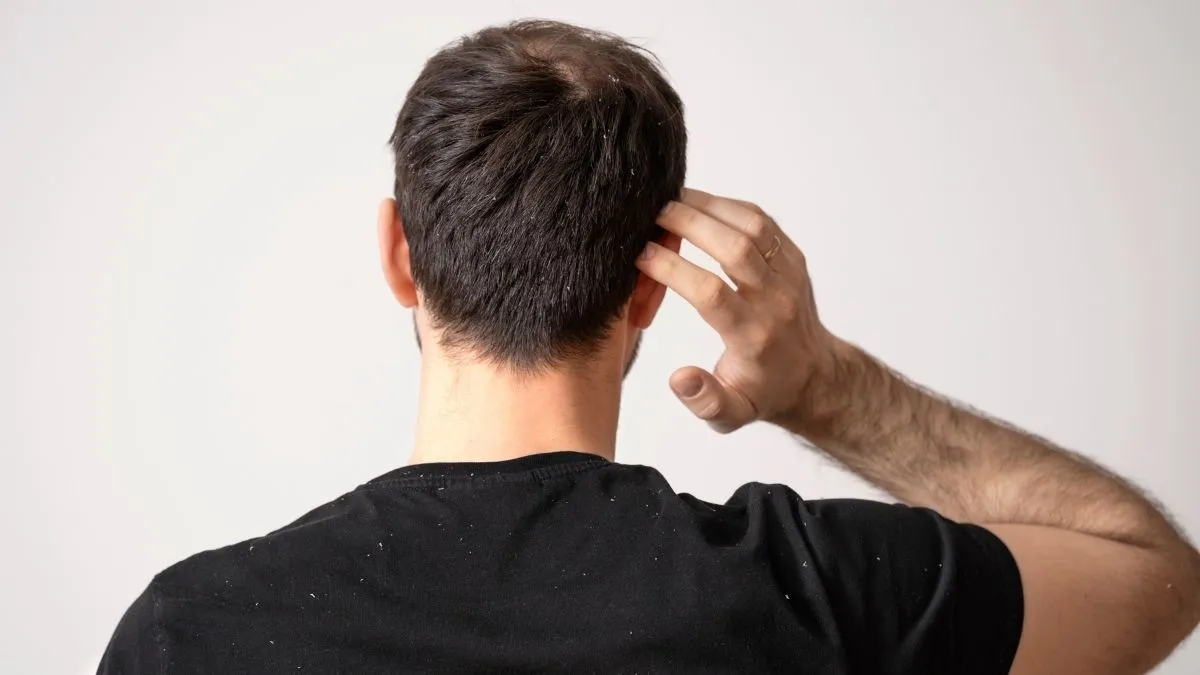
Winter is supposed to be the cosy season, hot drinks, soft sweaters, calmer days. But for your scalp, it’s a completely different story. The drop in humidity, the chill in the air and the rise in seasonal pollution create the perfect storm for sudden dandruff flare-ups and noticeable hair fall.
According to Dr Amit Bangia, Associate Director, Dermatology, Asian Hospital, the combination of dry weather and polluted air weakens the scalp’s natural barrier, making it more vulnerable than at any other time of the year. The result? Itchiness, flakes, brittle strands and a shedding pattern that leaves many people worried by mid-season.
How winter pollution disrupts the scalp microbiome
Pollution levels usually spike in winter because cold, stagnant air traps particulate matter closer to the ground. These microscopic pollutants settle directly onto the scalp and hair.
The scalp has its own microbiome, a community of protective microorganisms that keep everything balanced. But pollutants, especially PM2.5, disrupt this delicate ecosystem.
Here’s what happens next:
- The scalp becomes inflamed and irritated.
- Oxidative stress increases.
- The yeast Malassezia, which naturally lives on the scalp, begins to overgrow.
This imbalance is one of the biggest reasons dandruff becomes more noticeable in winter. As the scalp’s defence layer weakens, itching intensifies, flakes multiply, and the sebum (natural oil) on the scalp begins to oxidise. This oxidised sebum can clog follicles, worsening dandruff even further.
Why hair fall becomes worse in winter
Cold air pulls moisture out of everything, including your scalp. A dehydrated scalp struggles to nourish hair follicles, pushing many of them prematurely into the “shedding” phase of the growth cycle.
Add pollution to that mix, and hair health deteriorates even faster:
- Pollutants break down proteins that give hair its strength.
- Strands become brittle and snap easily.
- Chronic inflammation disrupts the natural hair growth rhythm.
And winter habits don’t help either. Woollen hats and scarves trap sweat, dirt and pollutants against the scalp, creating micro-irritation and sometimes even traction hair fall. All of this makes hair look thinner, weaker and more fragile by the time the season peaks.
Why winter + pollution = maximum damage
Think of winter as a double attack: dryness weakens the scalp barrier, and pollution exploits that weakness. The two together accelerate:
- flaking
- itching
- inflammation
- breakage
- excess shedding
It’s why so many people see their worst hair and scalp issues between December and February.
How to protect your scalp and hair in winter
While you can’t control the weather or pollution levels, Dr Bangia says timely care can significantly reduce damage.
1. Keep your scalp clean
Regular washing removes pollutants, oxidised sebum and yeast overgrowth.
2. Moisturise the scalp
Hydration helps restore the natural barrier, protecting against dryness and irritation.
3. Use gentle, non-stripping formulas
Harsh shampoos can worsen dryness and disrupt the microbiome even further.
4. Limit very hot water
Hot water dries the scalp and roughens hair cuticles.
5. Air out woollen hats
Alternate hats, and avoid wearing them on damp hair to reduce irritation.
6. Shield hair from pollutants
Covering hair outdoors or using leave-in serums forms a protective layer against particulate matter.
So, this winter, avoid dry scalp!
Also read: How to care for your skin in winter: Dermatologist-approved mistakes to avoid
