
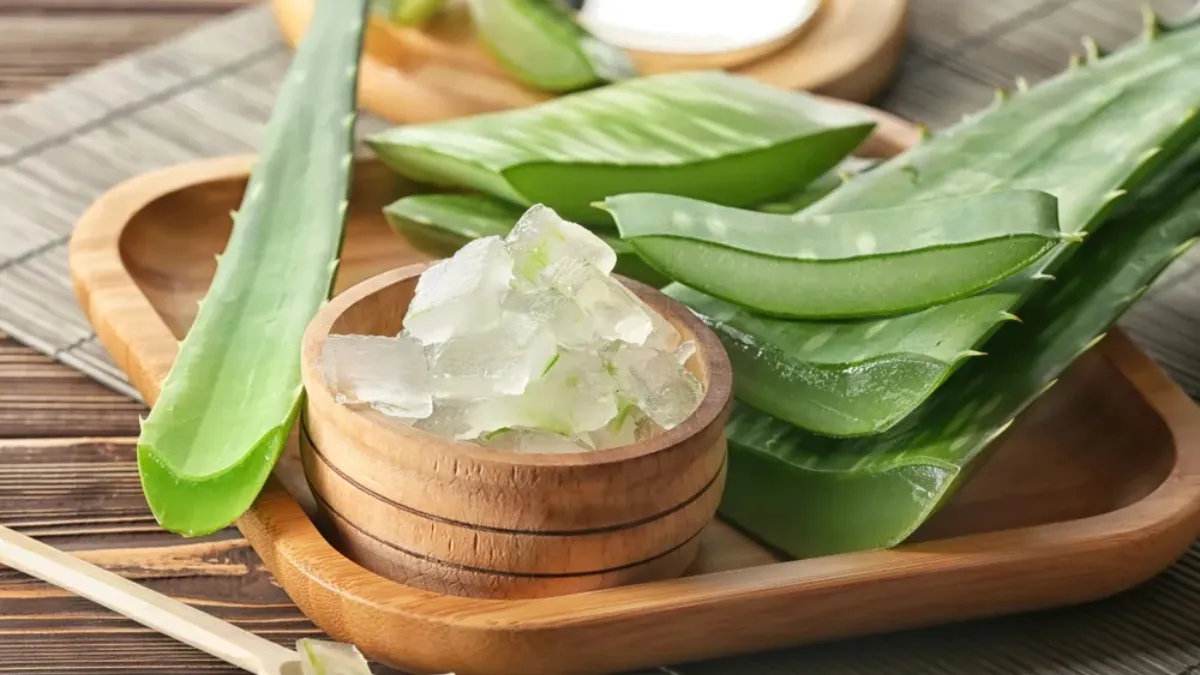
It is not right to trust every aloe vera gel available in the market. Yes, do you know that using fake and chemical-based gel can harm your skin instead of benefiting it? Now the question is how to identify real and fake aloe vera gel. Here are 5 easy tips that can help you identify real aloe vera gel so that you can take care of your skin without worrying.
1. See the colour and texture
Real aloe vera gel is slightly transparent or light green. If a gel looks too dark green or white, it may be fake. Also, the texture of real gel is light and watery, while fake gel may be sticky or too thick.
2. Read the ingredient list carefully
Whenever you buy aloe vera gel, read its ingredients list. If many chemicals and preservatives (such as parabens and artificial fragrances) have been added to it apart from aloe vera, then it is not pure aloe vera gel. The amount of aloe vera in real aloe vera gel should be more than 90%.
3. Identify by scent
The fragrance of real aloe vera gel is mild and natural. If the gel smells very strong and artificial, then it may be fake. Many fake gels in the market have a strong smell, which is completely different from real aloe vera gel.
4. Packaging and brand
Always buy aloe vera gel from a good and trusted company. Avoid local brands or gels from unknown companies, as they may contain impurities. Also, even if the packaging says '100% Pure Aloe Vera' or 'No Added Chemicals,' make sure to read its ingredients.
5. Do a patch test on the skin
If you have bought aloe vera gel, then do a skin test before using it. Apply a little gel on your hand; if you feel burning, itching, or stickiness, it means that it is not pure. Applying real aloe vera gel gives a slight cooling sensation, and it gets absorbed in the skin quickly.
It is very important to identify real and fake aloe vera gel so that your skin does not suffer any harm. Always buy good-quality gel and keep in mind the above-mentioned tips. If possible, extract fresh aloe vera gel at home and use it so that you get pure and chemical-free gel.
ALSO READ: Physical Sunscreen vs Chemical Sunscreen: Which is better for skin protection?
