
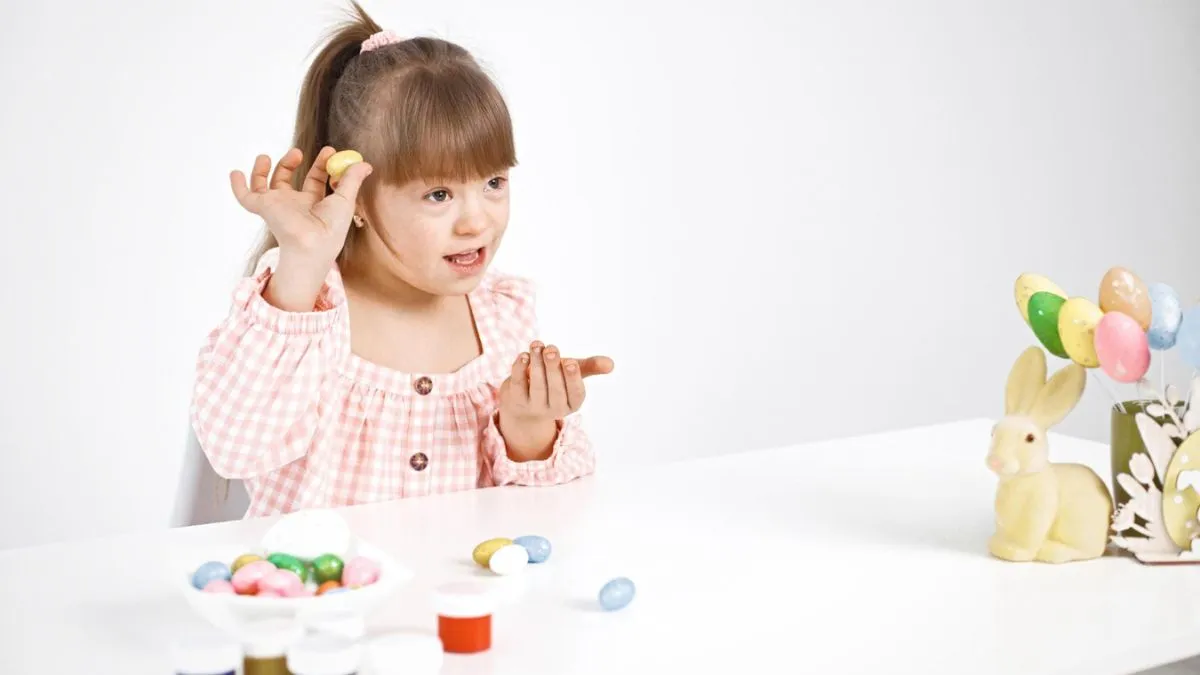
Today is World Down Syndrome Day. It is one of those days that quietly asks for a pause. Not just awareness in the usual sense, but a closer look at what we think we know. Because a lot of what people believe about Down syndrome still comes from assumptions, not understanding.
In clinical practice, that gap shows up often. Dr Gayathri K, child psychiatrist at Maarga Mind Care, Bengaluru, says much of her work involves not just the medical side of a diagnosis, but also helping families navigate the social narratives around it. And those narratives, more often than not, need unlearning.
Down syndrome and emotional reality people often overlook
One of the most common ideas is also one of the most misleading. “People with Down syndrome are often seen as always happy or lacking emotional depth,” Dr Gayathri says. But that is not how it works.
“They experience all human emotions, just like any other person,” she explains. Which also means they can feel anxious, low, or overwhelmed. Some may have co-existing conditions like Autism Spectrum Disorder. And when changes in mood or behaviour are brushed off as “just part of the syndrome”, it can delay proper care.
This is what clinicians call diagnostic overshadowing. The label takes over. The person gets missed.
Is Down syndrome hereditary and life-limiting?
There is also a tendency to view Down syndrome as rare or strictly hereditary. It is neither, in most cases.
“Approximately 97 to 98 percent of cases are not hereditary and occur randomly,” Dr Gayathri explains. With advances in medical care and better inclusion, many individuals live long, healthy lives well into their 60s and beyond.
The idea that it automatically limits life in a fixed way does not hold up anymore.
Learning ability and education in children with Down syndrome
Another assumption sits around learning. That children with Down syndrome cannot keep up or achieve much academically. That they will always fall behind.
But early support changes that trajectory. “With inclusive education and the right interventions, they can adapt, improve, and achieve meaningful academic and personal milestones,” she says.
Progress may look different. But it is still progress.
Independence, family life and long-term outcomes
There is also this quiet belief that individuals with Down syndrome will always remain fully dependent, placing a constant burden on families, especially siblings.
That is not the full picture. Many adults today work, build relationships, and live with varying degrees of independence. “Research shows that siblings often grow up to be more empathetic and resilient,” Dr Gayathri says, often describing the relationship as a positive influence rather than a burden.
It shifts the narrative. From responsibility to connection.
Beyond diagnosis, seeing the person first
Physical traits may be shared, but personality is not. “A person with Down syndrome will look far more like their own family and have their own unique traits,” she says.
And that is where the focus needs to move. Away from labels. Towards individuals.
“The real limitation has never been the diagnosis itself; it has been society’s lack of imagination and inclusion,” Dr Gayathri says.
Disclaimer: Tips and suggestions mentioned in the article are for general information purposes only and should not be construed as professional medical advice.
ALSO READ: Down Syndrome: Know its causes, importance of early diagnosis, lab tests and more
