
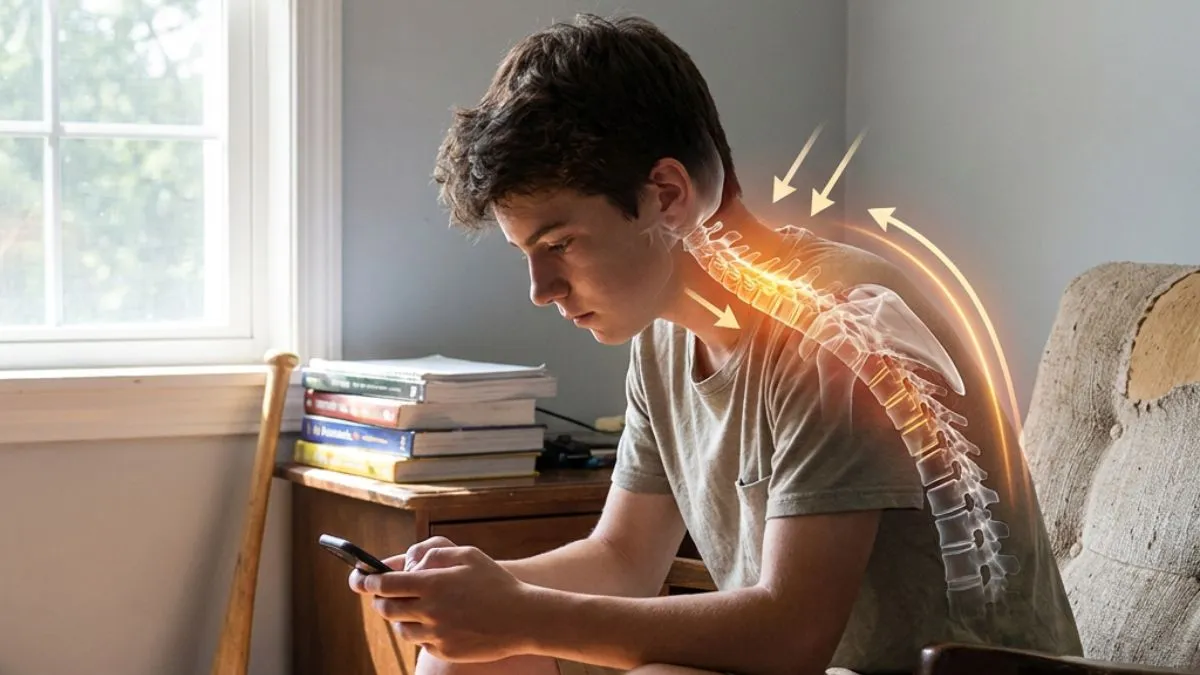
While vacations mean relaxation from studies and learning schedules, this vacation period means increased screen time for kids and adolescents. From gaming to binge-watching TV shows to using their phones, social media or logging in for online classes, children are spending hours and hours with their eyes fixed on phones, tablets, and laptops. What seems harmless and fun to indulge in during vacation can be detrimental to the spine development of kids, according to orthopaedic specialists.
As stated by Dr Vikas Gupte, Senior Consultant - Orthopaedics and Spine Surgery, Fortis Hospital Mulund, Mumbai, one of the most worrying trends related to the rise in screen addiction is text neck syndrome.
What is text neck?
Text neck refers to the condition where one frequently holds their head bent forward while focusing on an electronic device. Although the head typically weighs 10 to 12 pounds when in a neutral position, the extra pressure experienced by the neck region significantly increases when the head tilts downward.
Scientific studies carried out and documented in the Journal of Surgical Technology International reveal that tilting the head downward in order to see a smartphone can result in up to 60 pounds of extra strain on the neck region.
Why teenagers are particularly vulnerable
Doctors are increasingly seeing teenagers visit orthopaedic clinics with complaints of neck pain, rounded shoulders, poor posture and early spinal changes that were once more commonly associated with older adults.
Because children and adolescents are still growing, their bones, muscles and posture are more susceptible to long-term damage. Spending prolonged periods hunched over screens can contribute to stiffness, muscle imbalances, headaches, upper back pain and changes in spinal alignment.
Dr Gupte notes that poor posture affects more than just the spine.
"Poor posture also hurts breathing, concentration, quality of sleep and overall physical quality of life."
The hidden impact of sedentary lifestyles
A study cited from the National Library of Medicine found that excessive screen time is associated with bone and muscle discomfort as well as posture-related problems in children. The growing adoption of sedentary lifestyles may also weaken the core muscles that help support the spine.
The problem often becomes worse during school holidays when children spend longer periods indoors and on their devices without taking regular breaks. Many use phones while lying on sofas, beds or in awkward positions that place even more strain on the neck and back.
Simple changes can make a big difference
The good news is that preventing text neck does not require completely eliminating technology.
It is recommended that the screen be kept at eye level and that one maintain their position. It also helps to have brief breaks after every 30 to 40 minutes by moving and stretching in order to avoid back pain.
As Dr Gupte suggests, balancing time spent on screens with time spent outdoors exercising is highly recommended.
Physically engaging in activities like swimming, cycling, walking, and even playing games is the best way for muscles to get strong and maintain good posture. One must also look out for symptoms such as backache, headaches, stiffness in the shoulders and poor posture.
Also read: Why do your joints feel stiffer in air-conditioned rooms? An orthopaedic expert explains
