
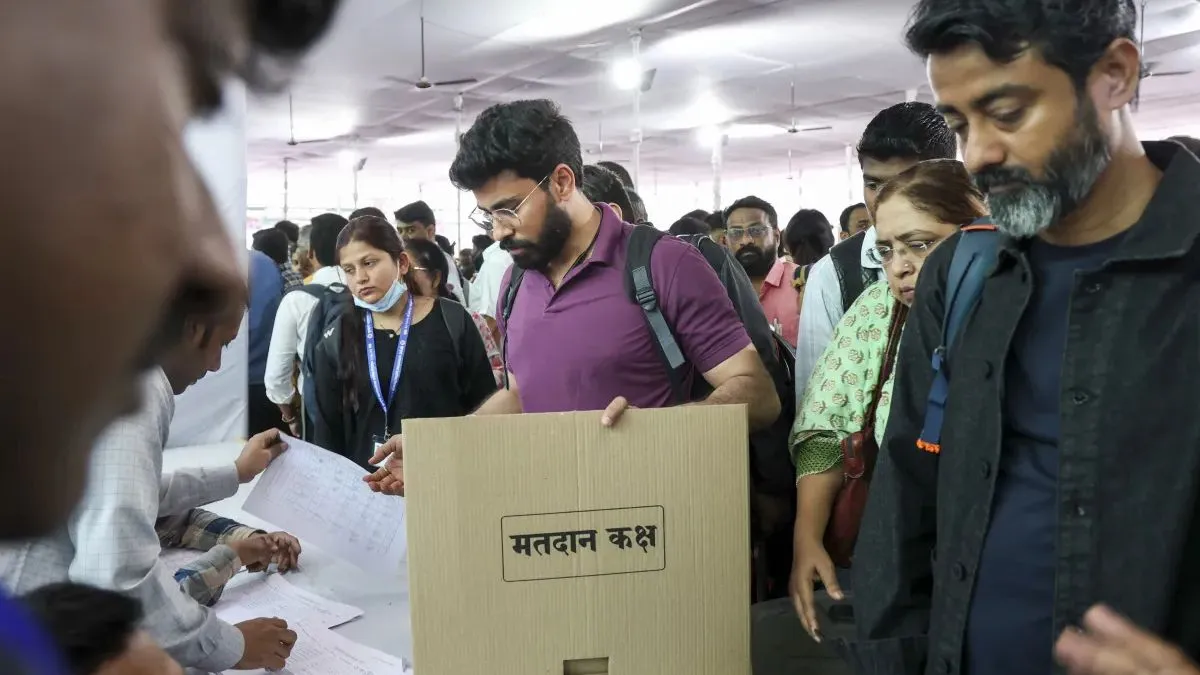
The election schedule for local bodies in Gujarat has been officially released, setting the stage for a large-scale democratic exercise across the state. Voting will take place on April 26, while counting of votes is scheduled for April 28. The entire election process is expected to be completed by April 30.
The nomination process will begin on April 6 and continue until April 11. Authorities will scrutinise the submitted papers on April 13, and candidates will have until April 15 to withdraw their nominations. Polling will be conducted between 7 am and 6 pm, with provisions in place for re-polling on April 27 if necessary.
With the announcement, the model code of conduct has come into force from the evening of April 1. These elections will cover a total of 9,992 seats across various local governing bodies.
Seat-wise distribution
Out of the total seats, 1,044 belong to Municipal Corporations, while 2,624 are in Nagar Palikas. District Panchayats account for 1,090 seats, and the largest share—5,234 seats—falls under Taluka Panchayats.
A total of 34 District Panchayats will go to polls, including the newly created Vav–Tharad district. Notably, 26 of these districts have undergone fresh delimitation. Among the 17 Municipal Corporations in the state, elections will be held in 15, with Junagadh and Gandhinagar excluded this time.
Elections will also be conducted in 84 municipalities, including seven newly formed ones, while 14 have been redrawn under new delimitation boundaries.
Similarly, 260 out of 263 Taluka Panchayats will participate in the elections. The remaining three—Kapadvanj, Kathlal and Gandhinagar—have already completed their electoral process. Apart from 109 Taluka Panchayats, the rest have also seen changes in constituency boundaries.
In addition to the elections, by-elections will be held for 13 vacant seats across 11 municipalities.
The voter base for this election is substantial, with around 4.19 crore registered voters. Of these, approximately 1.10 crore are from Municipal Corporations, 33.66 lakh from municipalities, and over 2.74 crore from Taluka Panchayats.
The electorate includes about 2.16 crore male voters and more than 2.02 crore female voters, reflecting a broad and diverse participation across the state.
