
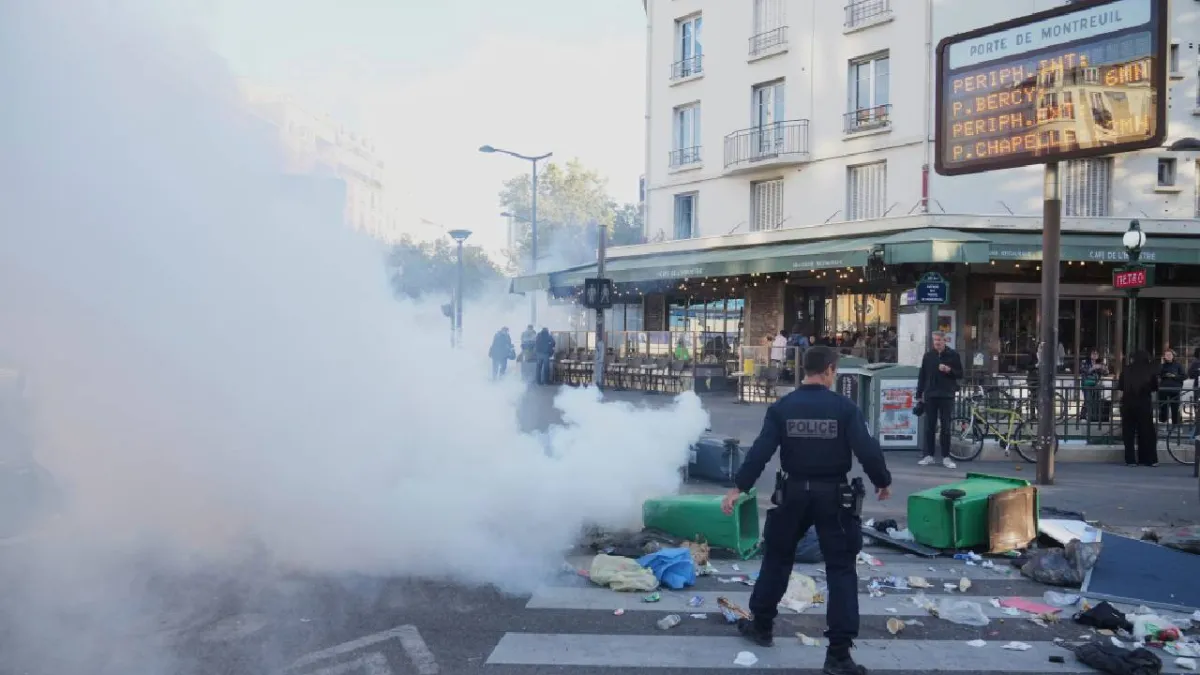
Protesters blocked roads, lit fires and clashed with police tear gas on Wednesday in Paris and other cities across France, aiming to put pressure on President Emmanuel Macron by giving his new prime minister a fiery test.
The interior minister reported nearly 200 arrests in the early hours of the nationwide demonstrations.
Despite falling short of its declared goal to "block everything," the protest wave, which had grown online over the summer, triggered pockets of disruption across the country. Some 80,000 police were deployed to dismantle barricades and make swift arrests.
Interior Minister Bruno Retailleau said a bus was torched in the western city of Rennes and damage to a power line disrupted train services in the southwest. He accused protesters of trying to create “a climate of insurrection.”
Even so, the unrest appeared milder than previous crises that have shaken Macron’s presidency. His first term was marked by months of yellow vest protests, and his second term has already faced nationwide anger over pension reforms in 2022 and widespread riots in 2023 after police fatally shot a teenager on the outskirts of Paris.
What's the reason behind protests in France?
The unrest erupted after days of political turmoil following Prime Minister François Bayrou’s defeat in a parliamentary confidence vote on Monday. Bayrou, who had unveiled sweeping austerity measures including cuts to public holidays and a freeze on pensions, resigned soon after the loss.
On Tuesday, President Emmanuel Macron moved quickly to appoint Sébastien Lecornu, his trusted defence minister, as the new prime minister, the fourth in just a year. The rapid turnover at the top highlighted political instability and deepened resentment among critics who accuse Macron of brushing aside public anger.
Unions and organisers of the protests argued that Bayrou's departure did nothing to address their concerns. “The fall of the government is good, but it’s insufficient,” rail union Sud-Rail posted on X.
The rise of 'Block Everything'
The "Bloquons Tout" or "Block Everything" movement took shape over the summer, spreading through TikTok, X and encrypted messaging groups. Its calls for strikes, boycotts and street action struck a chord with workers, students and activists who felt Macron’s policies had widened inequality.
Without a central leadership, the movement is both unpredictable and difficult to suppress. While many online calls urged peaceful action, authorities fear its decentralised structure allows outbreaks of sudden violence, as seen in Wednesday’s clashes and vandalism.
Its method, from road blockades to mass cash withdrawals and boycotts of major corporations like Amazon and Carrefour — recall the 2018–2019 Yellow Vest movement, which began over fuel tax hikes and swelled into a broader revolt against Macron.
Travel and transport disruption
The protests and strikes brought widespread travel chaos. Train and air traffic faced disruptions, though officials insisted that most metro, tram and high-speed TGV services would continue to operate.
Macron under growing pressure
The protests, coming just a day after Lecornu's appointment, have sharpened the political challenge facing Macron. Opposition parties accused him of disregarding voter frustration by installing another loyalist.
“He is running the risk of legitimate social unrest and institutional gridlock in the country,” the Socialist Party warned in a statement.
Jean-Luc Mélenchon, leader of the far-left France Unbowed, dismissed Lecornu’s appointment as a provocation. “Only Macron’s resignation can put an end to this sad comedy of contempt for Parliament, voters and political decency,” he wrote on social media.
