
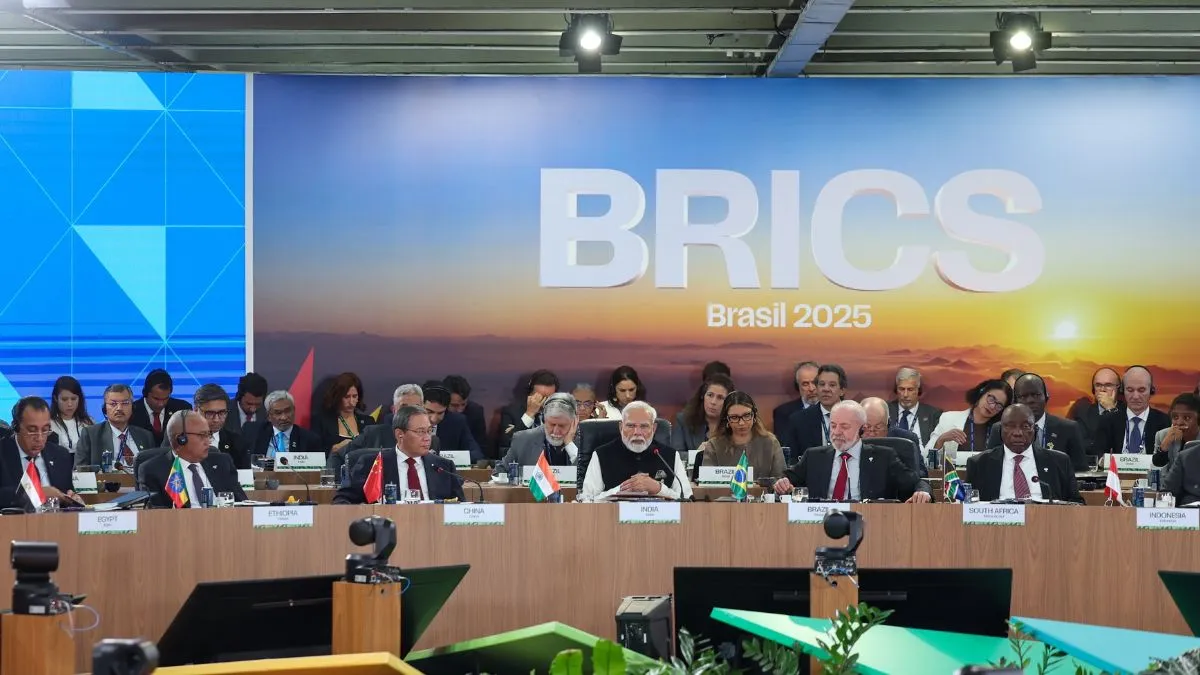
India on Thursday assumed the rotating chairmanship of the BRICS for 2026, reinforcing its commitment to championing the interests of the Global South. The bloc originally included Brazil, Russia, India, China and South Africa. Over the past two years, its membership has expanded to include Egypt, Ethiopia, Indonesia, Iran and the United Arab Emirates.
India assumed the chairmanship of BRICS following the conclusion of the BRICS Sherpas’ meeting held in Brasilia on December 12. The transition was marked by the ceremonial handover of the traditional gavel from Brazil’s Sherpa to his Indian counterpart. Although the symbolic transfer took place in December, India officially took over the leadership of the grouping on January 1, 2026, and is set to host the 18th BRICS Summit later this year.
What does India's BRICS presidency mean?
Notably, India has already set its priorities as it did during the G20 presidency to uphold the interests of the Global South proactively. Prime Minister Narendra Modi has articulated a people-centric and development-oriented agenda for BRICS in 2026.
PM Modi proposed a "humanity-first" approach, redefining BRICS with four core pillars, which are resilience, innovation, cooperation, and sustainability.
Balancing the US and the Global South
New Delhi is set to navigate choppy diplomatic waters by championing the concerns of the Global South while carefully avoiding actions that might run counter to the interests of the United States. As the Russia–China coalition is widely perceived as an anti-US bloc, India is likely to prioritise issues of development and cooperation rather than raise contentious matters that could go against Washington.
Over the years, India and the United States have deepened cooperation in defence, space and science, reflecting shared democratic values and converging regional interests. However, the relationship witnessed friction following US President Donald Trump’s claim of brokering a truce between India and Pakistan, a claim that India has consistently denied.
Besides, US tariffs imposed on Indian goods further strained ties, prompting New Delhi to explore alternative trade partners to diversify its economic engagement.
India, however, reduced its imports of Russian oil following new US sanctions on Rosneft and Lukoil. This move provided some relief to India–US relations, with Trump publicly welcoming the decision.
At the same time, India is keen to avoid being boxed into a binary US–China rivalry. Its participation in BRICS enables New Delhi to engage constructively with Beijing and Moscow on issues of trade, energy, and finance, while continuing to maintain strong ties with Washington.
ALSO READ: BRICS: What are key highlights, vision and theme of India's 2026 Presidency
