
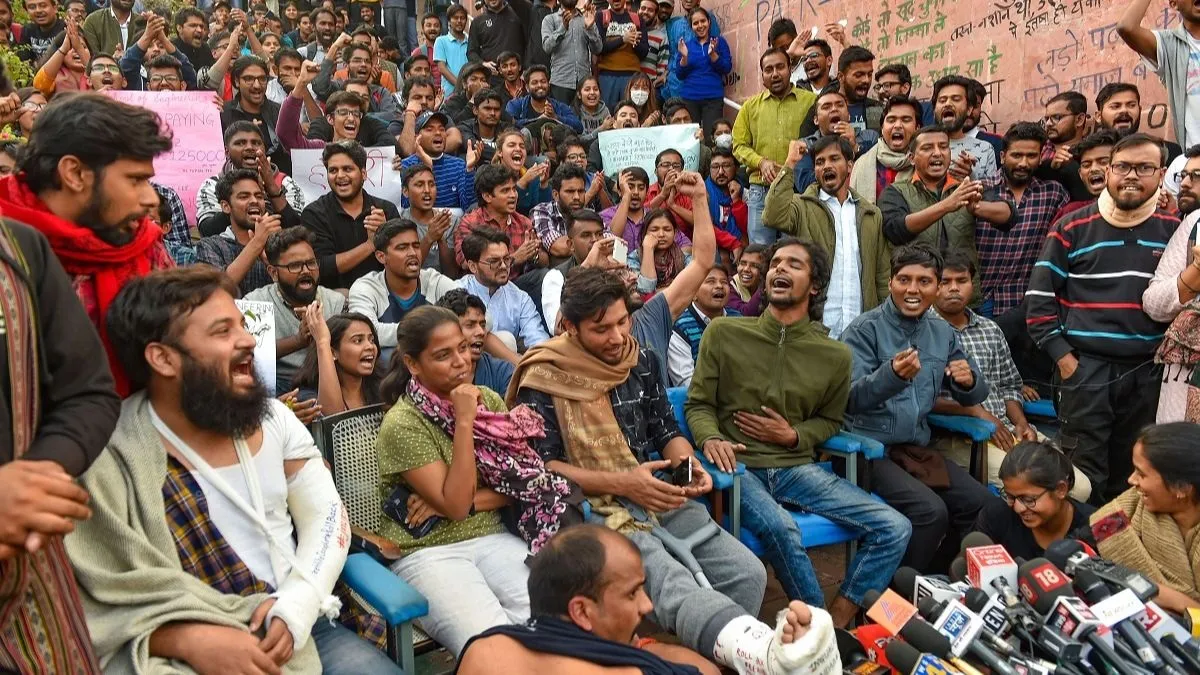
Following the Supreme Court's decision to stay UGC's new regulations, the students of Jawaharlal Nehru University (JNU), Delhi staged protest outside the Sabarmati Hostel on campus against those opposing UGC regulations. A group of around 50 students participated in the protest.
Meanwhile, the students of Delhi University also staged protest on the call of SFI Delhi to condemn the judicial stay. The students raised the demand to instate the UGC Equity Regulations 2026 without any further delay.
What is UGC act?
UGC has recently set a new set of regulations - Promotion of Equity in Higher Education Institutions Regulations, 2026 to constitute a structured framework for grievance redressal and support disadvantaged groups across universities and colleges. Meanwhile, UGC's new regulations has created an uproar among students, teachers and social groups with anguish expressed over how the terminology - "Caste-based discrimination" is defined in the UGC regulations.
As per the UGC's new rules, every higher education institution should establish an equal opportunity centre and will coordinate with Civil society groups, police and district administration, faculty members, staff, local media, district administration and police. The centre will coordinate with District and State Legal Services Authorities to facilitate legal aid.
The equal opportunity centre constituted by the head of the institution will have representations from Other Backward Classes (OBCs), Scheduled Castes (SCs), Scheduled Tribes (STs), Persons with Disabilities (PwDs), Women.
Under UGC's new regulations, the centre will be responsible for implementation of equity-related policies and programmes, to provide academic, financial guidance to disadvantaged groups and to coordinate with authorities and civil society.
Reactions on UGC regulations 2026
BSP Chief Mayawati said, "The new rules implemented by the University Grants Commission (UGC) to prevent casteist incidents in the country's government and private universities have created an atmosphere of social tension. Keeping in view such current circumstances, the decision today by the Hon'ble Supreme Court to stay the UGC's new rules is appropriate.
Whereas in the country, an atmosphere of social tension etc. in this matter would not have arisen at all if the UGC had taken all parties into confidence before implementing the new rules and had also given appropriate representation to the upper-caste society in the investigation committee etc. under the principles of natural justice."
