
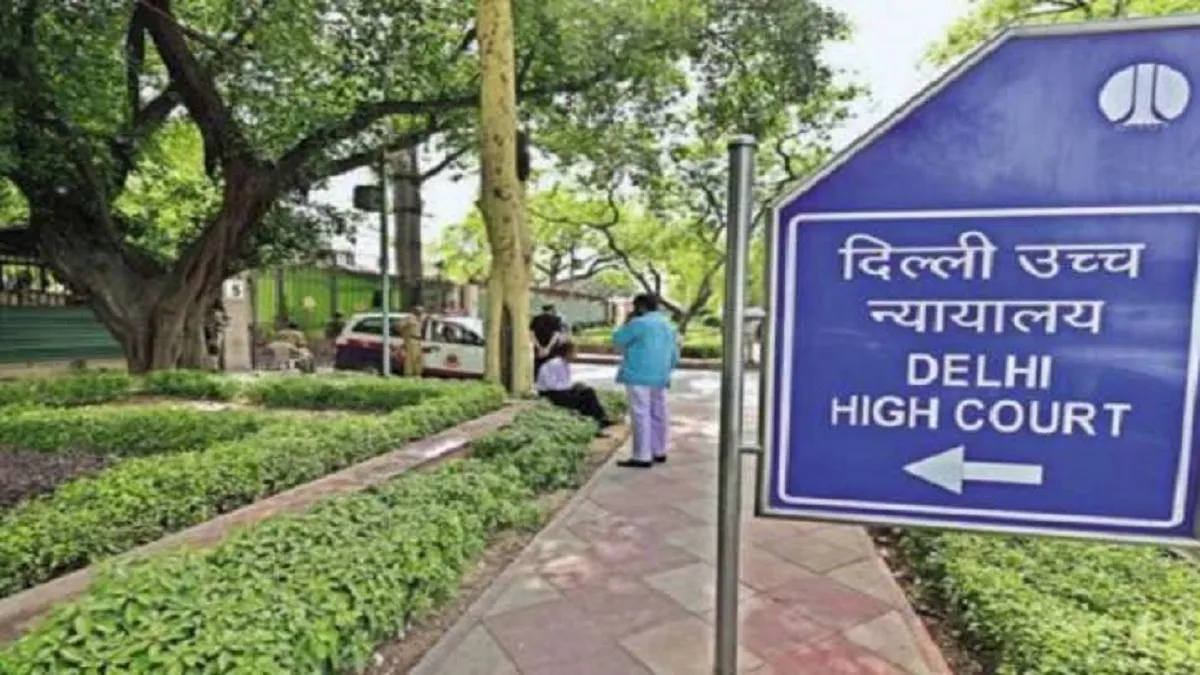
A Delhi High Court bench led by Chief Justice DK Upadhyaya and Justice Tejas Karia on February 18 (Wednesday) dismissed a public interest litigation seeking sweeping reforms in handling missing persons cases across the capital. The court labelled the requested reliefs- such as dedicated cells in every police station, mandatory FIRs, a CBI probe into all disappearances, and a retired judge-led supervisory body- as overly general and unsupported by specific evidence. Emphasising judicial restraint, the judges ruled that policing strategies and organisational setups remain firmly under police authority's purview, not court mandates.
Lack of concrete evidence seals petition's fate
The bench underscored that vague statistics or media-driven concerns fail to justify intervention, demanding tangible examples like instances where police refused FIRs for missing relatives. No such cases were cited, rendering prayers for dedicated cells or blanket CBI investigations untenable without individualized facts. "Filing petitions to discuss social problems differs from presenting legal grievances," the court noted, rejecting overreach into operational police matters.
Notices issued on separate PIL for untraced persons
In a parallel move, the court issued notices to the Centre, Delhi government, and Delhi Police on advocate Jayeeta Deb Sarkar's distinct PIL, calling for responses within four weeks and scheduling a hearing in April. This plea urges status updates on roughly 53,000 untraced individuals over the past decade, plus a robust framework to curb vanishings linked to trafficking and exploitation. It frames tracing rights and thorough probes as core to Article 21's life and liberty protections.
Delhi sees fewer missing persons cases in January 2026
Delhi recorded 1,777 missing persons cases in January 2026, marking a noticeable drop from the typical monthly average of around 2,000 and lower figures from January 2025. This dip bucks concerns of escalation in a city where annual reports have hovered steadily between 23,000 and 24,000 since 2016, even as population growth continues unabated.
High recovery rate offers reassurance
Over the past decade, Delhi Police successfully traced and reunited 180,805 individuals with their families, achieving an impressive 77 per cent recovery rate. Officials attribute the lack of an upward trajectory to sustained efforts, stressing that while numbers remain steady, each case demands urgent attention regardless of trends.
Tech and operations drive success
Initiatives like Operation Milap, bolstered by AI-powered facial recognition and other technologies, have proven pivotal in swiftly locating the missing. These tools enhance efficiency, turning potential long-term mysteries into reunions and underscoring a proactive shift in policing strategies.
Arvind Kejriwal sparks debate on safety
AAP leader Arvind Kejriwal highlighted alarm over 807 disappearances in the first 15 days of 2026- mostly women and children- questioning why the national capital feels increasingly unsafe under BJP governance. His X post framed the issue as a governance failure, contrasting sharply with police data showing overall stability.
Pandemic low highlights external factors
The year 2020 bucked norms with just 17,944 cases, largely due to COVID-19 lockdowns curbing mobility. This outlier reinforces how external conditions influence reports, yet recent declines suggest ongoing measures are yielding positive, if incremental, results.
