
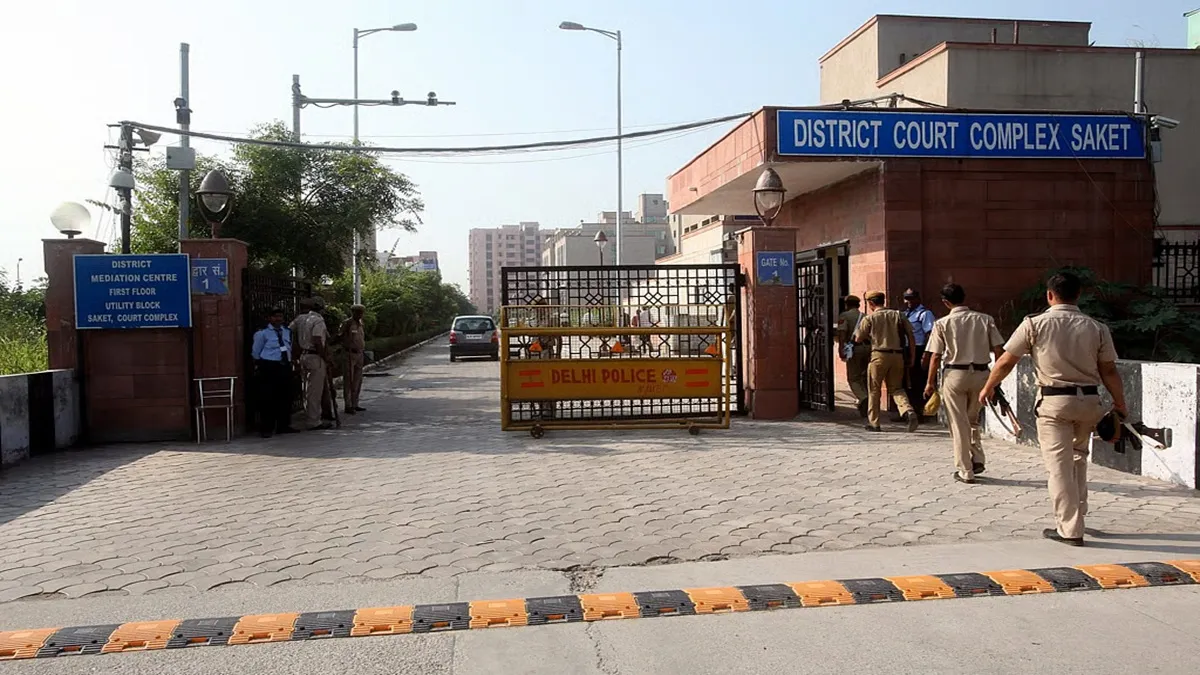
In a heartbreaking incident, a clerk deployed at Delhi's Saket Court complex took his own life on January 9 (Friday) by leaping from the top floor of the court premises, reportedly overwhelmed by job-related pressure. Harish Singh, who was 60 per cent differently-abled, left behind a suicide note that held no one responsible for his death. Police have launched an investigation, shedding light on the mounting challenges faced by court staff in India's overburdened judicial system.
Shocking act in broad daylight
Harish Singh, an ahalmad responsible for maintaining court records and assisting judges, climbed to the highest floor of the Saket Court building during working hours and jumped to his death. Eyewitnesses described the scene as chaotic, with court proceedings briefly halted as staff rushed to the spot. The incident occurred amid routine judicial activities, amplifying the shock within the legal fraternity.
Suicide note reveals no blame, hints at personal struggles
A suicide note recovered from Singh's possession explicitly stated that no individual or entity should be held accountable for his decision. While the contents did not name specific culprits, sources indicate it alluded to intense work pressure- a common grievance among low-level court employees handling voluminous paperwork and tight deadlines. Singh's 60 per cent disability, certified under government norms, may have compounded his difficulties in coping with the demanding role.
Police probe underway as colleagues express grief
Delhi Police have registered a case and are conducting a thorough inquiry, including forensic analysis of the note and interviews with coworkers. Initial findings confirm no foul play, classifying it as a suicide driven by stress. Colleagues remembered Singh as diligent but overburdened, prompting calls for better mental health support and workload management in courts. Updates are awaited as the investigation progresses, with authorities promising a detailed report soon.
