
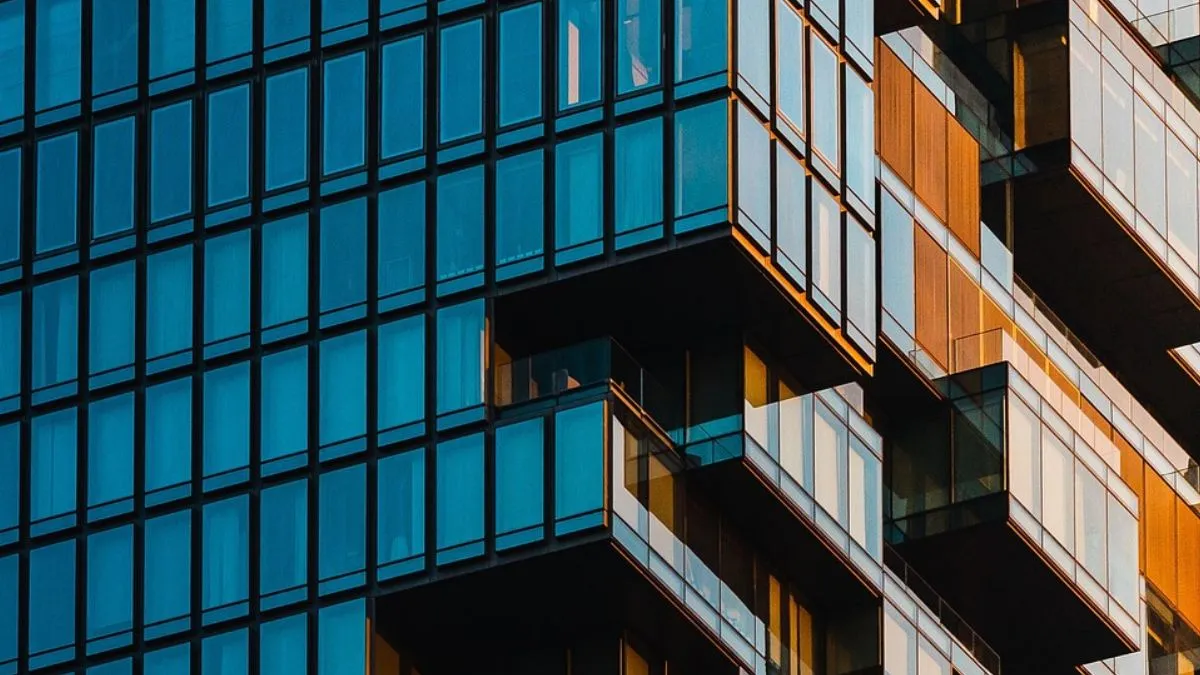
At a time when global markets are navigating renewed turbulence, triggered by ongoing Middle East conflicts, supply chain disruptions, and persistent inflationary pressures, most asset classes have shown visible signs of strain. Yet, almost unexpectedly, commercial real estate in India has held its ground. The sector has not been immune to global headwinds, but it has demonstrated a degree of resilience that stands out in the current climate. Even though capital has become selective, Grade A office assets have not exhibited the stress one would expect. According to a recent report by JLL, India recorded office leasing of approximately 58-60 million sq. ft. in 2024, with Global Capability Centres accounting for nearly 35-40 per cent of that demand.
One sees it in micro-markets. Buildings that were underwritten conservatively five years ago are today running at occupancies of 85-90 per cent, not because the market is uniformly strong, but because the tenants they attracted were structurally embedded, technology back offices, consulting hubs, and financial services expansions.
Warehousing has followed a different arc. E-commerce did not just create demand; it redefined expectations around logistics. A CBRE report estimates that India’s warehousing stock crossed 400 million sq. ft., with Grade A facilities accounting for an increasing share of new supply. Quality has become non-negotiable even in a cost-sensitive segment.
Retail, on the other hand, continues to spring surprises. Organised retail, particularly in dominant catchments, has shown resilience that borders on stubbornness. Knight Frank notes that mall vacancy levels in prime centres across top cities have remained in the 8-10% range, which, in a different macro context, would have seemed improbable. Their resilience has been noteworthy.
"Commercial real estate, particularly income-yielding office and retail assets, has demonstrated that stability is not accidental but engineered through tenant quality and lease structuring. Even in a volatile macroeconomic climate, well-located Grade A projects continue to attract occupiers and investors alike. What we are seeing now is a clear segregation, assets with strong fundamentals are holding value, while the rest are being repriced more realistically,” said Pankaj Jain, Founder and CMD, SPJ Group.
According to Sandeep Chhillar, Founder & Chairman, Landmark Group, investors today are far more discerning than they were even five years ago, and the focus has increased towards income visibility and tenant mix strength.
"If history has taught us anything, it is surely to leverage periods of global uncertainty. Current global volatility strongly favours commercial assets that are backed by long-term leases and institutional tenants as they continue to generate consistent interest in the Gurugram market. The key purpose for investors is not only to produce higher yields, but also to preserve them over time,” he said.
There is also the question of supply, which rarely gets the attention it deserves. Quality supply, particularly in core office markets, is not as abundant as headline numbers suggest. Which is why, even in softer cycles, rents in prime assets do not correct as sharply as one might expect.
“What stands out is the consistency of institutional demand for stabilised commercial assets. Whether it is office campuses driven by GCC expansion or logistics platforms aligned with supply chain formalisation, the underlying demand drivers remain intact. Investors, however, must approach this space with discipline; location, tenant profile, and asset quality are no longer negotiable variables. The margin for error has narrowed, but the opportunity remains intact for those who underwrite correctly," Sanchit Bhutani, Managing Director, Group 108, concluded.
ALSO READ | Govt withdraws domestic airfare cap, here's what it means for flyers and airlines: Full details
(This article is for informational purposes only and should not be construed as investment, financial, or other advice.)
