
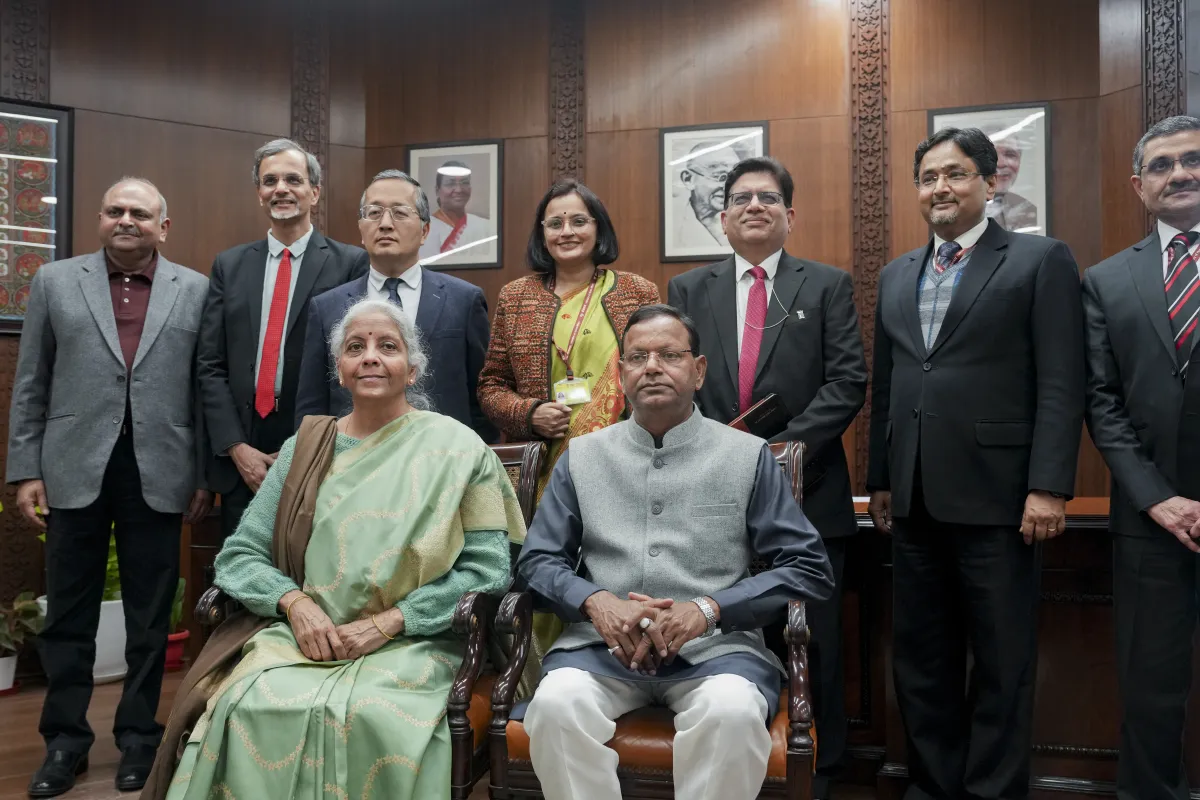
Union Finance Minister Nirmala Sitharaman is all set to present her ninth straight Budget on February 1, which is expected to unveil measures to sustain growth momentum, maintain fiscal discipline, and contain reforms that could buffer the economy from global trade frictions, including US tariffs. The presentation of the Budget for April 2026 to March 2027 fiscal (2026-27) will be on Sunday, a first in independent India's history.
Sitharaman to come up with measures to sustain growth
Sitharaman's sweeping income tax and GST cuts, together with spending on infrastructure and the RBI's interest rate reductions, have so far helped the Indian economy withstand the punitive 50 per cent tariff US President Donald Trump has imposed on Indian goods. But now, she has to come up with measures to sustain the momentum.
The FY27 Budget comes against a complex backdrop. While domestic demand has held up and inflation has moderated from recent highs, global uncertainties - including geopolitical tensions, volatile commodity prices and uneven monetary easing by major central banks - continue to cloud the outlook.
Government faces pressure to boost consumption
At home, the government faces pressure to boost consumption, accelerate job creation and step up capital spending, while keeping the fiscal deficit on a downward path. FM Sitharaman may focus on simplifying regulations and pushing structural reforms to attract domestic and foreign investment.
Despite the tight purse strings, she is not expected to cut spending and may include new measures for the poll-bound states -- West Bengal, Tamil Nadu, Kerala and Assam. Some schemes may be re-packaged.
What India’s middle class expects from Budget 2026?
- Consumers expect relief in areas like home loans, health insurance, EVs, and domestic electronics, while imported luxury items and foreign cars could get costlier.
- Health insurance might become cheaper for taxpayers as experts suggested extending Section 80D-like benefits to the new tax regime. This might allow deductions between Rs 25,000 and Rs 50,000 on health insurance premiums, reducing the financial burden of medical cover.
- A cut in duties on life-saving drugs and critical medical equipment could bring down treatment costs
- Apart from this, affordable housing is another area where relief is expected for India’s middle class. There is also a hope that the tax deduction limit on home loan interest will be raised from Rs 2 lakh to Rs 5 lakh. Once announced, this could lower the cost of owning a home and encourage more people to invest in property.
Also Read:
Budget 2026: From briefcase to bahi khata to tablet, how budget papers evolved over the years
