
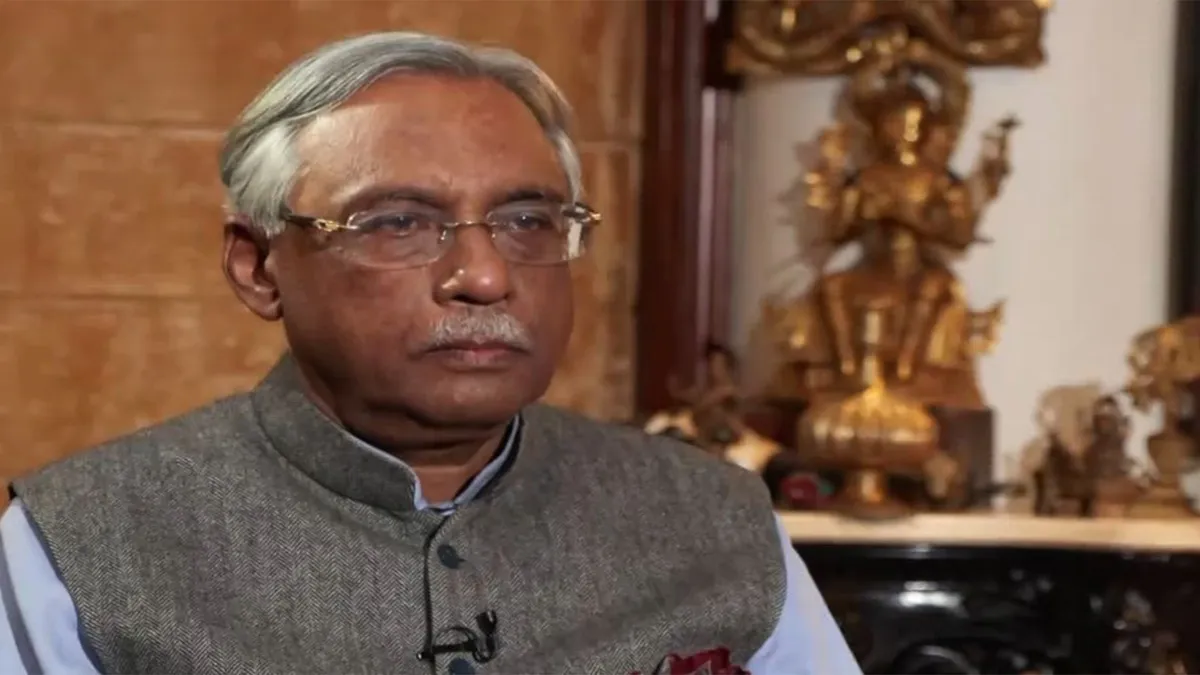
Jan Suraaj spokesperson and senior leader Pavan K Varma has accused the central government of misusing foreign development funds during the Bihar Assembly Elections 2025. Speaking to media, he alleged that Rs 14,000 crore meant for a World Bank‑sanctioned project was diverted and distributed among women voters just hours before the Model Code of Conduct (MCC) took effect.
Varma claimed that the funds were re‑routed under the 'Mukhyamantri Mahila Rojgar Yojana,' through which Rs 10,000 was directly transferred into the accounts of 1.25 crore women across the state.
'If true, raises questions of ethics,' says Varma
Varma stressed that while the information had not been independently verified, if proven true, it raised serious ethical concerns. “We are told that Rs 14,000 crore was diverted from Rs 21,000 crore received from the World Bank for another project and distributed just before the polls. If this is factual, it shows how public money is being exploited for electoral advantage,” he said.
The Jan Suraaj leader added that Bihar’s financial situation was already under severe strain. “The state’s public debt stands at Rs 4.06 lakh crore, with daily interest payments of Rs 63 crore. The treasury is empty. How can such massive spending be justified?” Varma questioned.
He further alleged that rumours were deliberately spread claiming women would not receive the remaining installment if the NDA failed to return to power. “Out of around four crore women voters, only 1.25 crore got the transfer. The rest were made to believe that voting against NDA would stop future payments,” he said.
'PM Modi criticised freebies...What happened in Bihar?': Varma
Varma also pointed to what he called a sharp contradiction between Prime Minister Narendra Modi’s public criticism of “freebie culture” and the government’s actions during the Bihar elections. “The Prime Minister has spoken against giveaways, especially when criticizing Aam Aadmi Party (AAP) in Delhi. So what just happened in Bihar?” he remarked, calling the move a “political freebie in disguise.”
He maintained that such practices distorted voter choice, particularly in economically weak regions, and undermined electoral fairness.
On Bihar’s liquor ban and Jan Suraaj’s electoral loss
Reacting to his party’s poor show in the elections, where Jan Suraaj failed to win even a single seat out of 243 contested, Varma rejected the claim that founder Prashant Kishor’s promise to revoke the state’s liquor ban hurt the party’s prospects.
He argued that the prohibition law had lost its meaning, as illegal liquor was “being sold and delivered openly at inflated prices.” He also highlighted the disproportionate impact of prohibition on marginalised communities, stating that over two lakh people, mostly from extremely backward castes, were in jail for violating liquor laws and often lacked resources for bail.
“The so‑called liquor ban is fake,” he said. “People drink, pay more, and get jailed, while women still suffer from the social fallout. Our stand was pragmatic, not populist.”
NDA’s sweep and political aftermath
The allegations come after the NDA’s sweeping victory, securing 202 of 243 assembly seats- a three‑fourths majority. The BJP emerged as the largest party with 89 seats, followed by JD(U) with 85. Its allies Lok Janshakti Party (Ram Vilas) (LJPRV) won 19, Hindustani Awam Morcha (HAMS) five, and Rashtriya Lok Morcha four.
In sharp contrast, the opposition Mahagathbandhan managed only 35 seats, with RJD winning 25 and Congress 6. Other smaller parties, including AIMIM and BSP, secured a few scattered wins. Despite Jan Suraaj’s ambitious debut, Varma conceded that the last‑minute cash transfer to women voters and Nitish Kumar’s welfare outreach “worked as the real game‑changer” in the NDA’s favour.
