
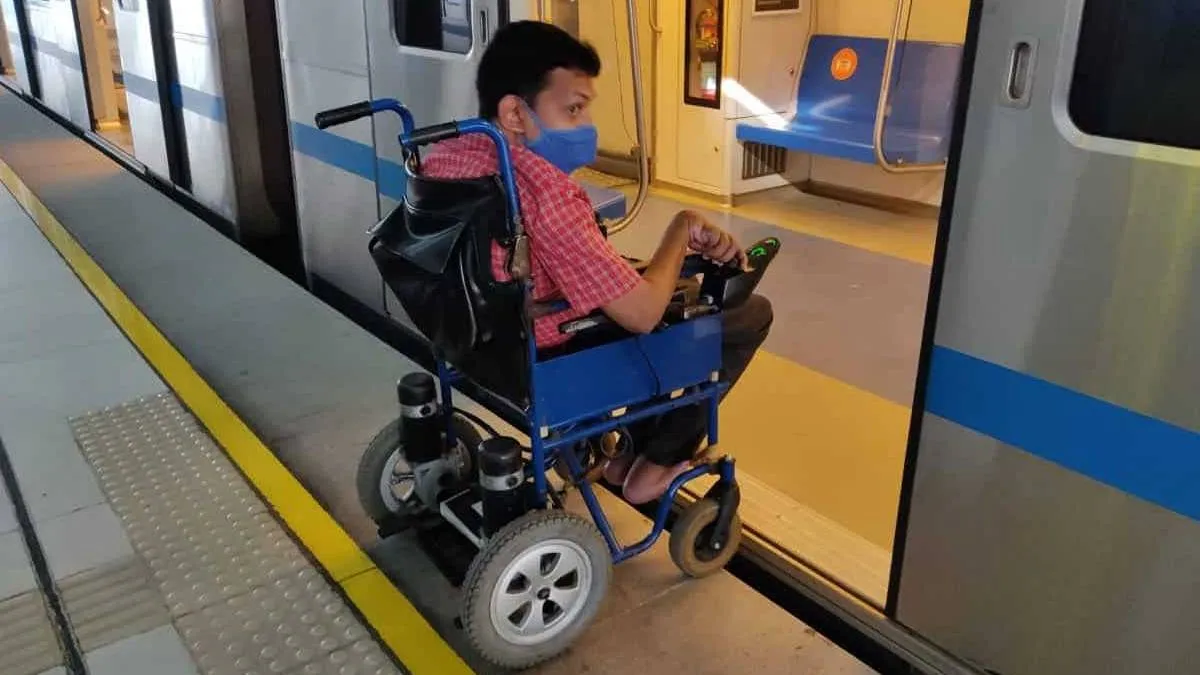
A new draft framework has proposed significant changes to transport systems to enhance accessibility for persons with disabilities (PwDs). Key features include mandatory wheelchair spaces in buses and Metro trains, step-free toilets at stations, level boarding ramps, and trained staff across air, rail, and road networks.The Department of Empowerment of Persons with Disabilities (DEPwD), part of the Ministry of Social Justice and Empowerment, is seeking feedback from stakeholders and the general public on these draft accessibility standards for the transport and mobility sector. The draft, labeled 'Transport Accessibility Framework,' has been developed by the Strategic Accessibility Cell – Rights of Riders (SAC-RR) and outlines detailed, enforceable standards across the entire transport chain—from booking and boarding to infrastructure, vehicles, and emergency response.
Most provisions come marked as “non-negotiable,” indicating that they will be binding once the guidelines are adopted.
What the draft says
According to the draft, all new buses purchased under Central schemes must offer low-floor entry, ramps, safety belts, and designated areas for wheelchairs. Existing services, such as PM eBus Sewa and Type III intercity buses, will also undergo retrofitting to include tested lifts or bridge ramps. Each bus will be required to have at least four priority seats equipped with seatbelts for passengers with limited mobility.
For Metro and rail services, platforms must incorporate rubber gap fillers and boarding ramps, while coach doors and aisles need to be widened for wheelchair access. Long-distance trains shall feature at least one accessible coach with wheelchair anchorage and a Type A toilet fitted with grab bars, as specified in the draft.
At airports, the draft emphasises step-free access from parking areas to check-in, along with aerobridges equipped with rollout ramps. Additionally, there should be designated wheelchair-friendly seating in aircraft and availability of aisle chairs. Air carriers must also provide storage space for assistive devices, ensuring that entertainment systems include audio descriptions and captions.
Guidelines extend to taxi services and e-rickshaws
The guidelines extend to taxi services and e-rickshaws, which are required to offer a portion of wheelchair-accessible vehicles and ensure drivers receive training in disability assistance. Ropeways and ferries are included in the framework as well, with specific requirements for rescue equipment, platform gaps, and access to universal toilets.
Moreover, transport hubs will need to establish quiet or sensory rooms for neurodivergent passengers, install tactile guiding strips, and provide clear signage that incorporates both text and QR codes. Apps and online platforms should be made accessible, and data on complaints related to disability access must be published on the data.gov.in portal.
Time-bound budgeting and procurement
The framework also advocates for time-bound budgeting and procurement provisions while urging immediate updates to national policies such as the Motor Vehicles Act, urban bus specifications, and building codes. Currently, stakeholder consultations regarding these guidelines are underway, and the final version is anticipated to be released after thorough discussions, according to a senior official.
ALSO READ: With EV production at risk, Indian auto delegation heads to China amid rare earth magnet crisis
Inputs from PTI
