Sarvam: India's AI startup all set to challenge ChatGPT, Google Gemini with regional language support
Sarvam AI is a Bengaluru-based startup building AI models focused on Indian languages and local needs. With innovations like Sarvam Vision and Bulbul V3, it aims to compete with ChatGPT and Gemini by prioritising Indian-language OCR, speech synthesis, and inclusive AI solutions.
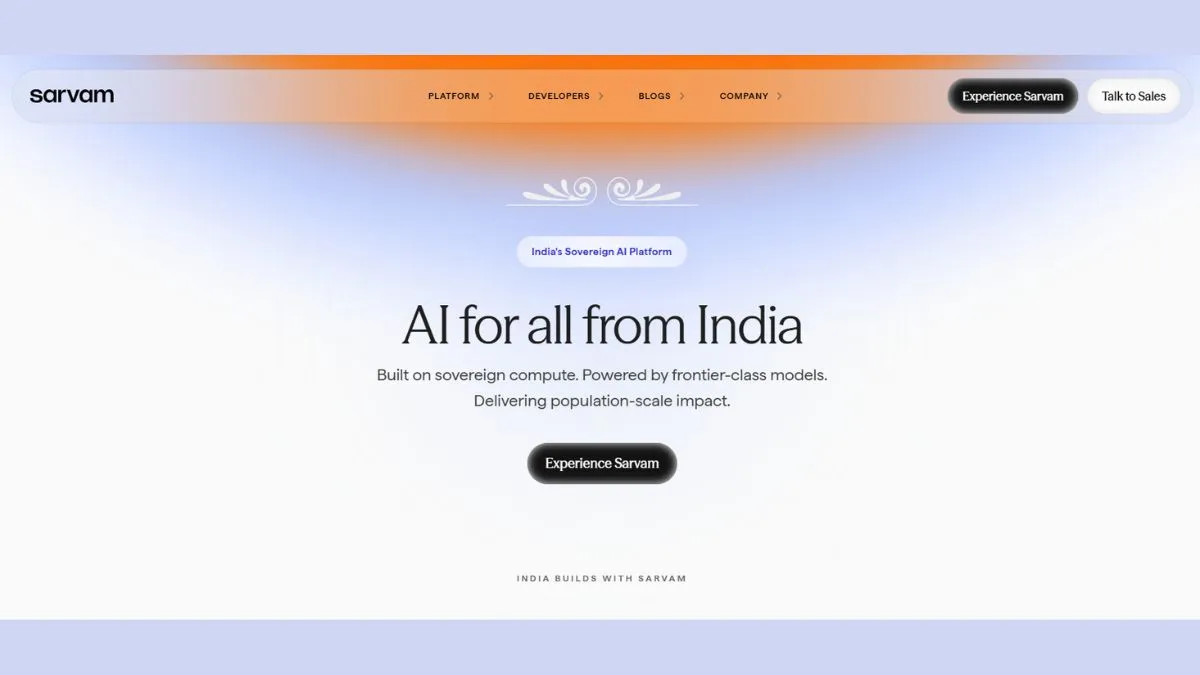
The AI Impact Summit 2026 has been inaugurated today, and the main highlight for the upcoming event will be majorly on India and its advancement in AI. Along with so many different technologies booming, one major highlight is the Sarvam AI, a Bangalore-based startup which is set to compete with the popular chatbots like ChatGPT and Google Gemini. Here, we will let you know everything about how the platform is different from international chatbots.
What is Sarvam AI?
In just a couple of years, AI has grown massively, changing the scenario, and Sarvam AI is one of the names everyone has started to notice – not only in India but in the worldwide market. A startup based in Bengaluru, back in August 2023, with a vision to build foundational AI models which could actually work for Indians, speaking any regional language.
While big global players like OpenAI and Google are chasing to fit in with the demand for AI chatbots, Sarvam AI is taking a different route. They are India’s first chatbot which supports Indian regional languages, fulfilling the local challenges, and digital tools that make sense for people here. That focus sets them apart right away.
How is Sarvam AI different from ChatGPT and Gemini?
Tools like ChatGPT and Gemini get plenty of attention worldwide, but they’re really aimed at global users, with a heavy bias toward English and a handful of other big languages. Sarvam AI doesn’t play that game. They’ve zeroed in on India’s wild mix of languages.
Deep focus on Indian languages
Sarvam AI says it supports all 22 scheduled Indian languages. That’s a big deal. Most global AI tools still trip up on regional dialects, “smaller” languages, and the tricky pronunciations people actually use across India. By putting Indian scripts, accents, and the little quirks of each language front and centre, Sarvam AI is trying to make sure AI isn’t just for English speakers, but for everyone.
What is Sarvam Vision?
One of Sarvam’s standout projects is Sarvam Vision. This thing is a vision-language model with three billion parameters under the hood. It does a lot—reading text from images (OCR), coming up with captions, recognising scene text, figuring out charts, and even parsing complex tables. It’s great at document digitisation too.
The company says Sarvam Vision beats the state-of-the-art for English-only OCR and even outperforms some of the top global models in understanding documents. But the bigger deal is what it means for Indian-language digitisation. That’s massive for things like government records, schools, and businesses that have piles of paperwork in all sorts of local languages.
What is Bulbul V3?
Here’s another flagship: Bulbul V3. This is Sarvam’s advanced text-to-speech (TTS) model. It promises natural, expressive speech, works right out of the box for production, and comes with more than 35 voices. Right now, it covers 11 Indian languages, with plans to hit all 22 soon.
Early reviews say Bulbul V3 scores high with listeners and makes fewer mistakes than other options. Sarvam positions it as a real contender in voice AI, especially for things like virtual assistants, call centres, edtech, and public services—all tuned to Indian voices and languages.
Sarvam AI- An important development for the Indian market
At the heart of it, Sarvam AI wants to make AI useful and accessible for India’s real, everyday needs. ChatGPT and Gemini are chasing global solutions, but Sarvam is building the nuts and bolts for India’s multilingual world.
Their main focus:
- Digitizing documents in Indian languages
- Voice AI tools that work for every region
- Language models that handle Indian scripts
- AI built for government, schools, and businesses
By doubling down on regional languages and homegrown use cases, Sarvam AI is actually working to close India’s digital gap. They want to make sure AI isn’t just for the English-speaking crowd in big cities—but for everyone, everywhere.