- Home
- Technology
- India proposes mandatory royalty system for AI training: Google, OpenAI may need licences
India proposes mandatory royalty system for AI training: Google, OpenAI may need licences
India has taken a major step toward regulating how AI companies like Google and OpenAI train their models. A new government working paper proposes a blanket licensing system that mandates royalty payments to creators for using copyrighted material in AI training datasets.
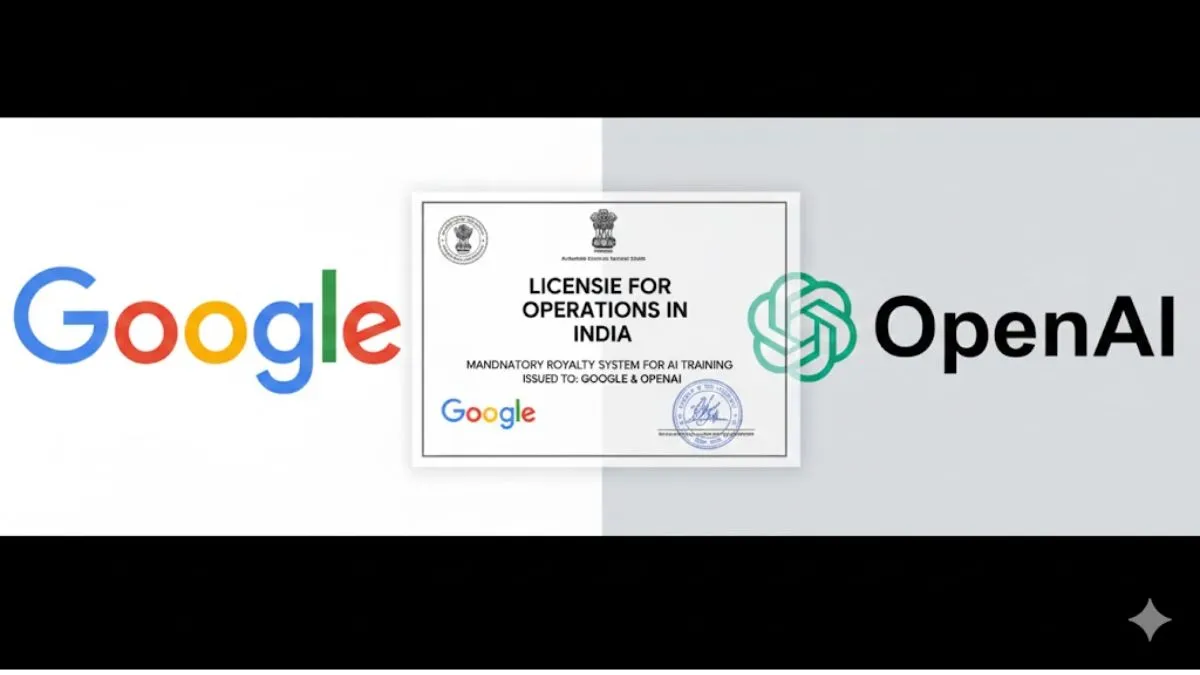
India is stepping ahead in establishing a royalty and formal licensing for training artificial intelligence (AI), which would mark a major policy shift for both global and local developers of the technology. As per the Department for Promotion of Industry and Internal Trade (
What the committee found and why this proposal surfaced?
The eight-member committee, headed by Himani Pande, was to probe whether India's existing copyright laws would be enough in determining artificial intelligence-driven use of creative works. It concluded by stating that India needs to safeguard creators against the uncompensated use of their work and turned down the tech industry's push for unlimited text-and-data mining (TDM).
The paper further pointed out that the creative economy of the country, like music, films, digital content, and traditional folk culture, is an important contributor to the country's GDP and employment. Therefore, developers of AI should not be allowed to scrape content generated without paying creators.
The tech industry opposes wholesale restrictions
Leading industry bodies of India, like Nasscom and the Business Software Alliance, on behalf of companies like Google, Microsoft, Salesforce, Amazon, IBM and OpenAI, have been advocating for an opt-out model for TDM. This would mean that the creators could choose if they would like to block their works, rather than developers having to get a licence for everything.
But content creators and media bodies have reportedly opposed the opt-out approach, stating that it will disproportionately benefit big tech at the expense of smaller creators.
A hybrid licensing model is proposed
The committee has suggested a hybrid system where the AI developers will be able to train models on all legally accessed copyrighted material, but they must pay royalties through a new centralised body, the Copyright Royalties Collective for AI Training (CRCAT).
Creators cannot prevent their works from being utilised
Creators will not be able to safeguard their works from being utilised but will be entitled to statutory remuneration, says the report. Even non-members have the right to claim royalties once they have registered their content.
Burden of proof on AI developers
If a creator claims misuse, it is considered by law to be infringement unless the AI developer can prove otherwise. Developers must now prove that no material was used that was copyrighted without paying royalties.
The proposal is put up for public consultation for 30 days. If adopted, India will be among the first major countries in the world to implement a structured royalty mechanism for AI training.