ISRO LVM3-M5 mission successful: India places its heaviest communication satellite CMS-03 into orbit
ISRO has successfully launched the heaviest indigenously built communication satellite, CMS-03, onboard the powerful LVM3-M5 rocket from Sriharikota. The mission lasted for about 16 minutes, and the 4,410-kg satellite was safely placed into Geosynchronous Transfer Orbit, achieving a major milestone
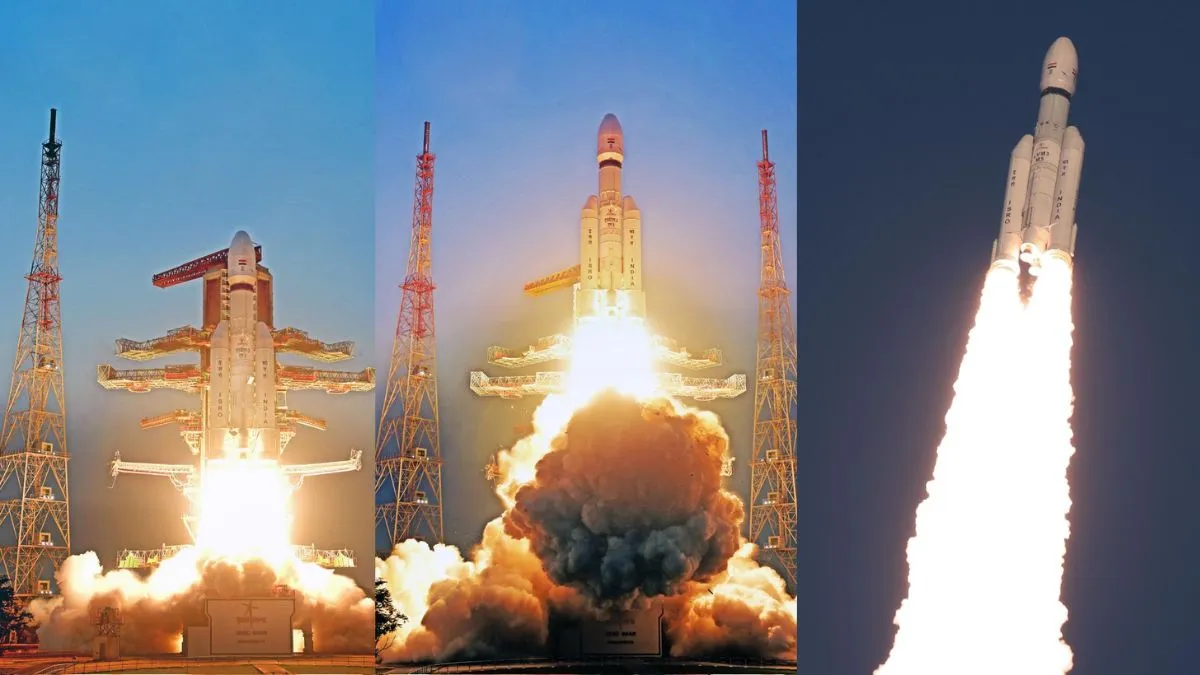
ISRO has accomplished yet another feat for India's space programme by sending into orbit the heaviest satellite, CMS-03. The LVM3-M5 rocket has been tagged as one of the most powerful rockets of ISRO and has been named 'Bahubali'. The lift-off took place from the Satish Dhawan Space Centre, Sriharikota, Andhra Pradesh, with the CMS-03 communication satellite weighing 4,410 kg. The main motive of the mission was to safely and securely place the heavy communication satellite into the Geosynchronous Transfer Orbit, or GTO.
PM Modi appreciated the success of the mission from a post on X.com (formerly known as Twitter).
Heaviest satellite ever!
ISRO officially mentioned that the satellite is the heaviest communication satellite launched so far from Indian soil. It was a mission to make history for the country's space independence.
A powerful lift-off from Indian soil
The launch happened at 5:26 PM IST, with the 43.5-metre-tall LVM3 heading straight from Sriharikota towards its destination. Its twin S200 boosters made the rocket deliver massive thrust and climb steadily through thick and thin air.
Though the weather was not 100 per cent favourable, the LVM3 completed key stage separations with a precision factor considered most important in any rocket mission.
The cryogenic stage of the LVM3 rocket completed its burn and separated the CMS-03 satellite into orbit in about 16 minutes.
This was LVM3's fifth mission with a heavyweight communication satellite onboard, making it India's most reliable rocket for heavy lift, reinforcing ISRO’s capability to execute complex, high-stakes missions without depending on foreign launchers.
CMS-03 Satellite: Boost for India's Communication Infrastructure
CMS-03 was a multi-band, high-performance communication satellite, which was intended to enhance comms services over:
- Remote education and telemedicine
- Maritime and aeronautical communication
- Internet and broadband
- Satellite TV and broadcasting
- Disaster response connectivity
The satellite will further improve the coverage over the Indian mainland and its surrounding oceanic region, thus strengthening the country's digital backbone.
Why is LVM3 called ‘Bahubali’?
LVM3, earlier known as GSLV Mk-III, is the most powerful rocket of ISRO so far, capable of carrying:
- 4 tonnes to Geosynchronous Transfer Orbit
- 8 tonnes to Low Earth Orbit
- It has a three-stage configuration that consists of:
- Two solid boosters
- Liquid-core stage
- A high-efficiency cryogenic upper stage
Altogether, it makes it ideal for heavier satellites like CMS-03.
LVM3 is on its fifth operational flight after the iconic launch of Chandrayaan-3, which made India the first country to land near the Moon's south pole.
ISRO Chairman applauds the team
After the successful deployment of the satellite, ISRO Chairman S. Somanath congratulated the team members of the mission for their efforts and dedication.
He also thanked the families of ISRO scientists: "The strength behind each successful mission is from the family."
A giant leap in India's space self-reliance. With the CMS-03 satellite reaching the required orbit safely, India is inching toward achieving self-reliance in launching heavy communication satellites, a task that was hitherto performed with the support of foreign agencies like Arianespace.
The success of LVM3-M5 marks a technological leap.
- A milestone in the communication infrastructure of India
- A boost to the country’s global commercial launch potential