How the 80th UNGA signals diminishing US dominance and shift to a multipolar world order | EXPLAINED
The 80th UN General Assembly wasn't just a meeting; it was a front-row seat to the possible end of an era. With the US championing 'America First' policies, the world is no longer waiting for a single leader. Nations are forging new alliances and openly defying the old guard.
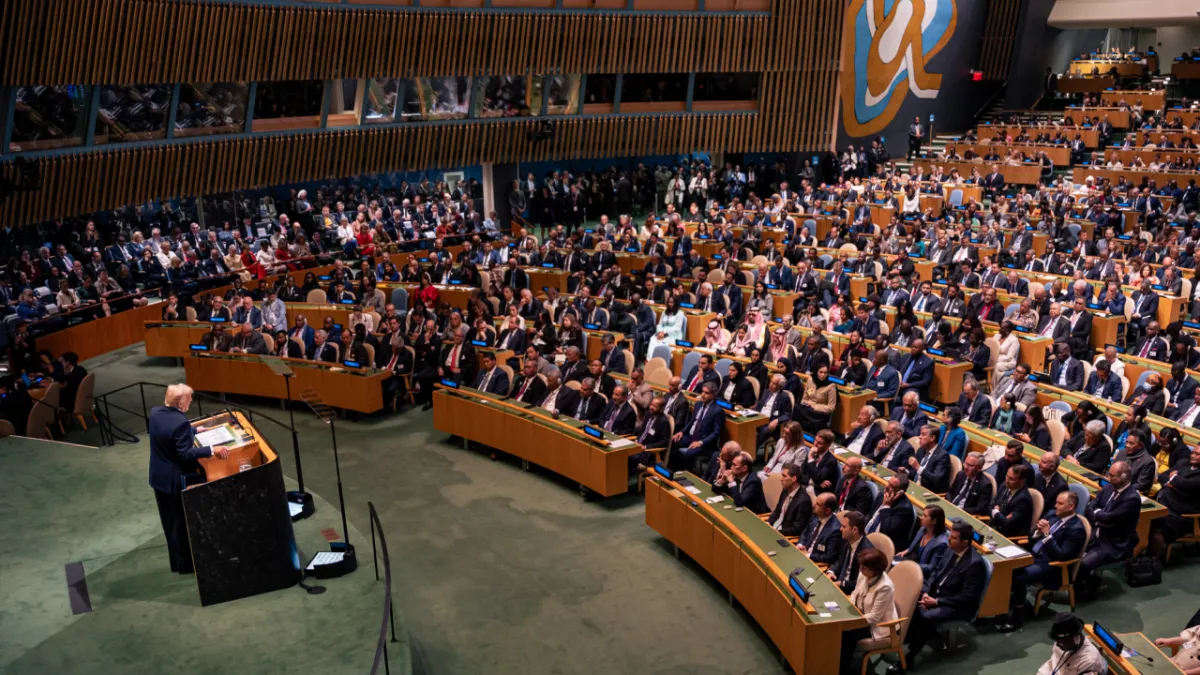
The 80th session of the UN General Assembly, convened from September 23-29 in New York, has become a stage for a tectonic shift in global power structures. Rather than reaffirming old hierarchies, many states seized the moment to signal that global leadership is no longer monopolised by a few. The passage of the New York Declaration on Palestine - over vigorous US objections - is perhaps its most telling moment: it showed that coalitions of states can marshal enough will to assert positions the traditional superpowers cannot easily block.
In that vote, 142 countries supported, while just 10 opposed and 12 abstained. The US was one of those dissenting, labelling the move "a gift to Hamas" and questioning its sincerity. That rejection underlines how the US' "America First" posture no longer commands the deference it once did in multilateral settings.
The New York Declaration: What it says and why it matters
Adopted at a UN-hosted high-level conference in July 2025 (July 28–30), and later endorsed by the General Assembly, the New York Declaration lays out "tangible, time-bound, irreversible steps" toward a two-state solution between Israel and Palestine. It condemns Hamas' October 2023 attack, calls for its disarmament, demands humanitarian access to Gaza, and proposes a temporary stabilization force under international auspices.
Its passage, despite resistance from Washington, underscores that many states now prefer multilateral norms over bilateral pressure. It also shows that alliances are being formed on issue-based grounds rather than inherited Cold War loyalties.
India’s Strategic Role: From Non-Alignment 2.0 to Multipolar Advocacy
India entered the 80th UNGA determined to push a vision of global order less dominated by traditional power centres. External Affairs Minister S. Jaishankar is slated to deliver India’s address on 27 September, and he is expected to weave together themes of multipolarity, counterterrorism, climate, and reformed multilateralism.
On the sidelines, India will host and participate in bilateral and plurilateral interactions — including a BRICS foreign ministers meeting that formally launches India’s BRICS presidency for 2026. In doing so, India aims to situate itself as a bridge-builder, especially between Global South actors and Western powers.
Notably, India voted in favour of a procedural resolution enabling Palestinian President Mahmoud Abbas to address UNGA virtually after US visa denials. That vote, though procedural, signals India’s willingness to assert diplomatic independence in a fraught environment.
Multipolar World: No Single Leader, Many Arenas
UNGA 80 is shaping up not as a reaffirmation of US hegemony, but as evidence that global authority is fragmenting into multiple nodes: Europe, the Middle East-Arab bloc, China, India, Africa, and regional groupings. The fact that the New York Declaration passed over US objections is emblematic of this shift.
India’s posture, neither vocally anti-West nor deferential, positions it well in this new order. By backing selected multilateral measures (like the two-state declaration) and cultivating its leadership role (e.g. in BRICS), India is staking a bet on a future where power is dispersed, not directed from a single capital.
|
Trump at it again, claims he ended seven wars including India-Pakistan conflict in UN speech |
|
Trump calls India, China 'primary funders' of Ukraine war for buying Russian oil | Top quotes |