Caste census to begin in two phases from October 1, 2026: When was it last held and why is it back?
In April, the Modi government had announced that conduct a 'caste census' will be done in India. The government has also decided to include 'caste enumeration' in the forthcoming census exercise
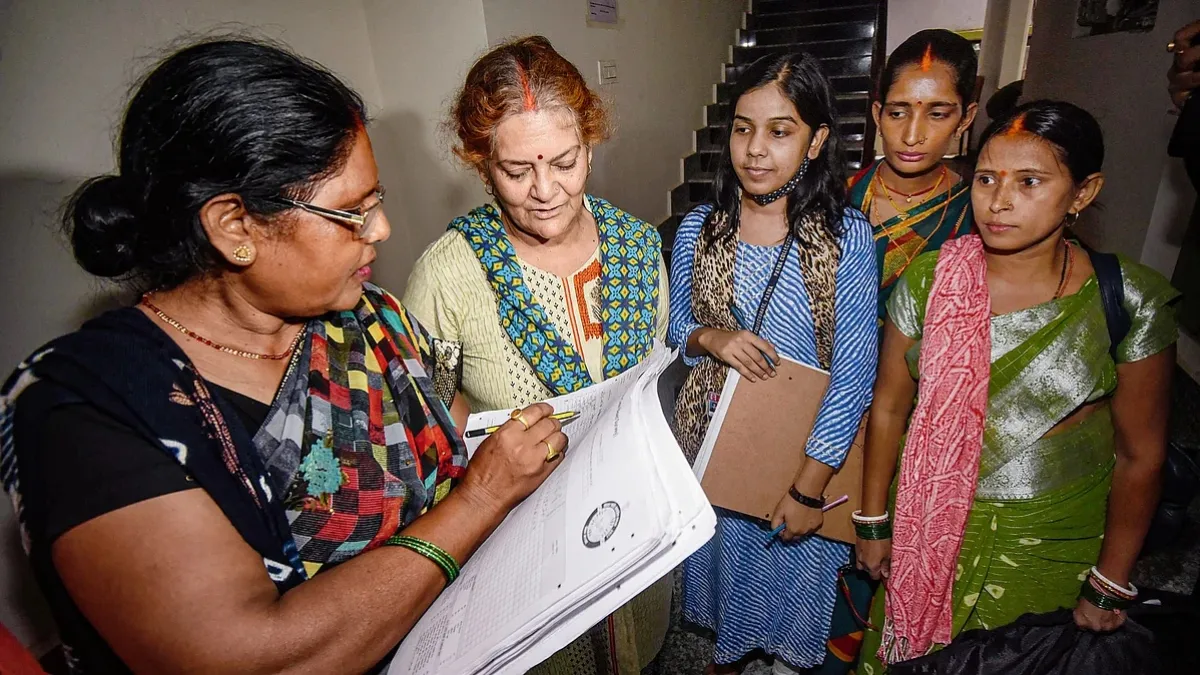
The national caste census, along with the caste enumeration exercise, is likely to begin on October 1, 2026, the Ministry of Home Affairs (MHA) said on Wednesday (June 4). The Modi government plans to carry out the caste census in two phases.
It is pertinent to mention that the caste census will take place across the nation after almost 94 years.
Caste census to be held in two phases
According to sources, the caste census will be conducted in two phases. The caste census will start with four hilly states --- Jammu and Kashmir, Ladakh, Uttarakhand and Himachal Pradesh--- from October 1, 2026. The exercise will be held in other states from March 1, 2027.
"It has been decided to conduct the Population Census-2027 in two phases, along with the enumeration of castes. The reference date for the Population Census - 2027 will be 00:00 hours of the first day of March, 2027. For the Union Territory of Ladakh and the non-synchronous snow-bound areas of the UT of Jammu and Kashmir and States of Himachal Pradesh and Uttarakhand, the reference date will be 00.00 hours of the first day of October, 2026," the MHA said.
The Cabinet Committee on Political Affairs approved this decision on April 30, 2025, under the leadership of Prime Minister Narendra Modi. Information Minister Ashwini Vaishnaw had said that the census exercise will be done in a transparent.
Census 2021 was also proposed due to COVID
The Ministry further said, "The Census of India is conducted under the provisions of the Census Act, 1948 and the Census Rules, 1990. The last Census of India was conducted in 2011 in two phases, namely i) Phase I – House Listing (HLO) (1 April to 30 September 2010) and (ii) Phase II – Population Enumeration (PE) (09 February to 28 February 2011) with reference date - 00:00 hours of the first day of March 2011, except for snow-bound non-synchronous areas of Jammu and Kashmir, Uttarakhand and Himachal Pradesh for which it was conducted during 11 to 30 September 2010 with reference date as 00.00 hours of the first day of October 2010.
Census 2021 was also proposed to be conducted in two phases in a similar manner with phase I during April-September 2020 and second phase in February 2021. All the preparations for the first phase of the Census to be conducted in 2021 were completed and field work was scheduled to begin in some States/UTs from April 1, 2020. However, due to the outbreak of COVID-19 pandemic across the country, the census work was postponed."
What is a Caste Census?
A caste census involves the systematic collection of data on the caste identities of individuals during a national census exercise. In India, where caste has historically shaped social, economic, and political dynamics, such data can provide insights into the demographic distribution, socio-economic conditions, and representation of various caste groups. This information can be used to inform policies on affirmative action, reservations, and social justice.
India's last caste census was in 1931
The last full-fledged caste census in India was carried out in 1931 during British colonial rule. Despite being nearly a century old, that historic exercise continues to significantly influence the nation's socio-political landscape.
According to reports, the 1931 Census was only the second to record caste data, the first being in 1901. It offered valuable insights into the structure of Indian society at that time. A key finding from the census was that Other Backward Classes (OBCs) constituted around 52% of India’s then population of 271 million (27 crore). This single statistic later played a pivotal role in shaping the Mandal Commission's 1980 report, which recommended 27% reservations for OBCs in government jobs and educational institutions—a policy that was ultimately implemented in 1990.
Why is a caste census needed now?
Over the years, rising social disparities and increasing political pressure have reignited the demand for a caste census. Here's why the issue has taken on renewed significance:
- Social justice: Accurate caste data is seen as essential for improving the efficiency of reservation policies in education, employment, and welfare schemes. It enables more precise identification of marginalized communities, ensuring that benefits reach those who need them most.
- Policy reform: Poonam Muttreja, Executive Director of the Population Foundation of India, highlights that a caste census can reveal inequalities in areas like education, healthcare, nutrition, and social security. This data would support the creation of more equitable and inclusive public policies.
- Political representation: Comprehensive caste data helps political parties identify underrepresented communities, enabling them to fine-tune their electoral strategies and ensure broader political inclusion.
- State-level demand: States such as Bihar and Telangana have already carried out their own caste surveys, demonstrating the practical importance of such data and fueling calls for a similar exercise at the national level.
- Socioeconomic disparities: Caste remains a significant factor in determining access to resources and opportunities. In the absence of updated, reliable data, it becomes difficult to craft well-targeted and effective interventions to address these disparities.
Also Read: Raj Thackeray urges Maharashtra government to implement two-language policy in primary education
Also Read: Will Asaduddin Owaisi and Uddhav Thackeray join hands in Maharashtra? Here's what AIMIM MLA said